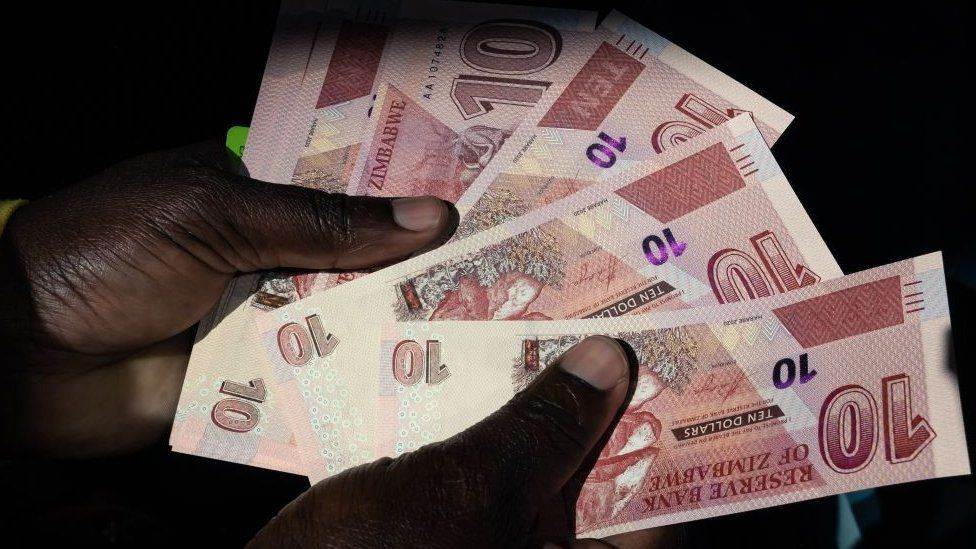
As an attempt to stabiliise the Zimbabwean dollar and address the steep inflation that plagued the nation, the government’s recent policy measures have shown promising results. The Zimbabwean dollar has witnessed a notable improvement, trading at 4,517 Zimbabwean dollars per U.S. dollar on the wholesale foreign exchange auction on Thursday, up from 6,713 per U.S. dollar recorded on June 16, according to figures released by the central bank.
The journey to stability has not been without challenges. Between April and June, the country experienced significant exchange rate volatility, leading to soaring prices and hyperinflation. Fearing further depreciation, people were quick to offload their local currency. However, the government’s implementation of various policy measures has aimed to reverse this trend.
One of the key directives put forward by the authorities was for import duties to be paid in Zimbabwean dollars, with the exception of luxury items. Additionally, government institutions were required to collect charges in the local currency, and a mandate was introduced, stipulating that 50 percent of the foreign currency portion of corporate tax payments must be in the local currency.



Economic analyst Zvikomborero Sibanda explained that these measures have effectively addressed excess liquidity in the economy, contributing to the improved stability of the Zimbabwean dollar. Formal enterprises have benefited from this stability as it fosters predictability in their business operations.
July’s inflation data released by the statistics agency ZIMSTAT showed a significant decline from 74.5 percent in the previous month to 15.3 percent. This reduction in inflation has brought a sense of relief to Zimbabweans, who can now hold onto their hard-earned cash for longer periods, provided the current stability persists.
Local residents have expressed their confidence in using the Zimbabwean dollar for transactions. Street vendors, like Samuel Pfani in central Harare, have acknowledged that stable exchange rates have eliminated the need for immediate currency exchanges and made direct payments possible.
However, maintaining stability is not without its challenges. Economic analyst Zvikomborero Sibanda emphasized that fiscal and monetary discipline must be upheld by the authorities to sustain the stability of the local currency.
Although the Zimbabwean dollar is showing signs of firming up, the U.S. dollar remains the preferred medium of exchange. Denford Mutashu, president of the Confederation of Zimbabwe Retailers, stressed that the government must take the lead in creating confidence in the local currency to encourage widespread adoption.

The history of the Zimbabwean dollar has been turbulent, with the currency being abandoned in 2009 due to hyperinflation. The subsequent adoption of a multicurrency regime offered temporary relief until the government reintroduced the Zimbabwe dollar as the sole legal tender in June 2019. However, the outbreak of COVID-19 prompted a return to the use of foreign currencies for easier transactions, leading to the dominance of the U.S. dollar in more than 70 percent of expenditure.
The recent stabilisation of the Zimbabwean dollar represents a positive step towards economic recovery and predictability for businesses. While the government’s measures have yielded promising results, continued adherence to fiscal and monetary discipline will be crucial in maintaining the newfound stability and fostering confidence in the local currency.