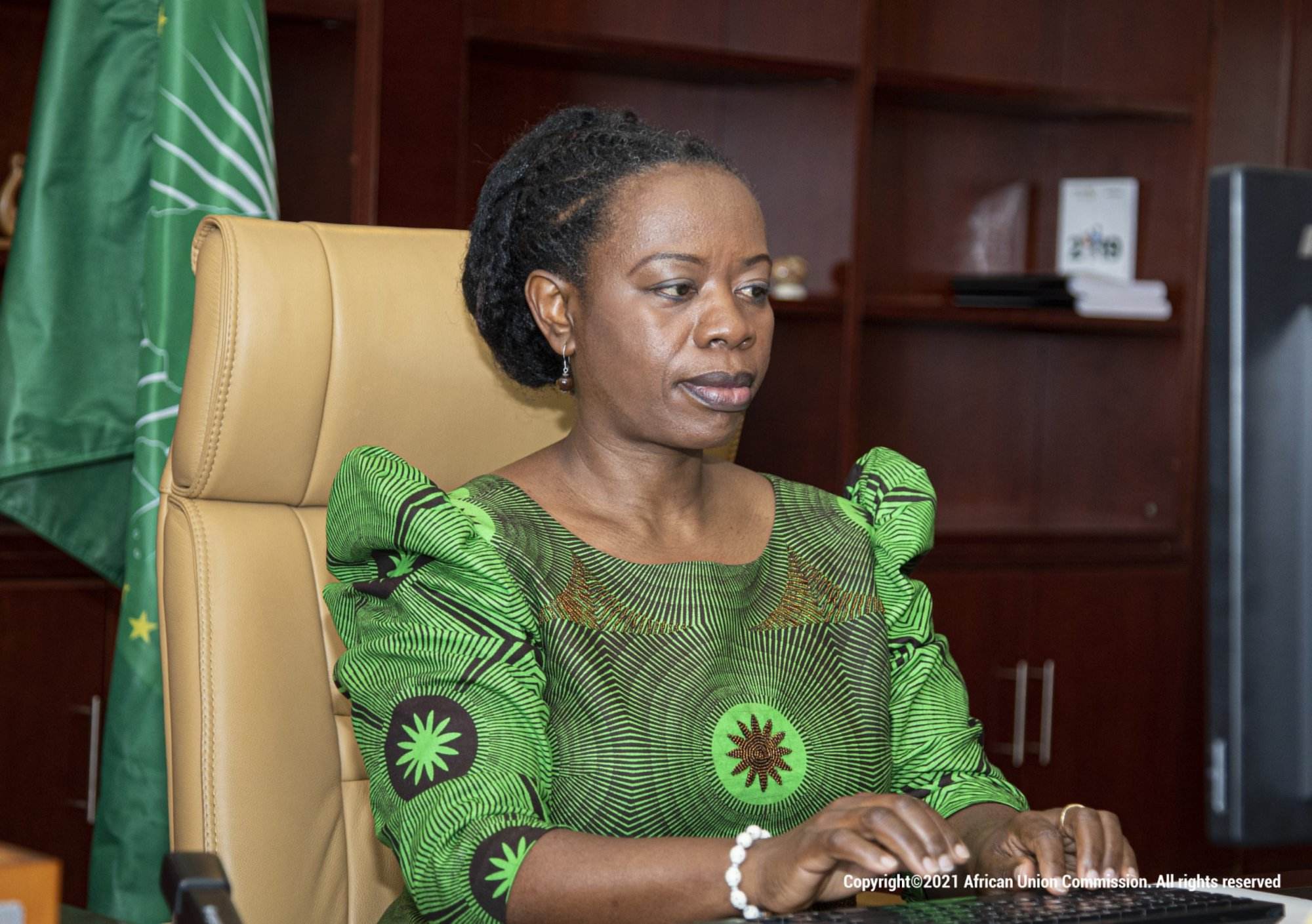
The African Union (AU) Commission has called on the pan-African business community to take ownership of the African Continental Free Trade Area (AfCFTA) Agreement as its implementation gathers momentum. Monique Nsanzabaganwa, the deputy chairperson of the AU Commission, made the comment at the AfCFTA Business Forum, co-hosted by the AfCFTA Secretariat and the Government of South Africa in Cape Town from April 16 to 19.
The AU heads of state and government have adopted the theme for the year 2023 as the “Year of AfCFTA: Acceleration of the African Continental Free Trade Area Implementation,” aiming to generate greater political momentum for the landmark free trade pact.
Nsanzabaganwa noted that the AU, the AfCFTA Secretariat, African countries, regional economic communities, and development partners have delivered on the flagship free trade pact as part of the Agenda 2063, and now it is crucial for the private sector to actively engage in trading under the AfCFTA.



To facilitate trading, several instruments have been introduced, including the AfCFTA e-Tariff Book, the Rules of Origin Manual, the African Trade Observatory, the Intra-African Trade Fair, the AfCFTA Adjustment Fund, the AfCFTA Automotive Fund, the Pan-African Payments and Settlement System (PAPSS), the AfCFTA Guided Trade Initiative, the African Business Council, and the AfCFTA Dispute Settlement Mechanism. These instruments are designed to ensure that legitimate business transactions thrive and contribute to the successful implementation of the AfCFTA.
Nsanzabaganwa also highlighted the need to include women-owned businesses, youth-owned businesses, and SMEs in the AfCFTA, calling for concerted efforts to support capacity development, skills creation, access to finance, access to markets, and access to information in these areas. She emphasized that the AfCFTA Agreement is for everyone and has positioned women and youth in trade as engines of its successful implementation.

Nsanzabaganwa sees the AfCFTA as an opportunity for Africa to recover from the impact of the COVID-19 pandemic and geopolitical challenges, and to find home-grown solutions to drive the continent’s economic growth and development.
With 47 African countries having ratified the AfCFTA treaty, Nsanzabaganwa urged customs authorities to do the necessary, highlighting that this is a pivotal moment for the continent to leapfrog and galvanize itself from external dynamics, and start looking for home-grown solutions to drive economic growth and development.
The AfCFTA is a historic agreement that aims to create a single market for goods and services across the African continent, covering a population of over 1.3 billion people and a combined GDP of over $3.4 trillion. It is seen as a key driver for economic integration and development in Africa, and the call for the pan-African business community to take ownership of its implementation reflects the importance of private sector engagement in realizing the full potential of this landmark initiative.