Monday, June 22, 2026
  • Login
The Southern African Times
  • Home
  • Southern Africa
  • Business
    • African Start ups
    • African Continental Free Trade Area
  • Technology
    • Lifestyle
      • Health
      • Culture
      • Food and Drink
      • Entertainment
  • Opinion
  • Sports
  • SAT Jobs
    • Events
  • About Us
    • Advertise with Us
    • Contact Us
No Result
View All Result
  • Home
  • Southern Africa
  • Business
    • African Start ups
    • African Continental Free Trade Area
  • Technology
    • Lifestyle
      • Health
      • Culture
      • Food and Drink
      • Entertainment
  • Opinion
  • Sports
  • SAT Jobs
    • Events
  • About Us
    • Advertise with Us
    • Contact Us
No Result
View All Result
The Southern African Times
No Result
View All Result
Home Markets

Kenya’s GMO maize push sowing trouble for food sector, farmers warn

by SAT Reporter
December 15, 2022
in Markets
0
Kenya’s GMO maize push sowing trouble for food sector, farmers warn

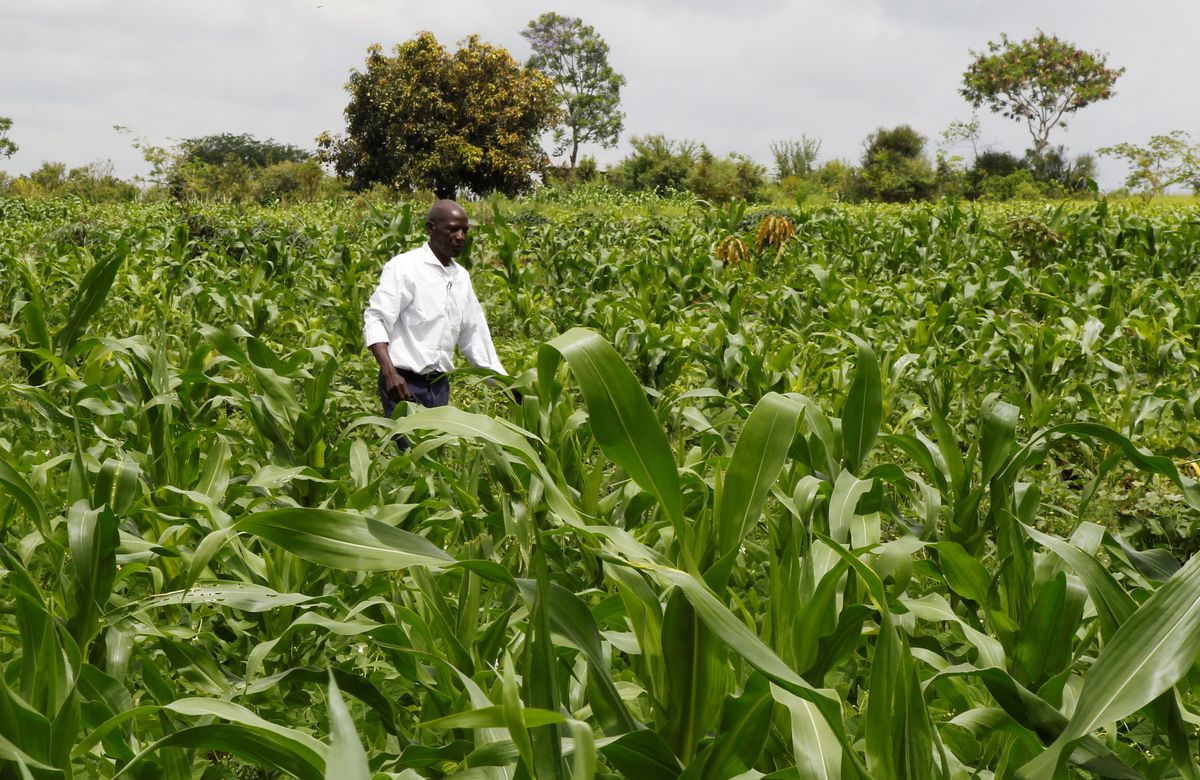
Dick Olela has been growing maize on his four-acre piece of land in the Migori county in western Kenya for the last three decades but fears his livelihood could be undermined by the government’s sudden embrace of genetically-modified crops.

With more than 4 million people in Kenya facing acute food shortages after the worst drought in four decades ravaged crops and livestock in East Africa, President William Ruto’s new government last month lifted a decade-old ban on cultivation and imports of genetically-modified (GMO) maize.

Kenya struggles to feed its population of 55 million and has consistently had an annual deficit of 10 million bags of the maize staple. Imports fill the gap but supply has come under unprecedented pressure in recent years from urbanisation and sky-rocketing prices of inputs like fertiliser.


ADVERTISEMENT

Ruto said the move to allow pest-resistant GMO crops was necessary to boost crop yields and ensure food security, an argument dismissed by maize growers like Olela and a smallholder farmers’ group that has filed a lawsuit against the government to have the decision overturned.

Olela says GMO crops, which are often seedless, pose a threat to a “sustainable” tradition of recycling seeds, leaving maize growers dependent on big foreign companies that own the patents to GMO seeds.

“This is something that is out to put us into seed slavery, where we have to buy them every time we plant,” Olela told Reuters.

Other critics, including the Kenya Farmers Association which represents thousands of maize growers, say the decision was rushed and failed to address long-standing health concerns.

COTTON CONTROVERSY

The controversy mirrors problems in other African countries which were earlier adopters of the technology. Farmers in Burkina Faso, Africa’s top cotton producer, said the quality of their crop fell after the introduction in 2008 of GMO strains.

Samuel Kioko, who grows maize, beans and peas on his 1-1/2 acres of land near Nairobi, says allowing GMO maize would force smallholders like him to carve up precious land to create “isolation zones” to shield indigenous seed varieties.

Kenya’s National Biosafety Authority, sought to allay some of the concerns.

“We check every crop, every genetic trait to confirm safety,” Chief Executive Roy Mugiira said, touting success of the technology in the country’s cotton sector where production had collapsed but was now reviving after the government allowed GMO varieties in 2019.

Daniel Magondu, who has grown GMO cotton over two seasons near the rice basket town of Mea in central Kenya, is one such beneficiary. In a field bordering an avocado orchard, he points to rows of weeks-old lush cotton seedlings as evidence that GMO seeds are superior to conventional varieties.

Next to them on a smaller plot, seedlings of the traditional variety are shorter, less lush and are being attacked by aphids.

“It (GMO cotton) has not even taken a month and you can see how it has grown very quickly,” he said, praising its resistance to pests and faster maturity than conventional cotton.

The maize farmers remain sceptical.

“Before we go the GMO way, why don’t we … give farmers subsidies for seeds, fuel, affordable credit?” said Kipkorir Menjo, a director at the farmers’ association.

Previous Post

South Africa’s Eskom CEO has resigns

Next Post

Scramble amid skepticism: Will U.S.-Africa Leaders Summit lead to sustained follow-up?

SAT Reporter

Related Posts

Global Markets Rise as Iran Deal Hopes Grow and SpaceX Debuts
Markets

Global Markets Rise as Iran Deal Hopes Grow and SpaceX Debuts

by Times Reporter
June 12, 2026
Former Deputy Minister Joins London-Based Sankofa Capital
Markets

Former Deputy Minister Joins London-Based Sankofa Capital

by Times Reporter
June 10, 2026
African Capital Markets Conference spotlights diaspora capital for market growth
Markets

AFRINEX Lists US$27 Million NHC Foods Bond on Mauritius Exchange

by SAT Reporter
June 3, 2026
Mauritius Commercial Bank Commits $1 Billion to Close Africa’s Trade Finance Gap
Markets

Mauritius Commercial Bank Commits $1 Billion to Close Africa’s Trade Finance Gap

by SAT Reporter
June 1, 2026
Oil climbs over 2% as Middle East tensions threaten supply
Markets

Oil climbs over 2% as Middle East tensions threaten supply

by SAT Reporter
June 1, 2026
Next Post
Scramble amid skepticism: Will U.S.-Africa Leaders Summit lead to sustained follow-up?

Scramble amid skepticism: Will U.S.-Africa Leaders Summit lead to sustained follow-up?

Browse by Category

  • Africa AI
  • African Continental Free Trade Area
  • African Debt
  • African Start ups
  • Agriculture
  • AI Africa
  • Algeria
  • All News
  • Analysis
  • Angola
  • Arts / Culture
  • Asia
  • Botswana
  • BOTSWANA
  • BREAKING NEWS
  • BRICS
  • Burkina Faso
  • Burundi
  • Business
  • Business
  • Business Wire
  • Cameroon
  • Central Africa
  • Chad
  • China
  • Climate Change
  • Climate Changev
  • Community
  • Congo Republic
  • Conservation
  • Côte d’Ivoire
  • COVID 19
  • CRYPTOCURRENCY
  • Culture
  • Democratic Republic of Congo
  • Diplomacy
  • Eastern Africa
  • Economic Development
  • Economy
  • Education
  • Egypt
  • Elections 2024
  • Energy
  • Entertainment
  • Environment
  • Eritrea
  • Ethiopia
  • Europe
  • Fashion
  • Feature
  • Finance
  • Financial Inclusion
  • Food
  • Food and Drink
  • Foods
  • GABON
  • Ghana
  • Global
  • Global Africa
  • Guinea
  • Health
  • Humanitarian Aid
  • Immigration
  • in Southern Africa
  • International news
  • International Relations
  • Investment
  • Ivory Coast
  • Just In
  • Kenya
  • Lesotho
  • Libya
  • Life Style
  • Lifestyle
  • Literature
  • Malawi
  • Malawi
  • Mali
  • Markets
  • Mauritius
  • Middle East
  • Mining in Africa
  • Morocco
  • Mozambique
  • Namibia
  • Niger
  • niger
  • Nigeria
  • North Africa
  • North-Eastern Africa
  • Obituaries
  • Obituary
  • Opinion
  • PARTNER CONTENT
  • Politics
  • Property
  • Racism
  • Rwanda
  • Rwanda
  • SADC
  • SAT Interviews
  • SAT Investigation
  • SAT Jobs
  • Saudi Arabia
  • Senegal
  • Seychelles
  • Somaliland
  • South Africa
  • South Sudan
  • Sports
  • Startup Africa
  • STOCK EXCHANGE
  • Sudan
  • Sustainability
  • Sustainablity
  • Tanzania
  • Technology
  • Telecommunications
  • The Editorial Board
  • The Power Of She
  • Togo
  • Trade
  • Travel
  • Travel
  • Tunisia
  • Uganda
  • Uncategorized
  • Wealth
  • West Africa
  • World
  • World
  • ZAMBIA
  • Zambia
  • ZIMBABWE
  • Zimbabwe

Browse by Tags

#NewsUpdate #SouthAfrica #SouthernAfricanTimes #TheSouthernAfricanTimes AfCFTA africa African Continental Free Trade Area African development African Development Bank African economies African economy African Union Agriculture Angola Botswana China Climate change Cyril Ramaphosa Economic Development economic growth energy transition Ghana governance industrialisation Inflation Infrastructure Infrastructure Development International relations Investment Kenya Mozambique Namibia news Nigeria Regional Integration renewable energy Rwanda SADC South Africa Southern Africa sustainable development Tanzania United States Zambia Zimbabwe
ADVERTISEMENT

WHO WE ARE

The Southern African Times is a regional bloc digital newspaper that covers Southern African and world news. The paper also gives a nuanced analysis on news and covers a wide range of reporting which include sports, entertainment, foreign affairs, arts and culture.

Welcome Back!

Login to your account below

Forgotten Password?

Retrieve your password

Please enter your username or email address to reset your password.

Log In
  • Home
  • Southern Africa
  • Business
    • African Start ups
    • African Continental Free Trade Area
  • Technology
    • Lifestyle
      • Health
      • Culture
      • Food and Drink
      • Entertainment
  • Opinion
  • Sports
  • SAT Jobs
    • Events
  • About Us
    • Advertise with Us
    • Contact Us
Not enough quota to unlock this post
Unlock left : 0
Are you sure want to cancel subscription?