Saturday, May 23, 2026
  • Login
The Southern African Times
  • Home
  • Southern Africa
  • Business
    • African Start ups
    • African Continental Free Trade Area
  • Technology
    • Lifestyle
      • Health
      • Culture
      • Food and Drink
      • Entertainment
  • Opinion
  • Sports
  • SAT Jobs
    • Events
  • About Us
    • Advertise with Us
    • Contact Us
No Result
View All Result
  • Home
  • Southern Africa
  • Business
    • African Start ups
    • African Continental Free Trade Area
  • Technology
    • Lifestyle
      • Health
      • Culture
      • Food and Drink
      • Entertainment
  • Opinion
  • Sports
  • SAT Jobs
    • Events
  • About Us
    • Advertise with Us
    • Contact Us
No Result
View All Result
The Southern African Times
No Result
View All Result
Home Finance

South Africa’s Reserve Bank hikes rates by 50 basis points

by SAT Reporter
May 19, 2022
in Finance, Just In
0
South Africa’s Reserve Bank hikes rates by 50 basis points

The South African Reserve Bank’s Monetary Policy Committee (MPC) has voted to hike interest rates by 50 basis points, taking the repo rate to 4.75% per annum.

The hike was in line with most analysts’ forecasts, while a forecast report from Finder, citing 22 economists, academics, and property specialists, pointed to a 50 basis point hike.

Four members of the committee preferred the announced increase and one member preferred a 25 basis point rise in the repo rate.


ADVERTISEMENT

The implied policy rate path of the bank’s forecast model, given the inflation forecast, indicates gradual normalisation through to 2024, though the bank stressed that it would make future decisions based on available data.

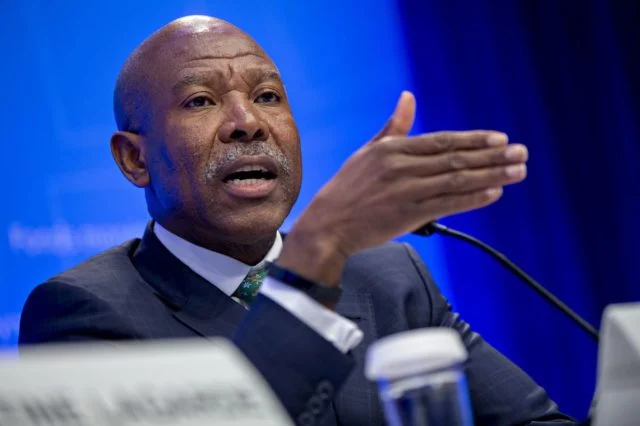
“Economic and financial conditions are expected to remain more volatile for the foreseeable future. In this uncertain environment, policy decisions will continue to be data-dependent and sensitive to the balance of risks to the outlook,” said Reserve Bank governor Lesetja Kganyago.

“The MPC will seek to look through temporary price shocks and focus on potential second-round effects and the risks of de-anchoring inflation expectations,” he said.

Kganyago said in a statement on Thursday afternoon (19 May) that the rate decision was based heavily on the global economic outlook, which has been negatively affected by Russia’s war in Ukraine, as well as the ongoing Covid-19 crisis, with further outbreaks in China.

“In recent months, the Omicron variant has transmitted globally and a major war started in Europe. The economic costs of the coronavirus generally continue to fall, as most economies remained open despite the rapid spread of the Omicron variant.

“China’s response to the new Covid-19 outbreak and the sustained invasion of Ukraine by Russia will, however, weigh heavily on global economic growth and contribute to higher inflation,” he said.

The war has impaired the production and trade of a wide range of energy, food and other commodities and will continue to do so for some time, the governor said. He stressed that global oil prices in particular have been significantly impacted and that they are likely to increase further.

“Electricity and other administered prices continue to present short- and medium-term risks. Higher diesel and coal prices may result in upward revisions to our electricity price forecast for 2023,” he said.

Locally, headline inflation has broken far beyond the mid-point of the SARB’s range, and is expected to break past the range in the second quarter at 6.3%.

As a result of higher global food prices, local food price inflation is also revised up and is now expected to be 6.6% in 2022 (up from 6.1%), and 5.6% in 2023 (up from 5.1%). Food price inflation is forecast to ease to 4.2% in 2024 – down from 4.4%.

The economy is expected to grow by 1.7% in 2022, revised down from 2.0% at the time of the March meeting. This is due to a combination of short-term factors, including the flooding in Kwa-Zulu Natal and the continued electricity supply constraints.

Growth in output in the first quarter of this year is expected to be 3.6%, stronger than the 3.2% expected at the time of the March meeting.


Tags: bankingFinancereserve bank of South AfricaSouth Africa
Previous Post

EU deal reached on mandatory gas reserves for supply crises

Next Post

Ugandan leader’s pro-Putin son touted for presidency, may face tricky ride

SAT Reporter

Related Posts

Standard Chartered Appoints Manus Costello as Chief Financial Officer
Finance

Standard Chartered Appoints Manus Costello as Chief Financial Officer

by SAT Reporter
May 18, 2026
Fitch Upgrades Ghana’s Sovereign Rating Following Fiscal Reforms
Finance

Fitch Upgrades Ghana’s Sovereign Rating Following Fiscal Reforms

by SAT Reporter
May 11, 2026
IMF Warns Africa’s Economic Gains Remain Vulnerable Amid Global Uncertainty
Finance

IMF Warns Africa’s Economic Gains Remain Vulnerable Amid Global Uncertainty

by SAT Reporter
May 8, 2026
Mozambique’s Debt Crisis Deepens as Economic and Climate Pressures Grow
Finance

Mozambique’s Debt Crisis Deepens as Economic and Climate Pressures Grow

by SAT Reporter
May 7, 2026
Africa Urged to Close Insurance Gap as Leaders Call for Stronger Financial Resilience
Finance

Africa Urged to Close Insurance Gap as Leaders Call for Stronger Financial Resilience

by SAT Reporter
May 6, 2026
Next Post
Ugandan leader’s pro-Putin son touted for presidency, may face tricky ride

Ugandan leader's pro-Putin son touted for presidency, may face tricky ride

Browse by Category

  • Africa AI
  • African Continental Free Trade Area
  • African Debt
  • African Start ups
  • Agriculture
  • AI Africa
  • Algeria
  • All News
  • Analysis
  • Angola
  • Arts / Culture
  • Asia
  • Botswana
  • BOTSWANA
  • BREAKING NEWS
  • BRICS
  • Burkina Faso
  • Burundi
  • Business
  • Business
  • Business Wire
  • Cameroon
  • Central Africa
  • Chad
  • China
  • Climate Change
  • Climate Changev
  • Community
  • Congo Republic
  • Conservation
  • Côte d’Ivoire
  • COVID 19
  • CRYPTOCURRENCY
  • Culture
  • Democratic Republic of Congo
  • Diplomacy
  • Eastern Africa
  • Economic Development
  • Economy
  • Education
  • Egypt
  • Elections 2024
  • Energy
  • Entertainment
  • Environment
  • Eritrea
  • Ethiopia
  • Europe
  • Fashion
  • Feature
  • Finance
  • Financial Inclusion
  • Food
  • Food and Drink
  • Foods
  • GABON
  • Ghana
  • Global
  • Global Africa
  • Guinea
  • Health
  • Humanitarian Aid
  • Immigration
  • in Southern Africa
  • International news
  • International Relations
  • Investment
  • Ivory Coast
  • Just In
  • Kenya
  • Lesotho
  • Libya
  • Life Style
  • Lifestyle
  • Literature
  • Malawi
  • Malawi
  • Mali
  • Markets
  • Mauritius
  • Middle East
  • Mining in Africa
  • Morocco
  • Mozambique
  • Namibia
  • Niger
  • niger
  • Nigeria
  • North Africa
  • North-Eastern Africa
  • Obituaries
  • Obituary
  • Opinion
  • PARTNER CONTENT
  • Politics
  • Property
  • Racism
  • Rwanda
  • Rwanda
  • SADC
  • SAT Interviews
  • SAT Investigation
  • SAT Jobs
  • Saudi Arabia
  • Senegal
  • Seychelles
  • Somaliland
  • South Africa
  • South Sudan
  • Sports
  • Startup Africa
  • STOCK EXCHANGE
  • Sudan
  • Sustainability
  • Sustainablity
  • Tanzania
  • Technology
  • Telecommunications
  • The Editorial Board
  • The Power Of She
  • Togo
  • Trade
  • Travel
  • Travel
  • Tunisia
  • Uganda
  • Uncategorized
  • Wealth
  • West Africa
  • World
  • World
  • Zambia
  • ZAMBIA
  • Zimbabwe
  • ZIMBABWE

Browse by Tags

#NewsUpdate #SouthAfrica #SouthernAfricanTimes #TheSouthernAfricanTimes AfCFTA africa African Continental Free Trade Area African development African Development Bank African economies African economy African Union Agriculture Angola Botswana China Climate change Cyril Ramaphosa Economic Development economic growth energy transition fiscal policy governance industrialisation Inflation Infrastructure Infrastructure Development International relations Investment Kenya Mozambique Namibia news Nigeria Regional Integration renewable energy Rwanda SADC South Africa Southern Africa sustainable development Tanzania United States Zambia Zimbabwe
ADVERTISEMENT

WHO WE ARE

The Southern African Times is a regional bloc digital newspaper that covers Southern African and world news. The paper also gives a nuanced analysis on news and covers a wide range of reporting which include sports, entertainment, foreign affairs, arts and culture.

Welcome Back!

Login to your account below

Forgotten Password?

Retrieve your password

Please enter your username or email address to reset your password.

Log In
  • Home
  • Southern Africa
  • Business
    • African Start ups
    • African Continental Free Trade Area
  • Technology
    • Lifestyle
      • Health
      • Culture
      • Food and Drink
      • Entertainment
  • Opinion
  • Sports
  • SAT Jobs
    • Events
  • About Us
    • Advertise with Us
    • Contact Us
Not enough quota to unlock this post
Unlock left : 0
Are you sure want to cancel subscription?