Monday, June 29, 2026
  • Login
The Southern African Times
  • Home
  • Southern Africa
  • Business
    • African Start ups
    • African Continental Free Trade Area
  • Technology
    • Lifestyle
      • Health
      • Culture
      • Food and Drink
      • Entertainment
  • Opinion
  • Sports
  • SAT Jobs
    • Events
  • About Us
    • Advertise with Us
    • Contact Us
No Result
View All Result
  • Home
  • Southern Africa
  • Business
    • African Start ups
    • African Continental Free Trade Area
  • Technology
    • Lifestyle
      • Health
      • Culture
      • Food and Drink
      • Entertainment
  • Opinion
  • Sports
  • SAT Jobs
    • Events
  • About Us
    • Advertise with Us
    • Contact Us
No Result
View All Result
The Southern African Times
No Result
View All Result
Home Opinion

Out of Ukraine war, a plan for Africa’s food security

A foreign conflict has exposed Africa’s dependence on imports and is galvanising action to boost local food production and tackle climate threats

by SAT Reporter
March 31, 2022
in Just In, Opinion
0
Out of Ukraine war, a plan for Africa’s food security

The victims of war are sometimes found far away from the battlefield—and so it is with Russia’s brutal invasion of Ukraine. For while the fighting there is causing immeasurable suffering and destruction, it is also threatening a silent catastrophe in Africa.

The conflict has sent food prices soaring. This is hard for the 283 million people who are already going hungry on the continent. War in Ukraine has also exposed Africa’s chronic dependence on food imports.

Wheat imports account for about 90% of Africa’s $4 billion trade with Russia and nearly half of the continent’s $4.5 billion trade with Ukraine. Sanctions against Russia have disrupted grain shipments at a time when global stockpiles were already tight. This is now raising the spectre of mass starvation on a continent that depends on food imports to feed itself.


ADVERTISEMENT

If ever there was a time to drastically raise food production in Africa, it is now.

In truth, Africa’s food crisis has been building for some time. Climate change is disrupting weather patterns and damaging agriculture, not only in Africa but in many parts of the world. This has also been a factor behind rocketing food prices, now at their highest in almost 50 years.

Excepting war, climate change is perhaps the biggest threat to global food security. We urgently need long-term, sustainable solutions that allow agriculture to adapt to our warming planet.


GROWN IN AFRICA

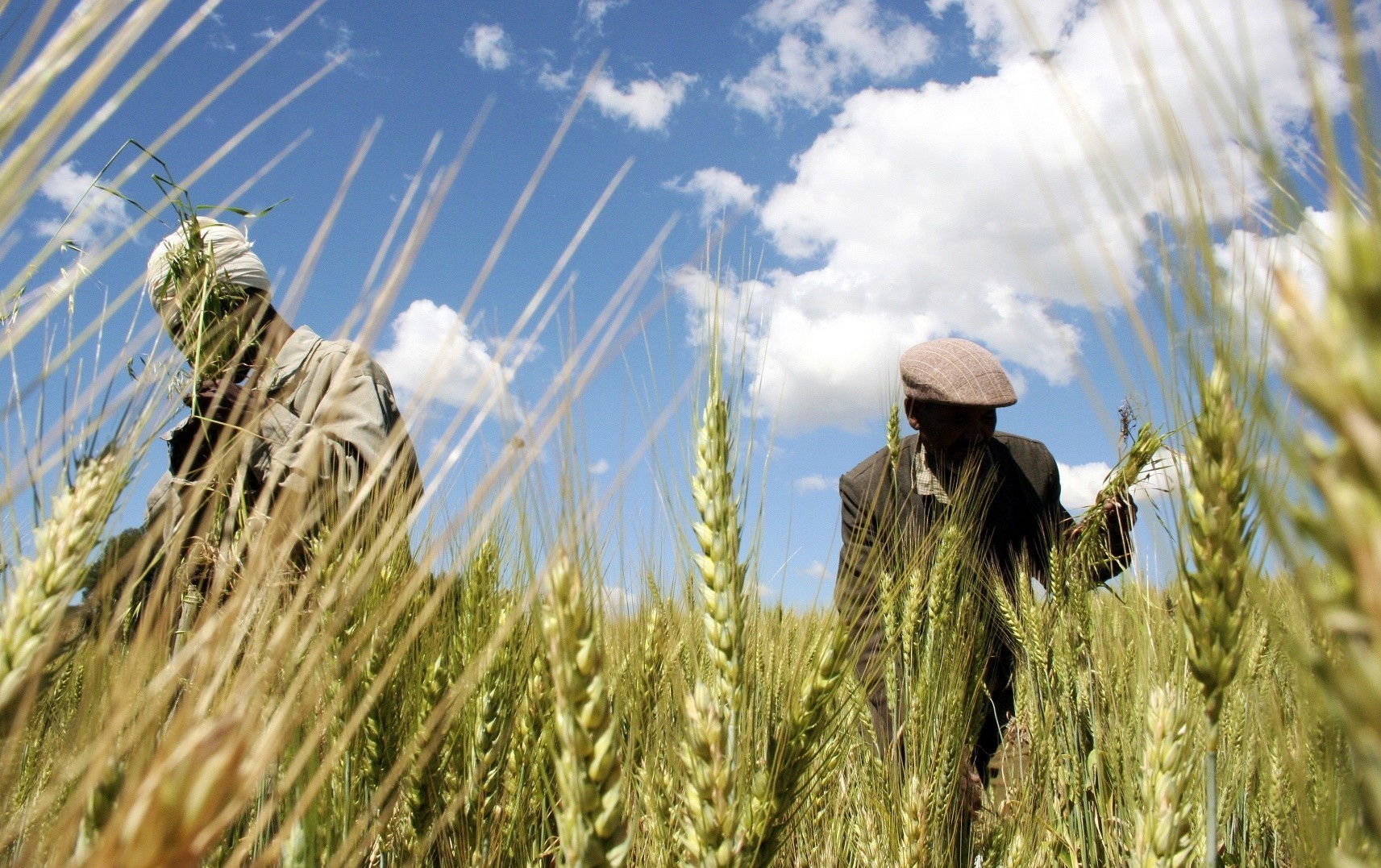
In response, the African Development Bank and partners aim to mobilise $1 billion to boost the production of wheat and other crops in Africa. The bank’s Technologies for African Agricultural Transformation (TAAT) programme is already helping the continent fulfil its enormous potential in the agriculture sector by employing high-impact technologies to boost output. The goal is to help 40 million farmers increase their harvests of heat-tolerant wheat varieties, rice, soybean and other crops to feed about 200 million people.

Central to these efforts is the need to train farmers in new techniques that increase their resilience to the impacts of climate change. To feed a hungry and rapidly growing continent, farmers need to produce more food, with fewer resources, while confronting erratic weather patterns, floods, droughts, the spread of pathogens and the loss of biodiversity.

Thanks to the Africa Adaptation Acceleration Program, an Africa-led initiative launched last year to reverse the continent’s vulnerability to climate change, the Global Center on Adaptation (GCA) and other development partners are already working to bring climate-resilient techniques to small-scale producers who grow most of Africa’s food.

The GCA estimates that investing to climate-proof African farms costs less than one-tenth of the damage inflicted by climate disasters, including crop losses, disaster relief, rebuilding roads and getting farmers back on their feet. For sub-Saharan Africa, these sunk costs are estimated at $201 billion a year, compared to the investments needed for climate adaptation in agriculture, which is estimated at $15 billion, again according to the GCA.

Farmers in sub-Saharan Africa face the combined challenges of a rapidly changing climate, malnutrition and a growing population. They will need more resilient, productive and nutritious crops if they are to meet this challenge. Such change must happen quickly and at scale. In Africa, climate change could wipe out 15% of gross domestic product by 2030. This means an additional 100 million people forced into poverty by the end of the decade.

Protecting the continent’s rich biodiversity is a route to boosting agricultural yields and finding new crop varieties that are better suited to drier and hotter climates. Genebanks conserve thousands of important plant samples which scientists can use to develop better varieties, but for years they have suffered from insufficient funding and inadequate staffing, putting plant collections – and future food security – at risk.

The BOLD Project, run by the Crop Trust and funded by Norway and the European Union, provides financial and technical support for genebanks in Nigeria, Zambia, Kenya, Ethiopia and Ghana to reach international standards of operation, ensuring collections are safe – and available for use – over the long term.

With food prices climbing and supplies disrupted by conflict, Africa needs to harness as many climate-resilient solutions as it can, quickly and at scale, to stave off the threat of a catastrophic food crisis. Investing in climate adaptation for agriculture is the smartest, most cost-efficient way to guarantee the continent’s food security. There is no time to waste.


Patrick Verkooijen is CEO of the Global Center on Adaptation, Anne Beathe Tvinnereim is Norway’s Minister of International Development and Akinwumi Adesina is President of the African Development Bank.

Previous Post

Ghana to start producing own Covid-19 vaccines in January 2024

Next Post

Equipment company to move manufacturing out of South Africa

SAT Reporter

Related Posts

President Cyril Ramaphosa’s Opinion: How South Africa’s Natural Splendour Can Drive Inclusive Growth
Opinion

Op-Ed by President Ramaphosa | Protest Is Both a Right and a Responsibility

by Times Reporter
June 29, 2026
The Insurance Hack More Drivers Should Know
Opinion

The Insurance Hack More Drivers Should Know

by Times Reporter
June 22, 2026
Southern African Times Announces Brendan Amadi as Recipient of the 2026 Editorial Recognition of the Year Award
The Editorial Board

Southern African Times Announces Brendan Amadi as Recipient of the 2026 Editorial Recognition of the Year Award

by The Editorial Board
June 19, 2026
LONG READ | No Longer the World’s Dustbin: China’s Waste Ban and Africa’s Circular Economy Moment
Opinion

LONG READ | No Longer the World’s Dustbin: China’s Waste Ban and Africa’s Circular Economy Moment

by Times Reporter
June 12, 2026
OPINION | The Investors Southern Africa Refuses to See
Opinion

OPINION | The Investors Southern Africa Refuses to See

by Times Reporter
June 14, 2026
Next Post
Equipment company to move manufacturing out of South Africa

Equipment company to move manufacturing out of South Africa

Browse by Category

  • Africa AI
  • African Continental Free Trade Area
  • African Debt
  • African Start ups
  • Agriculture
  • AI Africa
  • Algeria
  • All News
  • Analysis
  • Angola
  • Arts / Culture
  • Asia
  • Botswana
  • BOTSWANA
  • BREAKING NEWS
  • BRICS
  • Burkina Faso
  • Burundi
  • Business
  • Business
  • Business Wire
  • Cameroon
  • Central Africa
  • Chad
  • China
  • Climate Change
  • Climate Changev
  • Community
  • Congo Republic
  • Conservation
  • Côte d’Ivoire
  • COVID 19
  • CRYPTOCURRENCY
  • Culture
  • Democratic Republic of Congo
  • Diplomacy
  • Eastern Africa
  • Economic Development
  • Economy
  • Education
  • Egypt
  • Elections 2024
  • Energy
  • Entertainment
  • Environment
  • Eritrea
  • Ethiopia
  • Europe
  • Fashion
  • Feature
  • Finance
  • Financial Inclusion
  • Food
  • Food and Drink
  • Foods
  • GABON
  • Ghana
  • Global
  • Global Africa
  • Guinea
  • Health
  • Humanitarian Aid
  • Immigration
  • in Southern Africa
  • International news
  • International Relations
  • Investment
  • Ivory Coast
  • Just In
  • Kenya
  • Lesotho
  • Libya
  • Life Style
  • Lifestyle
  • Literature
  • Malawi
  • Malawi
  • Mali
  • Markets
  • Mauritius
  • Middle East
  • Mining in Africa
  • Morocco
  • Mozambique
  • Namibia
  • Niger
  • niger
  • Nigeria
  • North Africa
  • North-Eastern Africa
  • Obituaries
  • Obituary
  • Opinion
  • PARTNER CONTENT
  • Politics
  • Property
  • Racism
  • Rwanda
  • Rwanda
  • SADC
  • SAT Interviews
  • SAT Investigation
  • SAT Jobs
  • Saudi Arabia
  • Senegal
  • Seychelles
  • Somaliland
  • South Africa
  • South Sudan
  • Sports
  • Startup Africa
  • STOCK EXCHANGE
  • Sudan
  • Sustainability
  • Sustainablity
  • Tanzania
  • Technology
  • Telecommunications
  • The Editorial Board
  • The Power Of She
  • Togo
  • Trade
  • Travel
  • Travel
  • Tunisia
  • Uganda
  • Uncategorized
  • Wealth
  • West Africa
  • World
  • World
  • ZAMBIA
  • Zambia
  • Zimbabwe
  • ZIMBABWE

Browse by Tags

#NewsUpdate #SouthAfrica #SouthernAfricanTimes #TheSouthernAfricanTimes AfCFTA africa African Continental Free Trade Area African development African Development Bank African economies African economy African Union Agriculture Angola Botswana China Climate change Cyril Ramaphosa Economic Development economic growth energy transition fiscal policy governance industrialisation Inflation Infrastructure Infrastructure Development International relations Investment Kenya Mozambique Namibia news Nigeria Regional Integration renewable energy Rwanda SADC South Africa Southern Africa sustainable development Tanzania United States Zambia Zimbabwe
ADVERTISEMENT

WHO WE ARE

The Southern African Times is a regional bloc digital newspaper that covers Southern African and world news. The paper also gives a nuanced analysis on news and covers a wide range of reporting which include sports, entertainment, foreign affairs, arts and culture.

Welcome Back!

Login to your account below

Forgotten Password?

Retrieve your password

Please enter your username or email address to reset your password.

Log In
  • Home
  • Southern Africa
  • Business
    • African Start ups
    • African Continental Free Trade Area
  • Technology
    • Lifestyle
      • Health
      • Culture
      • Food and Drink
      • Entertainment
  • Opinion
  • Sports
  • SAT Jobs
    • Events
  • About Us
    • Advertise with Us
    • Contact Us
Not enough quota to unlock this post
Unlock left : 0
Are you sure want to cancel subscription?