Tuesday, May 26, 2026
  • Login
The Southern African Times
  • Home
  • Southern Africa
  • Business
    • African Start ups
    • African Continental Free Trade Area
  • Technology
    • Lifestyle
      • Health
      • Culture
      • Food and Drink
      • Entertainment
  • Opinion
  • Sports
  • SAT Jobs
    • Events
  • About Us
    • Advertise with Us
    • Contact Us
No Result
View All Result
  • Home
  • Southern Africa
  • Business
    • African Start ups
    • African Continental Free Trade Area
  • Technology
    • Lifestyle
      • Health
      • Culture
      • Food and Drink
      • Entertainment
  • Opinion
  • Sports
  • SAT Jobs
    • Events
  • About Us
    • Advertise with Us
    • Contact Us
No Result
View All Result
The Southern African Times
No Result
View All Result
Home Opinion

Listening to rural women should be the first defence against crises, not a last resort

by SAT Reporter
October 17, 2021
in Opinion
0
Listening to rural women should be the first defence against crises, not a last resort

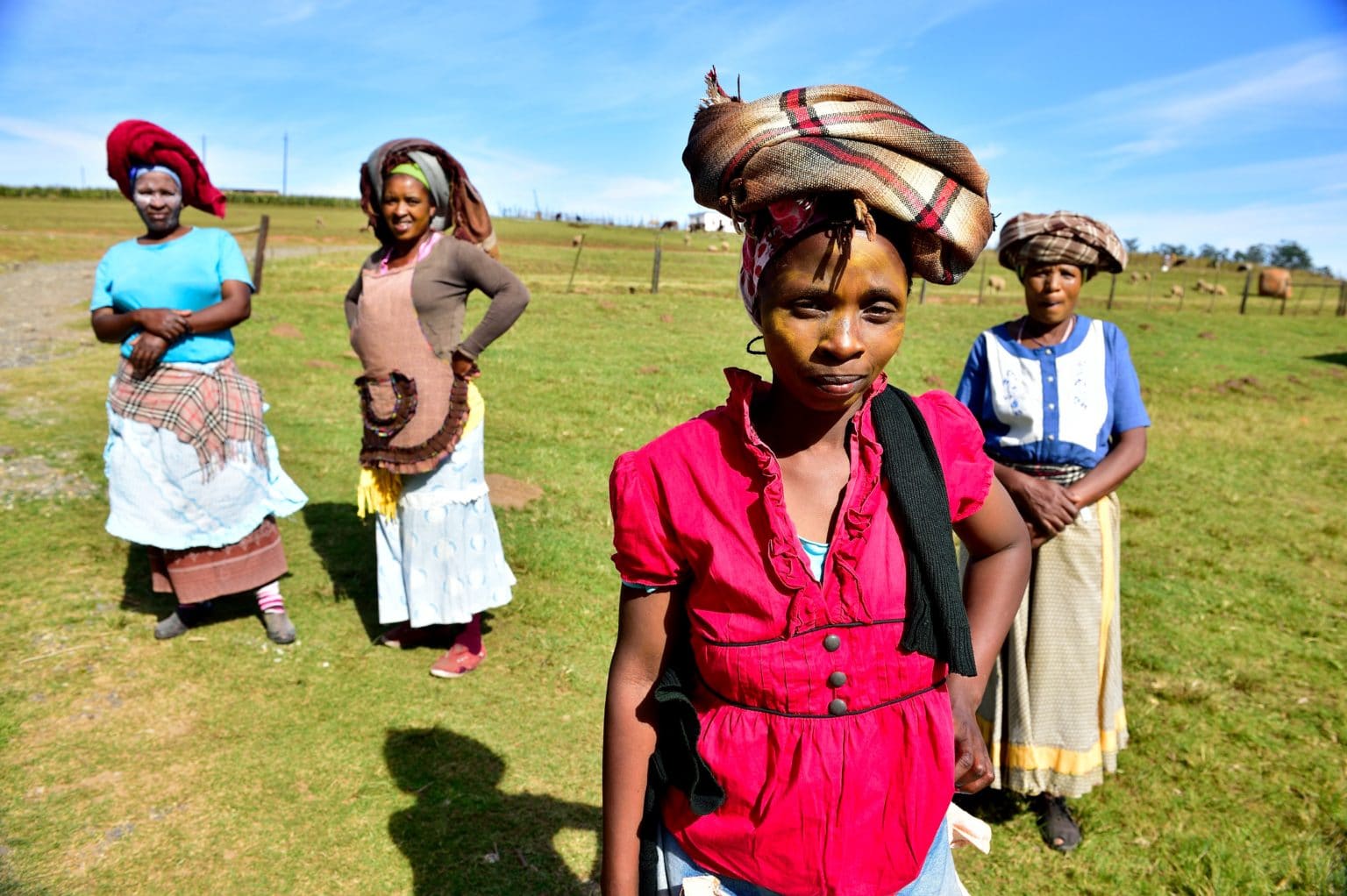
The lingering Covid-19 pandemic has provided the starkest preview of a planet pushed to its limits, the margins of which are narrowing further because of climate change.

The knee-jerk responses to Covid-19 around the world have, in many cases, reinforced endemic inequalities. For rural women, these reactions have often been as dangerous as the coronavirus itself, exposing them to increased hunger, poverty and risks of gender-based violence.

It is becoming increasingly clear that routinely ignoring gender biases amplifies existing inequalities, setting back not only women, but everyone, and worsening global challenges for all. As the world begins to emerge from the pandemic, governments and leaders have an opportunity to proactively minimise future crises by bringing rural women’s voices to the forefront.


ADVERTISEMENT

Across the Global South, this means ensuring that rural women have the chance to articulate their needs and influence every decision and policy, including those deployed in haste as part of crisis relief and response.

Rural women were the hardest hit by the pandemic, not because they were most susceptible to the virus, but because pandemic-related policies and restrictions paid little heed to their challenges of accessing fields, markets and assets to continue to earn a living and feed their families.

With the world now facing a yet more prolonged crisis, under a temperature rise of more than 1.5C, governments must learn the lessons of decisions that overlook rural women or face the even larger cost of letting them – and society – down on a greater scale.

One crucial aspect for policymakers is to better understand the role and value of rural women’s assets like livestock and land, and agricultural inputs like seeds and fertilizer, to be better positioned to adopt policies that do not undermine or compromise them.

Most women smallholders already start from a disadvantaged position, with gender gaps in land tenure particularly stark. Men represent between 70 and 90 per cent of landowners in most countries, and as many as 29 countries deny widows and daughters the same rights as their male relatives to inherit land and non-land assets.

To ensure national decisions and policies do not adversely impact women’s access to land and other assets, or force them to sell their animals to cope with crises, governments need more and better data on what assets women have and how they use them.

A second key factor is the provision of financial services, aid and benefits for the most vulnerable, including rural women.

For example, a new study of three African countries found that Senegal’s covid-related movement restrictions prevented women in agri-business, such as those involved in small-scale fishing, from accessing fish farms and markets as normal. This reduced not only their livelihoods and food security, but also those of their families and communities.

In response, the Rapid Entrepreneurship Delegation fund developed and implemented gender-responsive financial support targeting Very Small, Small and Medium Enterprises facing difficulties related to the pandemic. Women fish sellers were offered unsecured loans – or “nano-loans” – that did not require collateral, ranging from 10,000 to 300,000 CFA francs (US$17-530) with daily or weekly repayments options.

While this retrospective assistance provided a crucial lifeline for women impacted by pandemic restrictions, a more efficient approach might have involved consulting with women at the outset to either adapt the restrictions or offset their impact with upfront support.

This can be achieved by offering rural women loans requiring no collateral, loans with low-interest or longer repayment periods, or tailoring banking services to their realities, which may include limited literacy or access to technology.

Finally, government departments must develop strategies to always include rural women in policy-making processes, so that any response to a crisis does not need to be retrofitted to address both women and men’s needs equally.

Women’s organisations that are usually the first responders for community issues could be an entry point for identifying the audiences and demographics to engage, for example.

Investing in women’s leadership, particularly in rural areas, is another way to encourage women to empower themselves and speak on behalf of their constituents.

And making the use of gender analysis and data divided by gender and age the norm in policy development is crucial. These tools will help shape the design of response measures that reflect and address the differentiated needs and priorities of rural women and men.

But first and foremost, it is essential that governments recognise that women, especially those in rural areas, are among the most vulnerable groups in society because they are often the most excluded from decision-making and decisions.

As a result, authorities are often left playing catch up to redress the imbalance retrospectively.

At best, such an approach is inefficient because it requires additional resources to address an ever-widening gender gap. And at worst, it undermines gender equality, basic human rights and the prospects of everyone from families to communities to entire economies.

The pandemic should be the wake-up call needed to start listening to rural women before the next crisis makes it too late.

Dr. Nicoline de Haan, Director of the CGIAR GENDER Platform

Previous Post

Bitcoin tops $60,000 for first time in six months as traders bet on ETF approval

Next Post

Glencore opens talks with Chad over debt restructuring

SAT Reporter

Related Posts

Africa Day 2026 | The Century Is Quietly Turning Towards Africa
The Editorial Board

Africa Day 2026 | The Century Is Quietly Turning Towards Africa

by The Editorial Board
May 25, 2026
How China-Africa Cooperation Can Accelerate Africa’s Industrialisation
Opinion

How China-Africa Cooperation Can Accelerate Africa’s Industrialisation

by SAT Reporter
May 25, 2026
France Is Trying to Get New Stripes in Africa – but will it work?
Opinion

France Is Trying to Get New Stripes in Africa – but will it work?

by Development Reimagined
May 14, 2026
When AI Gets It Wrong, Humans Must Get It Right
Opinion

When AI Gets It Wrong, Humans Must Get It Right

by Dr Brighton Chireka
May 14, 2026
Can the United States Still Sanction China Into Compliance?
Opinion

Can the United States Still Sanction China Into Compliance?

by SAT Reporter
May 12, 2026
Next Post
Glencore opens talks with Chad over debt restructuring

Glencore opens talks with Chad over debt restructuring

Browse by Category

  • Africa AI
  • African Continental Free Trade Area
  • African Debt
  • African Start ups
  • Agriculture
  • AI Africa
  • Algeria
  • All News
  • Analysis
  • Angola
  • Arts / Culture
  • Asia
  • Botswana
  • BOTSWANA
  • BREAKING NEWS
  • BRICS
  • Burkina Faso
  • Burundi
  • Business
  • Business
  • Business Wire
  • Cameroon
  • Central Africa
  • Chad
  • China
  • Climate Change
  • Climate Changev
  • Community
  • Congo Republic
  • Conservation
  • Côte d’Ivoire
  • COVID 19
  • CRYPTOCURRENCY
  • Culture
  • Democratic Republic of Congo
  • Diplomacy
  • Eastern Africa
  • Economic Development
  • Economy
  • Education
  • Egypt
  • Elections 2024
  • Energy
  • Entertainment
  • Environment
  • Eritrea
  • Ethiopia
  • Europe
  • Fashion
  • Feature
  • Finance
  • Financial Inclusion
  • Food
  • Food and Drink
  • Foods
  • GABON
  • Ghana
  • Global
  • Global Africa
  • Guinea
  • Health
  • Humanitarian Aid
  • Immigration
  • in Southern Africa
  • International news
  • International Relations
  • Investment
  • Ivory Coast
  • Just In
  • Kenya
  • Lesotho
  • Libya
  • Life Style
  • Lifestyle
  • Literature
  • Malawi
  • Malawi
  • Mali
  • Markets
  • Mauritius
  • Middle East
  • Mining in Africa
  • Morocco
  • Mozambique
  • Namibia
  • Niger
  • niger
  • Nigeria
  • North Africa
  • North-Eastern Africa
  • Obituaries
  • Obituary
  • Opinion
  • PARTNER CONTENT
  • Politics
  • Property
  • Racism
  • Rwanda
  • Rwanda
  • SADC
  • SAT Interviews
  • SAT Investigation
  • SAT Jobs
  • Saudi Arabia
  • Senegal
  • Seychelles
  • Somaliland
  • South Africa
  • South Sudan
  • Sports
  • Startup Africa
  • STOCK EXCHANGE
  • Sudan
  • Sustainability
  • Sustainablity
  • Tanzania
  • Technology
  • Telecommunications
  • The Editorial Board
  • The Power Of She
  • Togo
  • Trade
  • Travel
  • Travel
  • Tunisia
  • Uganda
  • Uncategorized
  • Wealth
  • West Africa
  • World
  • World
  • ZAMBIA
  • Zambia
  • ZIMBABWE
  • Zimbabwe

Browse by Tags

#NewsUpdate #SouthAfrica #SouthernAfricanTimes #TheSouthernAfricanTimes AfCFTA africa African Continental Free Trade Area African development African Development Bank African economies African economy African Union Agriculture Angola Botswana China Climate change Cyril Ramaphosa Economic Development economic growth energy transition governance IMF industrialisation Inflation Infrastructure Infrastructure Development International relations Investment Kenya Mozambique Namibia news Nigeria Regional Integration renewable energy Rwanda SADC South Africa Southern Africa sustainable development Tanzania United States Zambia Zimbabwe
ADVERTISEMENT

WHO WE ARE

The Southern African Times is a regional bloc digital newspaper that covers Southern African and world news. The paper also gives a nuanced analysis on news and covers a wide range of reporting which include sports, entertainment, foreign affairs, arts and culture.

Welcome Back!

Login to your account below

Forgotten Password?

Retrieve your password

Please enter your username or email address to reset your password.

Log In
  • Home
  • Southern Africa
  • Business
    • African Start ups
    • African Continental Free Trade Area
  • Technology
    • Lifestyle
      • Health
      • Culture
      • Food and Drink
      • Entertainment
  • Opinion
  • Sports
  • SAT Jobs
    • Events
  • About Us
    • Advertise with Us
    • Contact Us
Not enough quota to unlock this post
Unlock left : 0
Are you sure want to cancel subscription?