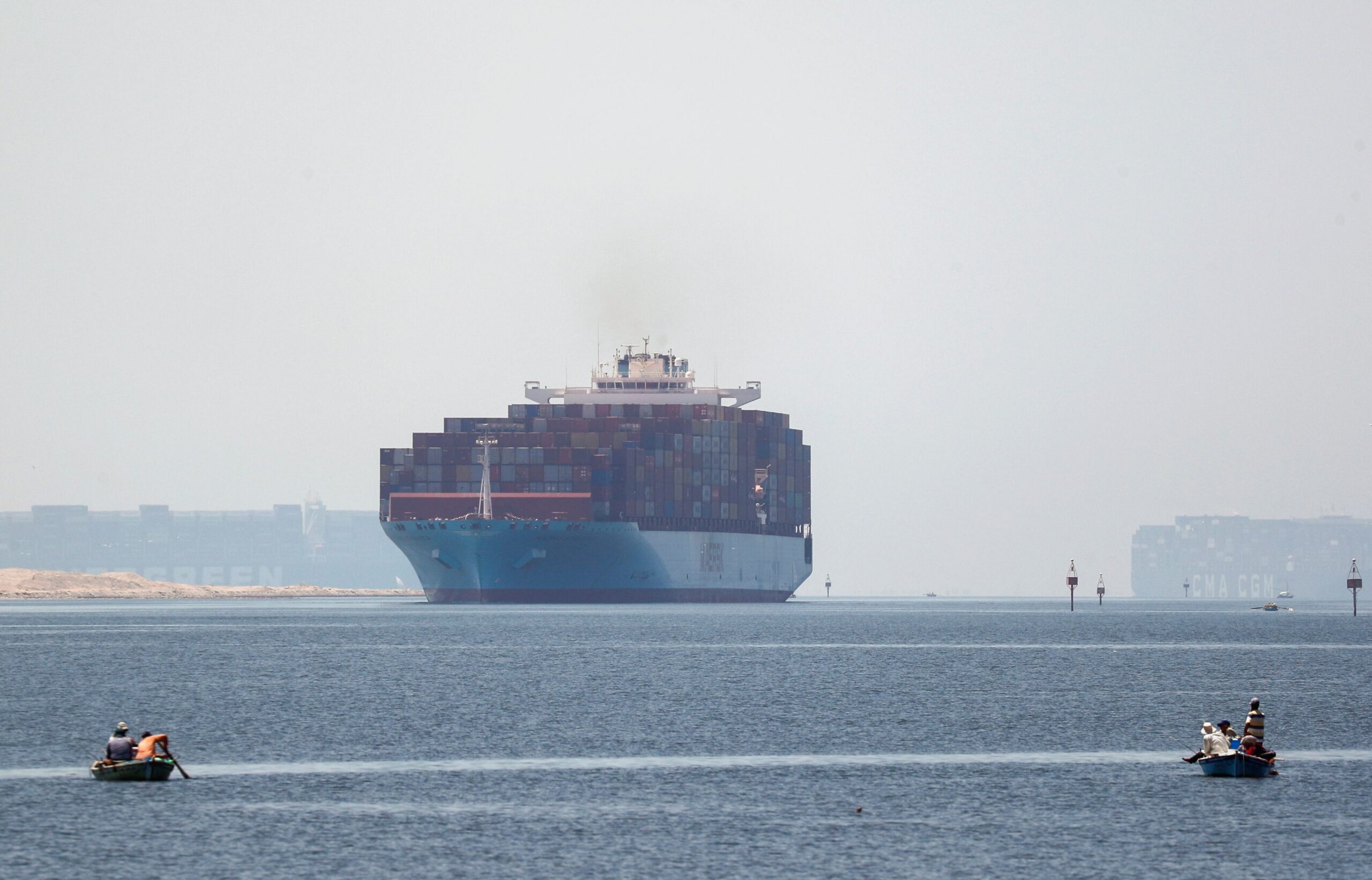
The Suez Canal, a vital maritime passage that significantly reduces transit times between Europe and Asia, has witnessed the rerouting of 47 vessels from the Cape of Good Hope since the beginning of February, according to Osama Rabie, chairman of the Suez Canal Authority. The adjustment signals a gradual realignment in global shipping patterns following months of disruption in the Red Sea.
The instability, driven by attacks on commercial vessels by Iran-backed Houthi militants, has led to significant diversions from the Suez Canal, with shipping companies opting for the much longer and costlier route around the African continent. However, Rabie has maintained that the Red Sea crisis has not provided a viable long-term alternative to the canal, citing recent indications that regional stability is returning.
The sustained volatility in the Red Sea, exacerbated by geopolitical tensions, has had severe economic repercussions, particularly for Egypt, which heavily depends on revenue generated from the Suez Canal. Egyptian President Abdel Fattah al-Sisi previously estimated that disruptions in maritime traffic could result in a loss of approximately $7 billion in canal revenue for 2024. This economic setback underscores the canal’s centrality to global trade and Egypt’s economy.
The Suez Canal, linking the Mediterranean and Red Seas, remains one of the most crucial arteries of global trade, facilitating the transit of an estimated 12% of worldwide trade volume. Despite recent disruptions, the canal’s ability to provide a shorter and more efficient shipping route than alternatives remains unparalleled, with major shipping firms closely monitoring developments in the region as they reassess their logistical strategies.
The recent rerouting of vessels to the Suez Canal suggests that some shipping operators are regaining confidence in the security of the passage. Nevertheless, the broader outlook for maritime trade in the region hinges on continued efforts to mitigate risks and ensure the safety of commercial navigation in the Red Sea.
For further updates on maritime trade and economic developments in Africa, visit The Southern African Times.