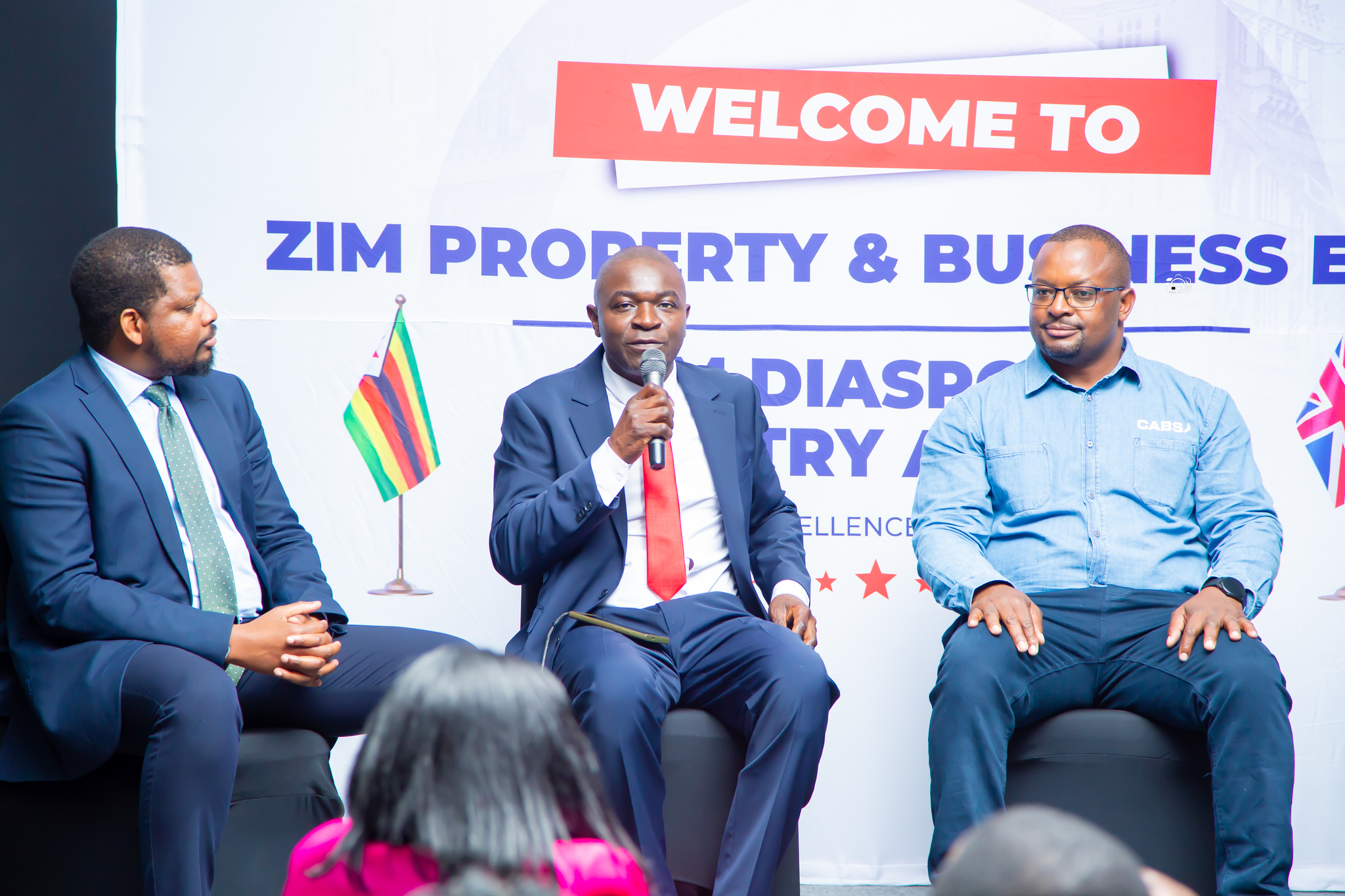
The Zimbabwe Property & Business Investment Expo 2025, held at the Village Hotel Solihull in Birmingham, provided fertile ground for a frank and at times animated discussion on the investment landscape confronting the Zimbabwean diaspora. While the programme ranged across agriculture, legal frameworks, and broader diaspora engagement, it was the intervention by Old Mutual that generated the most substantive debate, with its executives fielding probing questions on mortgages, portfolio construction, and risk management.
For many diaspora investors, the memory of past financial turbulence remains fresh. Episodes of asset erosion, currency volatility, and shifting policy environments have left a residue of scepticism towards long-term capital deployment into Zimbabwe. This legacy of post-investment anxieties was palpable in the room, with audience members interrogating Old Mutual on whether current offers were sufficiently resilient to withstand future shocks.
Old Mutual sought to distinguish its market positioning by presenting itself as a reliable counterparty with an unmatched footprint in Zimbabwe’s financial services sector. Executives emphasised the group’s longevity, diversified product suite, and ongoing expansion as evidence of its institutional stability. In their words, Old Mutual has weathered Zimbabwe’s market cycles before, and the breadth of its instruments enables it to manage exposures dynamically.



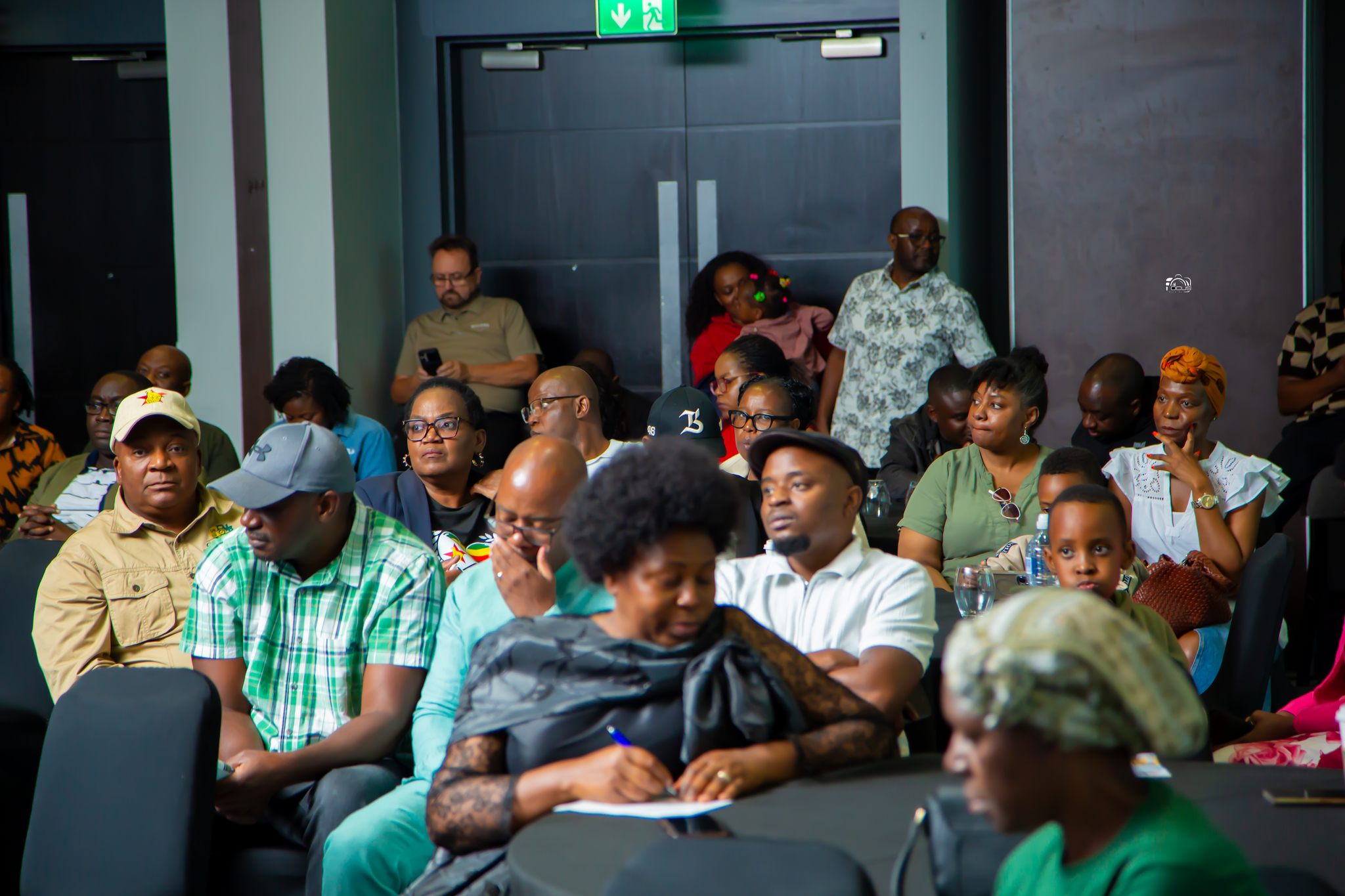
Central to the presentation was the notion of diversification as a hedge against uncertainty. Old Mutual set out three tiers of portfolio construction: a fixed-income offering anchored in corporate bonds, microfinance placements, and commercial paper; a balanced structure incorporating equities and alternative instruments; and an aggressive allocation designed to capture higher returns through structured debt and property exposure. The segmentation was presented not merely as a theoretical model but as a pragmatic framework designed to absorb market volatility.
By situating these products within a consolidated financial services group, Old Mutual sought to demonstrate operational integration spanning insurance, asset management, and mortgage financing, thereby offering diaspora clients a single platform through which to allocate capital across asset classes. The implicit argument was that a diversified institutional balance sheet mitigates idiosyncratic shocks and provides continuity of service even in stressed environments.


Perhaps most closely scrutinised were Old Mutual’s mortgage products. Diaspora delegates highlighted longstanding concerns about the tenor of facilities on offer, many of which have historically been limited to five-year maturities. Executives responded by acknowledging these reservations and outlining their intention to extend mortgage horizons beyond the prevailing benchmark. They further noted that current interest rate structures, while reflective of Zimbabwe’s domestic market realities, were being reviewed with a view to crafting a diaspora-specific product more sensitive to offshore investor needs.

This willingness to concede shortcomings while signalling reform was well received. The diaspora’s appetite for mortgage finance is clear, but so too is its demand for instruments that recognise the unique income streams and remittance patterns of those based abroad. Participants noted that it is not enough to replicate the domestic market offer, and that the diaspora requires tailored solutions that reflect its financial context.
The presentation was underpinned by references to risk-adjusted returns, asset class correlation, and capital preservation strategies. Yet what resonated most was the translation of this jargon into practical assurances. Old Mutual stressed that its insurance products provide both counterparty comfort for lenders and personal security for borrowers, thereby creating what it termed a dual peace of mind. Equally, the insistence on progressive steps—the idea that diaspora investors need not await an ideal macroeconomic environment but can enter the market incrementally—struck a chord. In a market where hesitation has too often delayed capital inflows, Old Mutual’s message was that engagement today, however modest, is preferable to indefinite deferral.

The robustness of the session was reflected in diaspora feedback. Matthew Sithole, a UK-based professional, remarked afterwards: “What impressed me was less the sales pitch and more the fact they were willing to listen. I learnt a great deal about their offer, and I am now seriously considering purchasing a stand through Old Mutual.” His comment underscored a key outcome of the day—that engagement, when combined with transparency, can begin to rebuild trust in Zimbabwe’s financial sector.

Recordings from the session highlighted recurrent themes: the need for risk mitigation, the importance of extended mortgage horizons, the relevance of tailored diaspora products, and the imperative of institutional resilience in the face of economic shocks. While scepticism remains, the discourse was notably more constructive than in years past, suggesting that Old Mutual’s first formal entry into this diaspora-focused space may have succeeded in shifting perceptions.
The event did not mark the end of the conversation but rather its beginning. For Old Mutual, the challenge now lies in translating assurances into demonstrable products, and in maintaining an open channel with diaspora investors who will expect not merely words but delivery. The Expo showed that the diaspora remains willing to engage, provided it is met with candour, innovation, and structures calibrated to its realities. At Solihull, Old Mutual may not have dispelled all anxieties, but it did succeed in repositioning itself as a credible partner for diaspora capital. In a market long in need of trust and transparency, that may prove its most valuable currency of all.