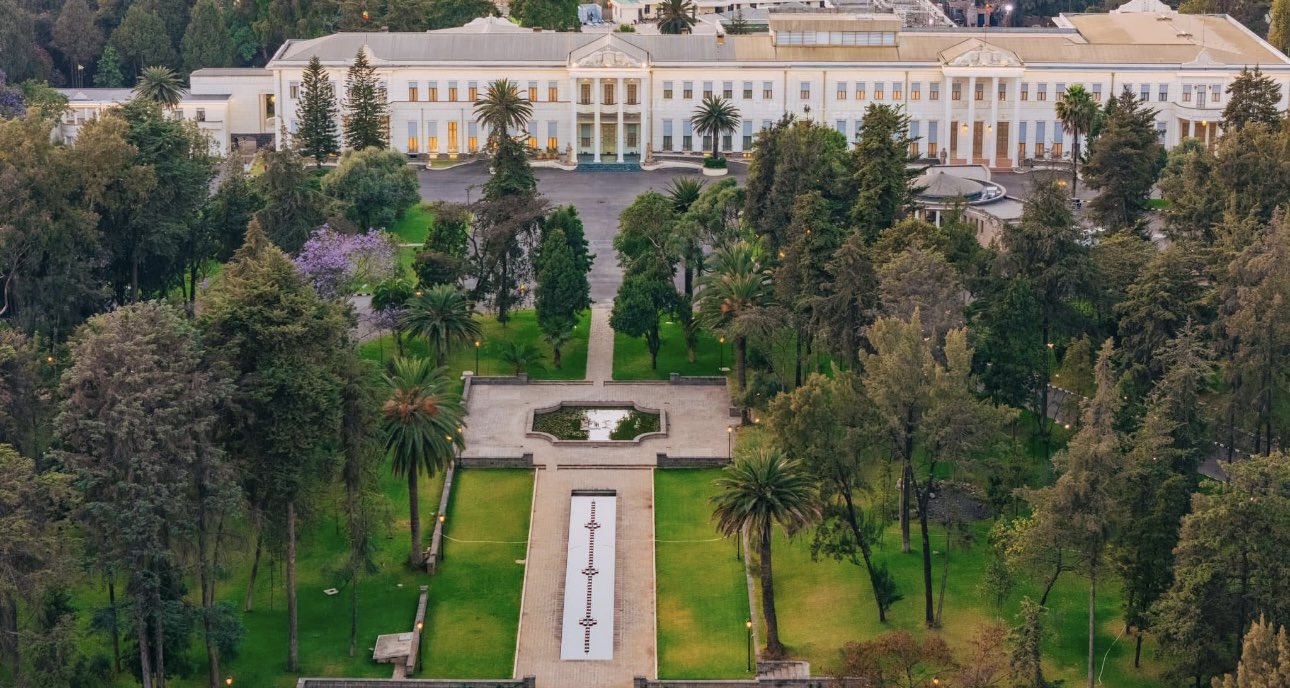
Ethiopia has unveiled the meticulously restored National Palace in a grand ceremony celebrating the legacy of Emperor Haile Selassie and the nation’s enduring commitment to Pan-African ideals. Prime Minister Abiy Ahmed spearheaded the $25 million restoration, transforming the historic structure into a public museum that now chronicles Ethiopia’s governance, diplomacy, and cultural heritage. This ambitious project, supported by international partnerships, stands as a testament to Ethiopia’s resilience and progressive vision.
President Taye Atske-Selassie, addressing the attendees at the inauguration, described the restored palace as both an architectural masterpiece and a repository of Ethiopia’s illustrious history. The building’s evolution mirrors the nation’s trajectory—from a beacon of imperial grandeur under Emperor Haile Selassie to a venue for pivotal diplomatic engagements during Africa’s struggle against colonialism. Its reopening as a museum marks a new chapter, offering the public an opportunity to connect with Ethiopia’s historical and diplomatic narratives.
Originally conceived during Emperor Haile Selassie’s reign, the palace was heavily influenced by Western architectural styles, reflecting his vision of modernity. However, its significance extends far beyond its physical design. During the mid-20th century, it became a focal point for African leaders united in the fight against colonialism. It served as a meeting place for visionaries such as Guinea’s President Sékou Touré, symbolising Ethiopia’s role as a vanguard of African independence and solidarity. The palace thus came to embody the hopes of a continent striving for unity and self-determination.



The restoration project, overseen by the Ethiopian government under Prime Minister Abiy Ahmed’s administration, underscores a commitment to preserving Ethiopia’s historical and cultural legacy. By repurposing the National Palace as a museum, the initiative aims to make Ethiopia’s rich past accessible to both its citizens and the global community. Visitors can now explore exhibits that highlight the country’s governance structures, its engagement in international diplomacy, and the enduring relevance of its Pan-African aspirations.
President Taye praised the French government and President Emmanuel Macron for their substantial contributions to the restoration effort. France’s involvement reflects a broader partnership between the two nations, enhancing cultural and diplomatic ties. This collaboration also underscores the importance of international cooperation in preserving historical landmarks that hold global significance. The National Palace now stands as a symbol of Ethiopian resilience and a model for future restoration projects across the continent.
The unveiling of the National Palace Museum aligns with Ethiopia’s broader cultural initiatives, including the celebrated Unity Park. These projects aim to highlight the nation’s artistry, resilience, and progressive aspirations. The restoration also complements ongoing endeavours such as the Chaka project, further cementing Ethiopia’s reputation as a leader in heritage conservation and modernisation.
The restored palace is not merely a historical site but also a platform for fostering unity and education. Its transformation into a museum reflects Ethiopia’s dedication to sharing its multifaceted history with future generations. From its early role in shaping diplomatic dialogues during the decolonisation era to its current incarnation as a public institution, the National Palace symbolises Ethiopia’s journey of self-reliance and leadership.
The palace’s significance resonates deeply within the context of Pan-Africanism. Ethiopia’s unique position as a nation that resisted colonisation and supported Africa’s independence movements is intricately tied to the legacy of Emperor Haile Selassie. The restoration project pays homage to this legacy, showcasing the palace’s role as a hub for collaboration among African leaders. It also serves as a reminder of Ethiopia’s enduring contributions to the continent’s quest for unity and progress.
The inauguration of the National Palace Museum comes at a time when Ethiopia is striving to balance its historical identity with its contemporary aspirations. By embracing projects that honour its past while looking towards the future, the nation sets a precedent for how cultural heritage can inspire modern development. The palace’s restoration is a tangible representation of this philosophy, blending historical preservation with public accessibility and international cooperation.
Prime Minister Abiy Ahmed’s leadership in this endeavour has drawn widespread acclaim. His dedication to preserving Ethiopia’s cultural and historical assets aligns with his broader vision for national development. By restoring the National Palace, the government has not only safeguarded an important historical landmark but also created a space for education, reflection, and dialogue. The museum now stands as a bridge between Ethiopia’s past and its ambitions for the future.
Acknowledging the contributions of international partners such as France further highlights the collaborative spirit underlying the project. This partnership extends beyond the restoration itself, symbolising a shared commitment to cultural preservation and mutual understanding. As Ethiopia continues to position itself as a leader in heritage conservation, the National Palace serves as a beacon of what can be achieved through visionary leadership and global cooperation.

The restoration of the National Palace is also a celebration of Ethiopia’s artistic and architectural heritage. The meticulous work involved in preserving the palace’s original features while adapting it for its new role as a museum demonstrates a deep respect for the past. This approach ensures that the palace remains not only a historical monument but also a living testament to Ethiopia’s resilience and creativity.
In its new role, the National Palace Museum offers a platform for educating visitors about Ethiopia’s rich history and its pivotal role in shaping African and global narratives. By opening its doors to the public, the museum invites Ethiopians and international audiences alike to engage with the stories that define the nation’s identity. It also underscores the importance of preserving cultural landmarks as sources of inspiration and pride.
The National Palace stands as a model for future projects that seek to honour the past while embracing the future. Its restoration is a testament to Ethiopia’s enduring commitment to its heritage, its people, and its place on the global stage. By celebrating its history through initiatives like the National Palace Museum, Ethiopia continues to inspire a vision of progress rooted in respect for tradition and collaboration.