
Wednesday, November 11, 2026
  • Login
The Southern African Times
  • Home
  • Southern Africa
  • Business
    • African Start ups
    • African Continental Free Trade Area
  • Technology
    • Lifestyle
      • Health
      • Culture
      • Food and Drink
      • Entertainment
  • Opinion
  • Sports
  • SAT Jobs
    • Events
  • About Us
    • Advertise with Us
    • Contact Us
No Result
View All Result
The Southern African Times
No Result
View All Result
Home Environment

Zimbabwe elephants died from bacterial disease, say experts

by Farai Muvuti
September 29, 2020
in Environment, in Southern Africa, Just In, Zimbabwe
0
Zimbabwe elephants died from bacterial disease, say experts

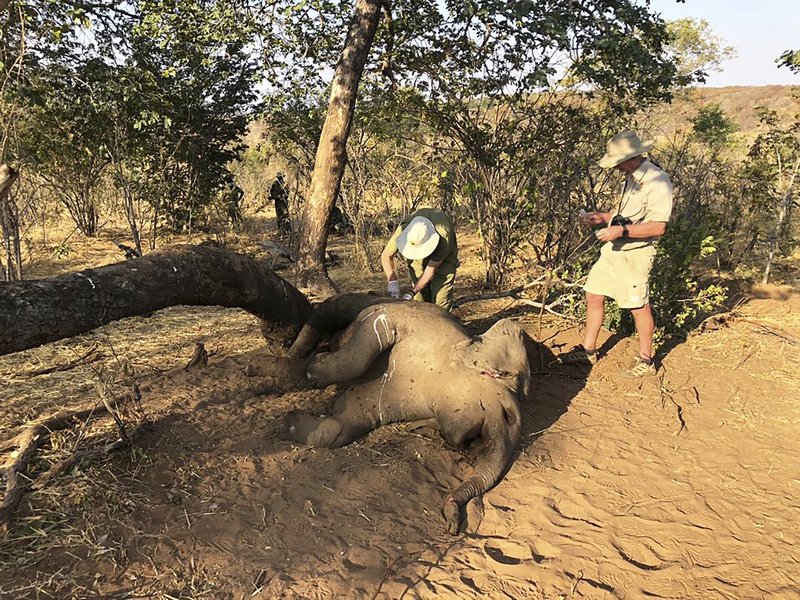
HARARE, Zimbabwe (The Southern African Times) — Parks authorities in Zimbabwe said Monday that the recent deaths of elephants have been caused by a bacterial disease that has previously affected elephants in Asia and other animals in southern Africa, although more tests will still be carried out.

Fulton Mangwanya, the director-general of the Zimbabwe Parks and Wildlife Management Authority, told a parliamentary committee that 34 elephants have died so far and “many” more could still die “in the short term.” 

“All results to date point to the cause of these elephant deaths being a disease known as hemorrhagic septicemia,” said Mangwanya, noting that the disease does not appear to have been previously recorded as causing deaths among Africa’s savannah elephants.


ADVERTISEMENT

However, it has been reported to kill Asian elephants in India. It has also affected cattle, pigs, and chickens in southern Africa in which it can cause massive mortality. It has also been recognized in buffalo and some other wildlife species in this part of this world,” he said.

He said the disease “may have been around in elephants in this region for some time,” pointing to specimens from two dead elephants from the vast Hwange National Park in 2019 that showed “the same microscopic pathology,” although a definitive diagnosis could not be made at that time.

Most of the elephants that died recently in the Pandamasue Forest, located between Hwange National Park and Victoria Falls, were weak or young, mostly under 15 years old.

The dead elephants were found with their tusks still on their bodies, ruling out poaching. In recent years poachers in Zimbabwe have poisoned dozens of elephants with cyanide and then have taken their ivory tusks to sell them to illegal traders.

The parks authorities also said toxic water was an unlikely cause because the country has been pumping “clean water” from wells during this dry season.

To eliminate other causes, blood samples have been sent to the United Kingdom, while other samples will be sent to the United States and neighboring South Africa for further testing, said Mangwanya.

Not enough information is known about the disease’s effect on local elephants to predict a long-term outcome, he said.

“It is unlikely that this disease alone will have any serious overall impact,” on the survival of the southern African country’s booming elephant population, said Mangwanya.

“Yes they die, but honestly this is just nothing, a drop in the ocean because we have over 84,000 elephants in Zimbabwe, which is overpopulation already,” he said. “But this is a disease that we should work seriously to make sure that we unearth and identify properly so that corrective measures are taken,” said Mangwanya.

In neighboring Botswana, home to the world’s largest population of the pachyderms, the government last week said the sudden deaths of some 330 elephants in the northwestern region of the country earlier this year may have occurred because they drank water contaminated by toxic blue-green algae.

Mangwanya said the recent elephant deaths in Zimbabwe also showed that the animals experienced “extremely sudden death,” and that Botswana might need to conduct tests to find out if it’s not the same bacterial infection being experienced in Zimbabwe.

Previous Post

UN: Africa lost $800B in illegal transfers in recent years

Next Post

Togo’s president appoints first Female Prime Minister

Farai Muvuti

Related Posts

Southern Africa steps up preparations for potentially severe El Niño season
Economy

Southern Africa steps up preparations for potentially severe El Niño season

by Times Reporter
October 27, 2026
Ramaphosa Renews Call for Unconditional Lifting of Sanctions on Zimbabwe
in Southern Africa

Ramaphosa Renews Call for Unconditional Lifting of Sanctions on Zimbabwe

by Times Reporter
October 27, 2026
Botswana Secures $503.75 Million AfDB Loan for Economic Reforms
Botswana

Botswana Secures $503.75 Million AfDB Loan for Economic Reforms

by Times Reporter
October 27, 2026
Harare closes Africa Skills Week with a call to turn continental strategy into national practice
in Southern Africa

Harare closes Africa Skills Week with a call to turn continental strategy into national practice

by Times Reporter
October 19, 2026
South Africa to Open National Payments System to Retailers, Telecoms and Fintechs in 2027
in Southern Africa

South Africa to Open National Payments System to Retailers, Telecoms and Fintechs in 2027

by Times Reporter
October 19, 2026
Next Post
Togo’s president appoints first Female Prime Minister

Togo's president appoints first Female Prime Minister

Browse by Category

  • Africa AI
  • African Continental Free Trade Area
  • African Debt
  • African Start ups
  • Agriculture
  • AI Africa
  • Algeria
  • All News
  • Analysis
  • Angola
  • Arts / Culture
  • Asia
  • Botswana
  • BOTSWANA
  • BREAKING NEWS
  • BRICS
  • Burkina Faso
  • Burundi
  • Business
  • Business
  • Business Wire
  • Cameroon
  • Central Africa
  • Chad
  • China
  • Climate Change
  • Climate Changev
  • Community
  • Congo Republic
  • Conservation
  • Côte d’Ivoire
  • COVID 19
  • CRYPTOCURRENCY
  • Culture
  • Democratic Republic of Congo
  • Diplomacy
  • Eastern Africa
  • Economic Development
  • Economy
  • Education
  • Egypt
  • Elections 2024
  • Energy
  • Entertainment
  • Environment
  • Eritrea
  • Ethiopia
  • Europe
  • Fashion
  • Feature
  • Finance
  • Financial Inclusion
  • Food
  • Food and Drink
  • Foods
  • GABON
  • Ghana
  • Global
  • Global Africa
  • Guinea
  • Health
  • Humanitarian Aid
  • Immigration
  • in Southern Africa
  • International news
  • International Relations
  • Investment
  • Ivory Coast
  • Just In
  • Kenya
  • Lesotho
  • Libya
  • Life Style
  • Lifestyle
  • Literature
  • Malawi
  • Malawi
  • Mali
  • Markets
  • Mauritius
  • Middle East
  • Mining in Africa
  • Morocco
  • Mozambique
  • Namibia
  • Niger
  • niger
  • Nigeria
  • North Africa
  • North-Eastern Africa
  • Obituaries
  • Obituary
  • Opinion
  • PARTNER CONTENT
  • Politics
  • Property
  • Racism
  • Rwanda
  • Rwanda
  • SADC
  • SAT Interviews
  • SAT Investigation
  • SAT Jobs
  • Saudi Arabia
  • Senegal
  • Seychelles
  • Somaliland
  • South Africa
  • South Sudan
  • Sports
  • Startup Africa
  • STOCK EXCHANGE
  • Sudan
  • Sustainability
  • Sustainablity
  • Tanzania
  • Technology
  • Telecommunications
  • The Editorial Board
  • The Power Of She
  • Togo
  • Trade
  • Travel
  • Travel
  • Tunisia
  • Uganda
  • Uncategorized
  • Wealth
  • West Africa
  • World
  • World
  • ZAMBIA
  • Zambia
  • Zimbabwe
  • ZIMBABWE

Browse by Tags

#NewsUpdate #SouthAfrica #SouthernAfricanTimes #TheSouthernAfricanTimes AfCFTA africa African Continental Free Trade Area African development African economies African economy African Union Agriculture Angola Botswana China Climate change critical minerals Cyril Ramaphosa Economic Development economic growth energy transition industrialisation Inflation Infrastructure Infrastructure Development International relations Investment Kenya Mining Mozambique Namibia news Nigeria Regional Integration renewable energy Rwanda SADC South Africa Southern Africa Southern African Times sustainable development Tanzania west africa Zambia Zimbabwe
ADVERTISEMENT

WHO WE ARE

The Southern African Times is a regional bloc digital newspaper that covers Southern African and world news. The paper also gives a nuanced analysis on news and covers a wide range of reporting which include sports, entertainment, foreign affairs, arts and culture.

Welcome Back!

Login to your account below

Forgotten Password?

Retrieve your password

Please enter your username or email address to reset your password.

Log In
  • Home
  • Southern Africa
  • Business
    • African Start ups
    • African Continental Free Trade Area
  • Technology
    • Lifestyle
      • Health
      • Culture
      • Food and Drink
      • Entertainment
  • Opinion
  • Sports
  • SAT Jobs
    • Events
  • About Us
    • Advertise with Us
    • Contact Us