In a decisive step towards consolidating access to education, the Zambian government is advancing efforts to legislate its free education policy. Minister of Education Douglas Syakalima confirmed this week that amendments to the current Education Act have been proposed to ensure legal backing for free education from early childhood to the end of secondary school.
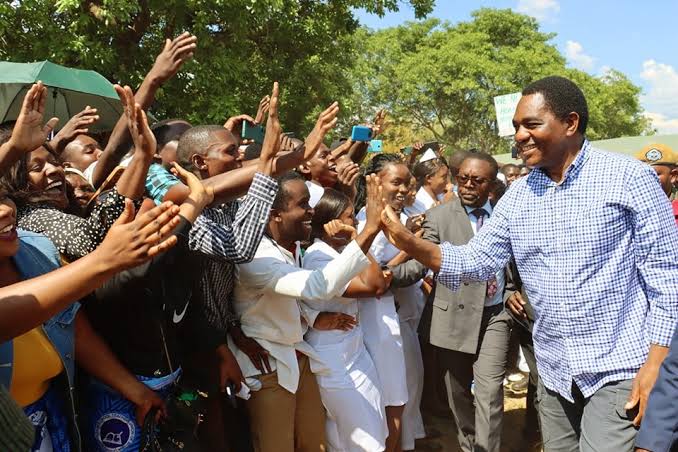
Speaking during a meeting with the Educational Association for Quality Assurance in Zambia (EAQAZ) and representatives from tertiary institutions, Syakalima stated that the proposed reforms aim to institutionalise the policy that was first rolled out in 2022. Since its introduction, the policy has led to a significant increase in school enrolments across the country. According to President Hakainde Hichilema, more than 2.3 million children had returned to school by October 2025. This surge reflects both the latent demand for education and the socio-economic barriers previously imposed by school fees.
While the proposed legislation has been widely welcomed, including by EAQAZ President Chilao Mutesa, government officials remain acutely aware of the importance of maintaining education quality alongside access. “We have seen the massive benefits brought by free education and we want to ensure this policy is anchored in law,” Syakalima affirmed.


The decision to codify the free education policy emerges not only as a national milestone but also as part of a broader regional aspiration for equitable development. Education remains a foundational pillar for sustainable development across the continent. In Zambia’s case, the policy aligns with both the African Union’s Agenda 2063 and the United Nations Sustainable Development Goal 4, which calls for inclusive and equitable quality education for all.
Despite budgetary pressures and logistical challenges associated with rapid enrolment growth, Zambia’s approach underscores a critical shift from donor-dependent frameworks to more home-grown policies rooted in the country’s constitutional aspirations. While debates around financing and infrastructure persist, the policy reflects an evolving understanding of education not as a commodity but as a public good with intrinsic value for social transformation.
Unlike externally imposed models that often centre foreign benchmarks, Zambia’s initiative represents a recalibration of education policy grounded in local realities. The country’s experience echoes similar initiatives in Ghana and Kenya, where free education reforms have had mixed but instructive outcomes.
President Hichilema has consistently framed education as a driver of both personal and national development. His government’s efforts to shift the policy from political promise to constitutional guarantee is widely seen as an attempt to insulate it from future policy reversals. According to the Zambian Ministry of Education, legal enshrinement will also strengthen oversight and accountability mechanisms, particularly around resource allocation and teacher deployment.
As the region grapples with persistent inequalities in access to quality education, Zambia’s policy trajectory offers both a case study and a call for deeper continental dialogue. Central to that dialogue must be a recognition of the structural legacies that have shaped education systems in Africa and the need to move beyond imported paradigms. By embedding free education into law, Zambia is not merely fulfilling a campaign pledge. It is reaffirming the principle that the right to education is not contingent on affordability.
Whether the legislative process can maintain the same momentum as the initial policy rollout remains to be seen. However, what is clear is that this initiative reflects a significant shift in political will to reimagine access to education through an African-centric lens — one that places dignity, equity and inclusion at the core of national development.