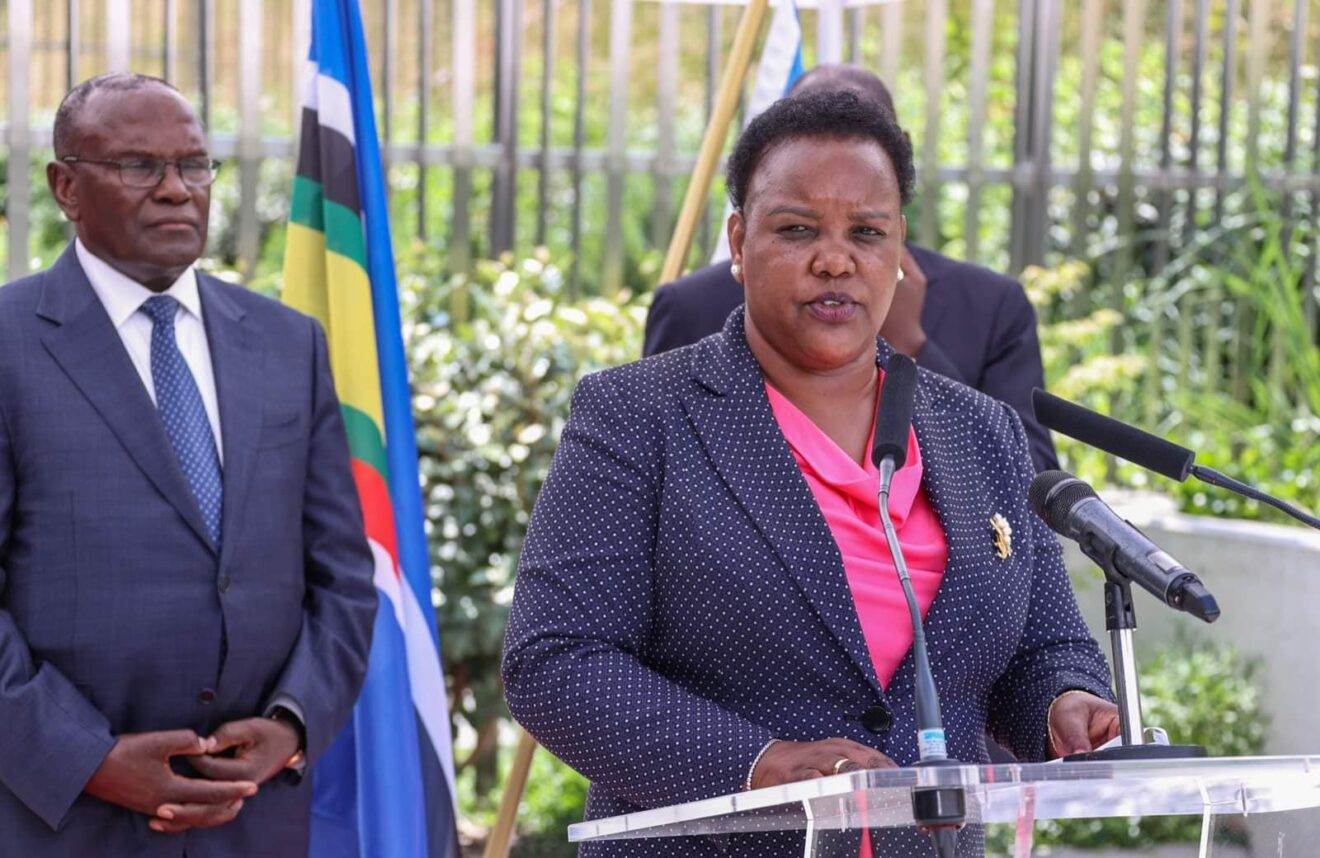
Kenya launched its National Plan of Action on Trafficking in Persons on Friday. Florence Bore, the cabinet secretary in the Ministry for Labor and Social Protection, unveiled the action plan in Nairobi, outlining its key pillars of prevention, protection, prosecution, and partnerships to address the pervasive issue.
The comprehensive plan aims to guide stakeholders in planning, implementing, and monitoring human trafficking strategies and interventions across the country. Government data revealed that women accounted for 41 percent of trafficking cases, children for 33 percent, and men for 26 percent. Notably, trafficking for labor constituted a staggering 96 percent of all trafficking cases in 2022, as reported by the state-owned National Crime Research Center.
The plan focuses on addressing both external trafficking in persons (64.7 percent) and domestic trafficking (35.3 percent). One of its critical aspects is enhancing the capacity of law enforcement officers through intelligence-led investigations to ensure the successful prosecution of offenders.




Moreover, the plan seeks to conduct a national mapping exercise to identify existing support services available for trafficked persons. This initiative aims to establish a minimum standard of care for victims of human trafficking, providing them with the necessary assistance and protection.
Additionally, the plan emphasizes the development of international cooperation mechanisms to facilitate joint investigations and combat transnational human trafficking.
Kenya’s commitment to implementing this comprehensive action plan signifies a significant step forward in the fight against human trafficking, as the nation stands united to protect its citizens from this grave injustice.