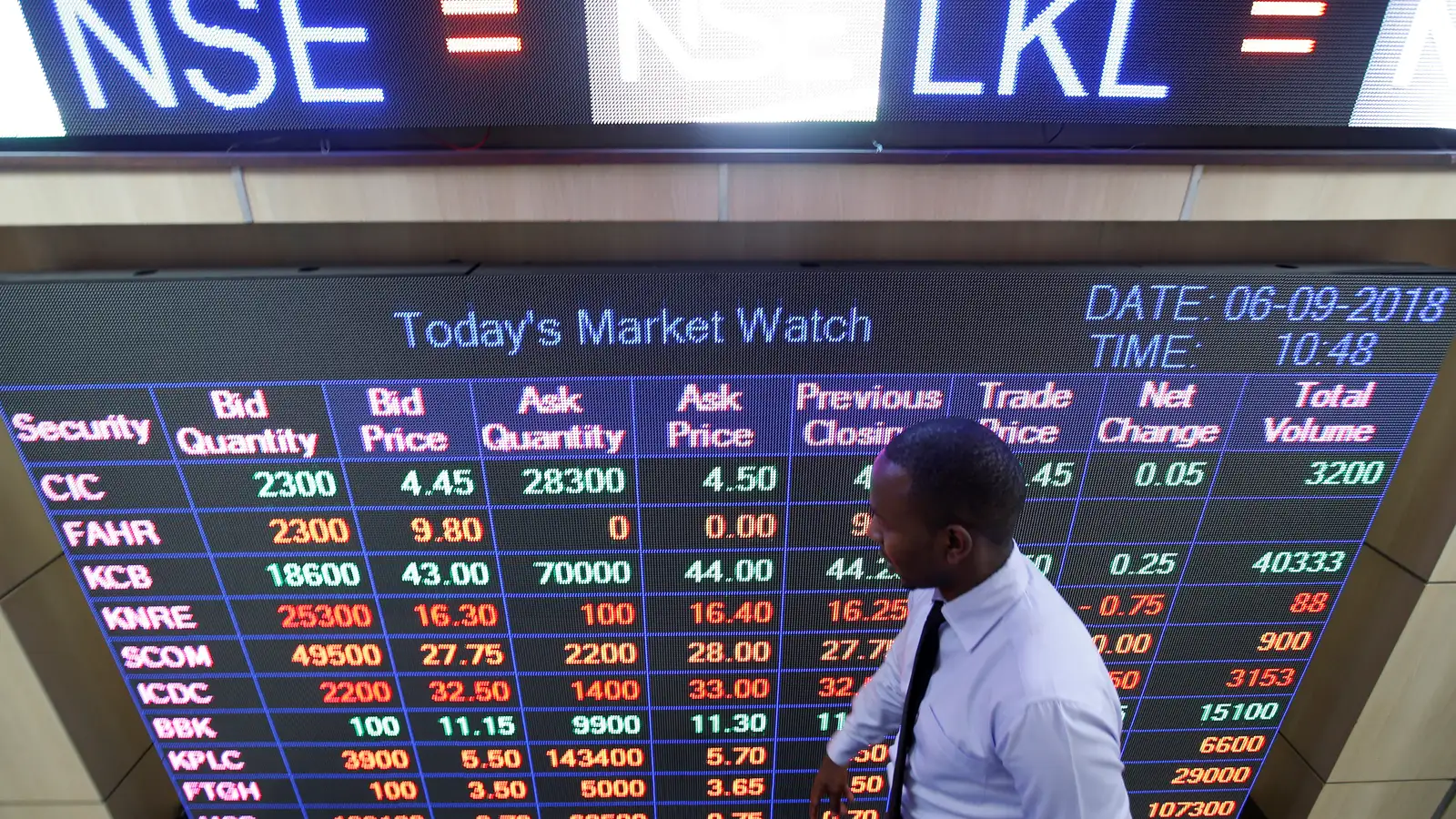
Kenya’s stock market is in a slump as foreign investors continue to withdraw their investments. The Nairobi Securities Exchange (NSE), the country’s biggest bourse and only such institution, recorded a six-year low of 30.1% in foreign investment in March 2023. Local investors are keeping it afloat, but the country’s economic challenges are taking a toll on its stock market.
In 2022, foreign investors pulled out $170 million from the Kenyan stock market, citing escalating global risks. This led to a plunge in share prices of NSE-listed firms, particularly commercial banks. Telecom major Safaricom, NSE’s biggest scrip by average capitalization, lost 36.4% of its value, adding to foreign investors’ fears. Top performers like Equity Bank, Kenya Commercial Bank, and Co-operative Bank of Kenya also recorded share price devaluation.
The COVID-19 pandemic has had a significant impact on Kenya’s economy, and the country’s stock market has not been immune. Between January and September 2022, Kenyan investors lost $6.37 billion as NSE-listed firms’ share values plunged 28%. A reduced appetite for Africa’s capital markets following a hike in interest rates in developed markets, such as the US, triggered this. As a result, central banks in African countries were forced to adjust interest rates upwards amid weakening local currencies and rampant inflation.



Furthermore, Kenya has been facing a limited supply of dollars since the pandemic. The result is a problem that is directly affecting the livelihoods of millions of Kenyans. Coupled with other economic challenges, the dollar shortage has primarily stalled companies’ expansion prospects, heightening the ever-present threat of job losses and financial insecurity.
The Kenyan shilling has been losing value against the US dollar and other major global currencies. The shilling has lost over 37% of its value against the dollar in the past five years, and there is no sign of its recovery anytime soon. This has further compounded the country’s economic problems.

Kenya has also faced droughts, food insecurity, and rising inflation. Russia’s invasion of Ukraine caused a global fuel price hike, further increasing the cost of living. All these factors combined have made it challenging for Kenya to attract foreign investment in its stock market.
The Kenyan government has been taking measures to mitigate the economic crisis. In 2022, it raised its debt ceiling to Ksh9 trillion ($81 billion), which allowed it to borrow more to support its economy. Additionally, the government has been working on several initiatives to attract foreign investment, including providing tax incentives to foreign investors and streamlining the process of setting up businesses in the country.
Despite these efforts, the country’s stock market continues to struggle, and the future remains uncertain. The lack of foreign investment in the stock market is a significant concern, as it limits the country’s ability to raise capital and grow its economy.
In conclusion, Kenya’s stock market is in a slump, and the country’s economic challenges are taking a toll on its performance. Foreign investors continue to withdraw their investments, and the lack of foreign investment in the stock market is a significant concern. While the government has been taking measures to mitigate the economic crisis, the future remains uncertain. The Kenyan economy needs to stabilize to attract foreign investment and grow its stock market.