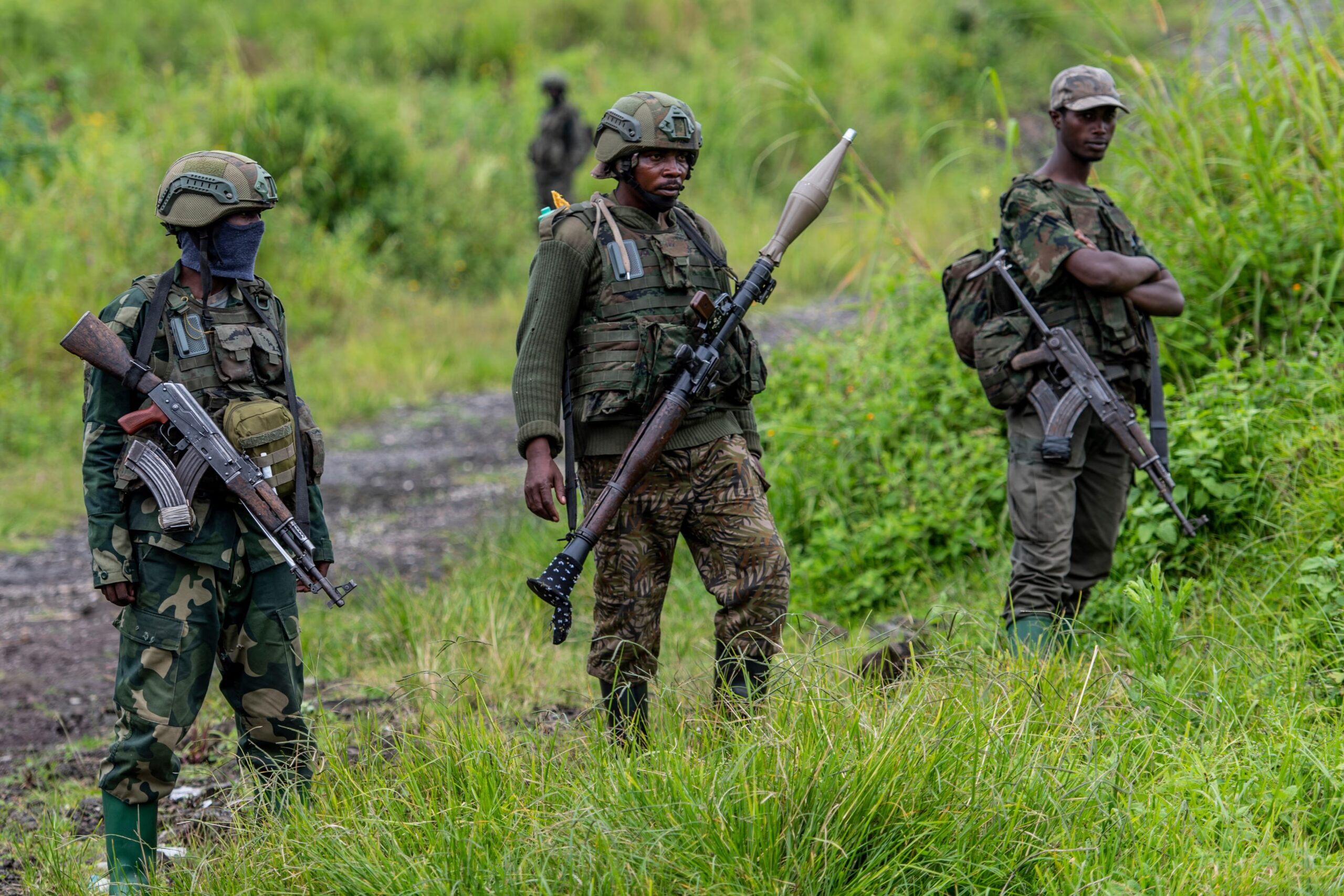
Tensions have intensified once again in eastern Democratic Republic of the Congo as the Congolese armed forces and the March 23 Movement (M23) rebel group accused one another of violating a recently brokered ceasefire. The accusations come in the wake of renewed clashes in South Kivu Province, threatening both the fragile peace framework signed last month and the humanitarian conditions on the ground.
On Tuesday, spokesperson for the Armed Forces of the Democratic Republic of the Congo, Colonel Sylvain Ekenge, issued a public statement condemning what he described as a “series of coordinated assaults” by the M23 on national army positions in South Kivu. He asserted that several strategic locations, including parts of the provincial capital Bukavu, had been overrun by M23 fighters.
In response, M23 spokesperson Lawrence Kanyuka alleged that the Congolese army had initiated “widespread and indiscriminate attacks” across frontline positions, including the densely populated town of Kamanyola. According to Kanyuka, at least three civilians were killed and five others injured in air or artillery strikes carried out by government forces. These claims could not be independently verified at the time of publication, but United Nations observers on the ground confirmed that heavy exchanges of fire had erupted on multiple fronts early Tuesday.


The resurgence of hostilities stands in stark contrast to the confidence-building measures outlined in the November framework agreement between the M23 and the Congolese government. The accord, mediated by regional stakeholders and supported by international partners, sought to establish a sustainable roadmap towards a full ceasefire and the reintegration of rebel elements into political processes. It followed the earlier diplomatic commitment made in June, signed by the foreign ministers of the Democratic Republic of the Congo and Rwanda, and due to be formally endorsed this Thursday in the United States by Presidents Félix Tshisekedi and Paul Kagame.
Colonel Ekenge maintained that the latest attacks were intended to “sabotage the peace agreements” and described the M23’s operations as part of a “coalition of instability.” His statement also noted that the Congolese military was taking “all necessary measures” to neutralise the threat and restore order.
Meanwhile, the M23, which has long claimed to represent the interests of marginalised Congolese Tutsi communities, has gained renewed momentum since its resurgence in late 2021. The group, which had been largely dormant following a 2013 peace deal, re-emerged against the backdrop of rising regional tensions and political fragmentation. The government in Kinshasa continues to accuse neighbouring Rwanda of supporting the rebels with logistical and military backing, an allegation that Kigali has repeatedly denied.
The African Union and the East African Community have both reiterated the need for dialogue, underscoring that only a political solution can bring lasting stability to the Great Lakes region. Analysts have pointed out that a purely militarised response may risk further displacement and loss of life in an area already struggling with humanitarian emergencies, including food insecurity and mass internal displacement. According to the United Nations Office for the Coordination of Humanitarian Affairs (OCHA), South Kivu alone hosts hundreds of thousands of internally displaced persons, many of whom now face renewed threats to their safety and wellbeing.
As the conflict continues to evolve, there is a growing call among pan African actors to resist framing the crisis through external narratives that often overlook the historical complexity and local agency at play. Rather than viewing the eastern DRC’s instability solely through the prism of resource conflict or foreign interference, local civil society groups have urged international partners to support homegrown peacebuilding mechanisms that centre affected communities.

With President Tshisekedi and President Kagame expected to meet in Washington this week, attention now turns to whether the diplomatic track can prevent further escalation. The road to peace remains uncertain, but stakeholders across the continent are watching closely, hopeful that sustained African leadership and inclusive political processes can pave the way for an enduring resolution.