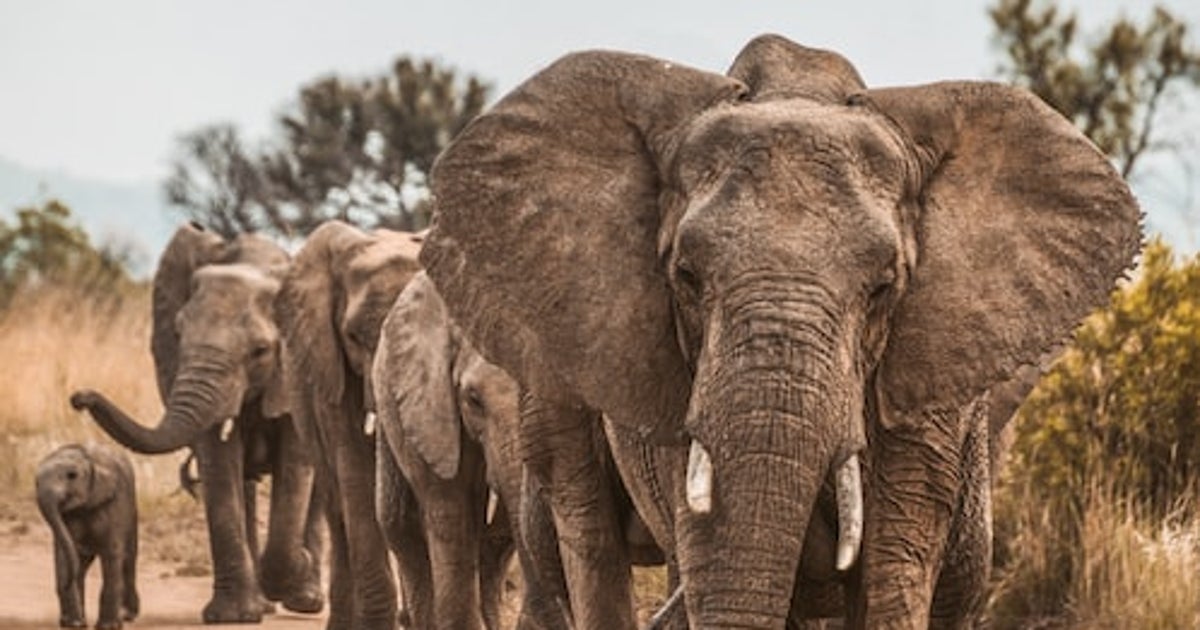
Elephants are increasingly migrating to unpredictable areas in their search for food and water, a phenomenon driven by climate change, experts stated at a recent conservation seminar in Botswana’s capital.
At the Evidence-Based Approaches to Elephant Conservation in Botswana seminar, Keoikantse Sianga, a senior lecturer in wildlife management at Botswana University of Agriculture and Natural Resources, presented data demonstrating the significant impact of water and forage availability on elephant movement patterns.
Sianga explained that during the wet season, elephants from the Central Kalahari Game Reserve in central Botswana migrate as far as Zimbabwe. However, in the dry season, they return to the reserve, relying on artificial water points constructed by the government to provide essential water during the arid months. “During dry seasons, the elephants focus on points where there is permanent water. We see water as the key driver. Water influences the movement,” Sianga stated.




The continuous search for water and food sees these majestic creatures on the move year-round, a behaviour that sometimes leads to property damage in local communities and contributes to the growing incidence of human-wildlife conflicts. According to the Department of Wildlife and National Parks, there were 11,938 reported cases of human-wildlife conflict in the 2022-2023 period, a figure slightly increasing to 11,993 in the 2023-2024 period.

Botswana, home to 131,909 elephants, has designated 40 percent of its total land for wildlife protection. Despite these efforts, the challenges posed by climate change are reshaping the landscape of elephant conservation, necessitating adaptive strategies to mitigate human-wildlife conflicts and ensure the survival of these iconic animals.
As climate change continues to alter environmental conditions, the movement patterns of elephants serve as a crucial indicator of the broader ecological impacts, underscoring the urgent need for sustainable conservation solutions.