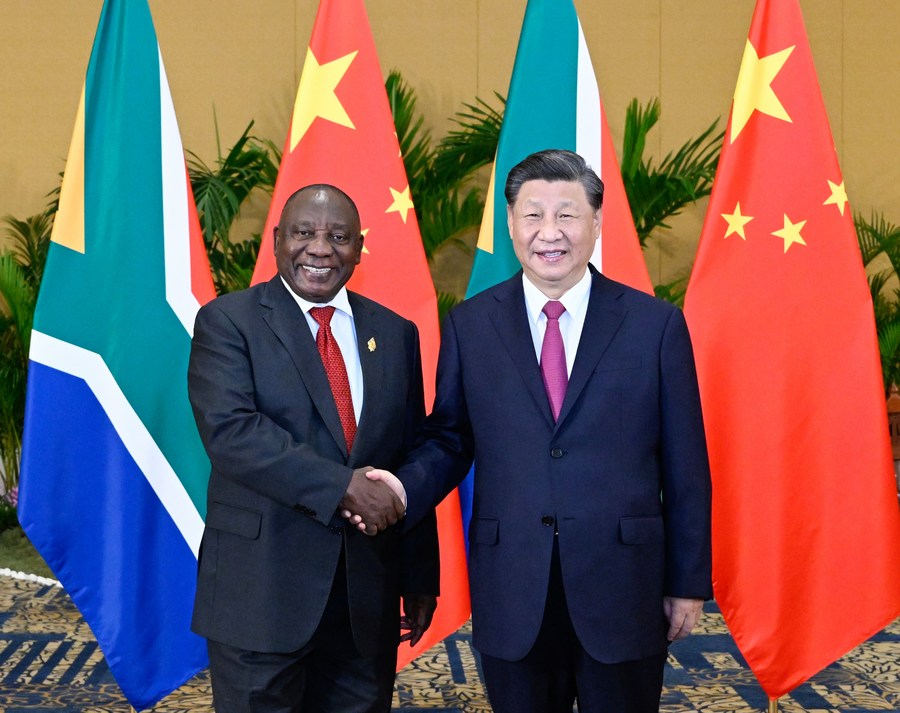
Chinese President Xi Jinping has departed Beijing for a momentous state visit to South Africa, where he is set to attend the 15th BRICS summit in Johannesburg. The official media outlet, Xinhua News Agency, reported that this visit marks his second foreign trip of the year, following a visit to Russia in March.
The BRICS summit, consisting of Brazil, Russia, India, China, and South Africa, stands as an alliance aiming to create a counterbalance to Western influence on the global stage. Scheduled from Tuesday to Thursday this week, the summit will bring together leaders from these nations, with the aim of fostering collaboration and strengthening international relations.
Among the leaders present will be Brazilian President Luiz Inacio Lula da Silva and Chinese President Xi Jinping, demonstrating the high level of commitment to this strategic alliance. Representing India will be Prime Minister Narendra Modi, while Russia will be represented by its Foreign Minister, Sergei Lavrov. In a unique twist, Russian President Vladimir Putin, who currently faces an arrest warrant from the International Criminal Court (ICC) related to war crimes in Ukraine, will participate through a videoconference.



Xi Jinping’s engagement with South Africa is not unprecedented. In 2018, he visited the African nation to bolster diplomatic and economic ties with the continent. This visit underscores China’s ongoing efforts to enhance collaboration and investment opportunities in Africa.
One of the focal points of the BRICS summit will be discussions about expanding the alliance’s membership. Currently accounting for a remarkable 42% of the world’s population, the BRICS nations aim to include new members, with nearly forty countries expressing their interest in joining. Notable contenders include Iran, Argentina, Bangladesh, and Saudi Arabia, each with unique geopolitical and economic perspectives to bring to the table.


As geopolitical landscapes continue to shift, the BRICS summit remains a vital platform for these nations to collectively shape global narratives, economics, and diplomacy. The summit’s outcomes have the potential to influence trade, investment, and international cooperation for years to come.
In a world marked by evolving power dynamics and complex relationships, the BRICS alliance stands as a beacon of cooperation and a potential disruptor of traditional Western dominance. As experts and leaders gather in South Africa this week, the outcomes of the summit will undoubtedly reverberate across international corridors of power.