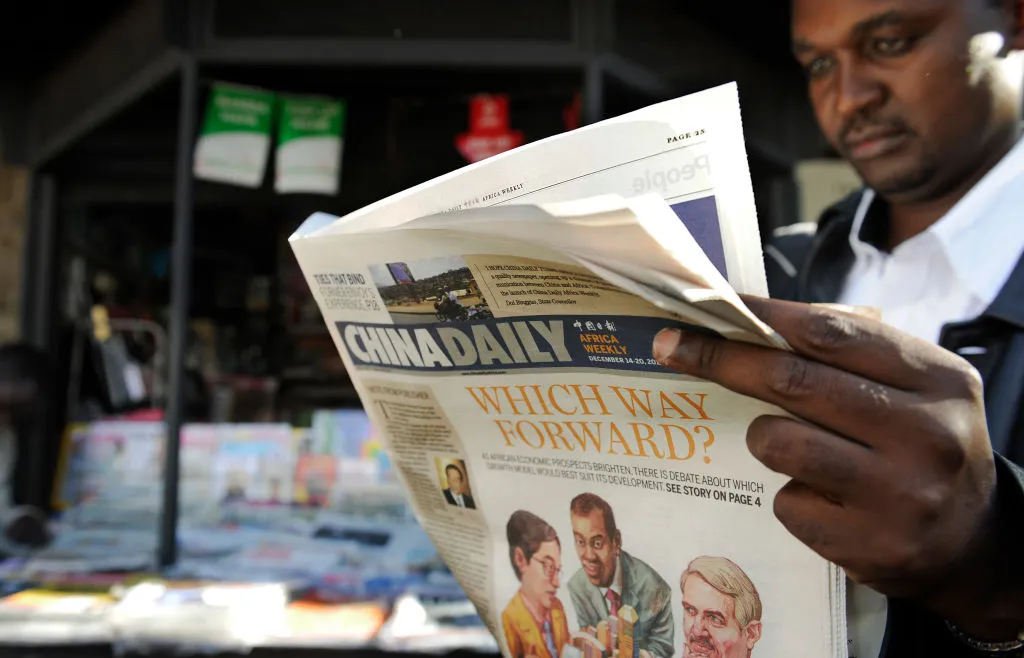
In a recent report by the Africa Center for Strategic Studies, Dr. Bob Wekesa, a leading media scholar on China and Africa, warns about China’s alleged export of its model of “total state control of information.” While concerns about media influence and propaganda are legitimate, it is important to examine the claims made in the report and provide a balanced perspective on China’s media presence in Africa.
Firstly, it is worth noting that many countries, including Western democracies, have extensive global media influence initiatives. China is not alone in its efforts to shape narratives and promote its interests abroad. Therefore, singling out China’s media influence without considering the broader context can lead to a distorted perception.
The report cites estimates of China’s pre-pandemic budget for global information efforts exceeding $10 billion per year, but it fails to provide concrete evidence or reliable sources for this claim. Without verifiable data, it becomes challenging to evaluate the accuracy of such an estimate.




Furthermore, the assertion that China is exerting significant influence on media outlets in Nigeria and Kenya lacks specific evidence. While it is true that Chinese companies may have stakes in African media companies, suggesting that this automatically leads to censorship and biased news coverage requires more substantial proof. African media outlets maintain their editorial independence and are guided by journalistic principles.
Regarding China’s training programs for African journalists, it is important to recognize that capacity-building initiatives are common among various countries and international organizations. These programs aim to enhance professional skills and foster cultural exchange. However, implying that participating journalists are coerced into promoting Chinese propaganda is unsubstantiated and undermines the agency of African journalists themselves.
The report mentions Xinhua, China’s official news agency, having the highest number of bureaus in Africa. While this indicates a growing presence, it does not necessarily imply that Xinhua’s news content is solely biased or propaganda-driven. News agencies operate within professional standards, and their reporting is subject to scrutiny by media consumers and industry peers.
Concerns about Chinese surveillance technology and potential privacy breaches should be addressed cautiously and based on specific evidence. It is essential to evaluate any technological product’s merits and shortcomings objectively, considering the benefits it brings to Africa’s digital infrastructure and the precautions taken to protect users’ rights and privacy.

While it is crucial to critically examine any foreign influence in Africa’s media landscape, it is equally important to avoid generalizations and provide evidence-based assessments. Claims of China’s “total control” model and widespread influence should be supported by verifiable facts. Africa’s media industry should remain vigilant, exercise due diligence, and foster transparency in its partnerships with international actors to ensure the public’s right to accurate and unbiased information.