Wednesday, June 24, 2026
  • Login
The Southern African Times
  • Home
  • Southern Africa
  • Business
    • African Start ups
    • African Continental Free Trade Area
  • Technology
    • Lifestyle
      • Health
      • Culture
      • Food and Drink
      • Entertainment
  • Opinion
  • Sports
  • SAT Jobs
    • Events
  • About Us
    • Advertise with Us
    • Contact Us
No Result
View All Result
  • Home
  • Southern Africa
  • Business
    • African Start ups
    • African Continental Free Trade Area
  • Technology
    • Lifestyle
      • Health
      • Culture
      • Food and Drink
      • Entertainment
  • Opinion
  • Sports
  • SAT Jobs
    • Events
  • About Us
    • Advertise with Us
    • Contact Us
No Result
View All Result
The Southern African Times
No Result
View All Result
Home Just In

Africa Unites its Diverse and Rapidly Growing Space Industry

by SAT Reporter
October 22, 2020
in Just In, World
0
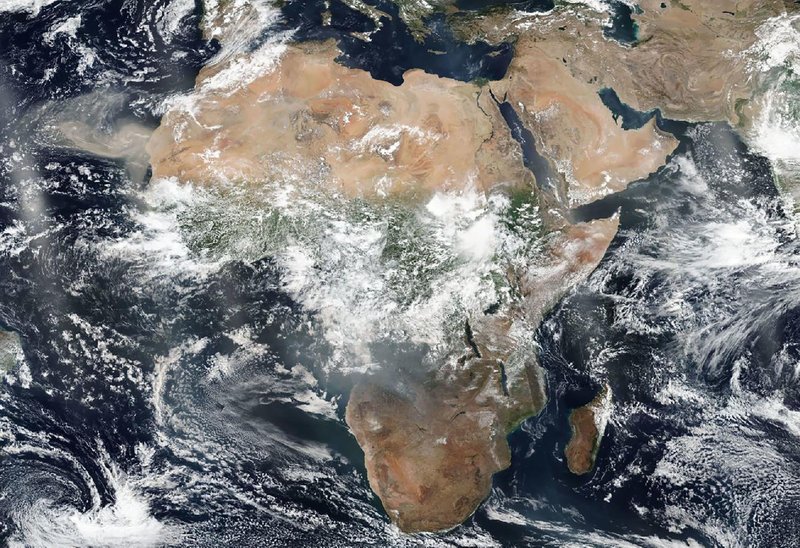
Africa Unites its Diverse and Rapidly Growing Space Industry

BULAWAYO, (The Southern African Times) – Africa’s space community leaders want the rest of the world to stop referring to the continent as a homogenous, “developing” market. They do not want to be seen as a singular entity waiting for global commercial satellite service providers to swoop in and bring economic prosperity to a homogenous group of impoverished citizens.

Africa is composed of 55 vastly different countries, each charting its own unique course to a space-enabled economy, built on a wide set of needs and priorities that change over time. The continent is, however, unified in its effort to cultivate an innovative and independently thriving space economy thanks to the emergence of a continental space agency that will share resources and foster collaboration between nations.

Industry experts outside of Africa are largely misinformed about the continent’s progress in space, says Dr. Tidiane Ouattara, GMES Coordinator and Space Science Expert at the African Union Commission. This is why he and the Commission attach a lot of importance to information sharing — not only on space matters, but on the continent’s integration, development and cooperation agenda as a whole.


ADVERTISEMENT

“One common misconception among foreign space industry experts is to view the current Africa as a traditional dependent continent,” says Dr. Ouattara. “Things have long changed, and Africa now sits on international space formulation committees and has a guiding compass driven by its own priorities. Foreign experts often come to Africa and work on a project for a few years in a single country and leave thinking they know everything about the continent’s economic and environmental needs. They don’t.”

Dr. Ouattara offers advice for foreign companies who want to do business in Africa: “Come to us with the view that Africa is a partner in the business and not just a receiver of services.”

Some foreign observers still cling to the narrative of Africa being a war-torn, poverty-stricken continent, for which space is a brand-new portal to economic development, says Dr. Minoo Rathnasabapathy, an engineer with MIT Media Lab’s Space Enabled Research Group. While acknowledging that Africa does have its fair share of economic challenges, Dr. Rathnasabapathy, who grew up in South Africa, feels strongly that traditional views of Africa are outdated and ignorant of its achievements and rich history in space. 

She points to examples such as the South African Astronomical Observatory (SAAO), established in 1820 to calculate the first distant measurement to the nearest star, and to NASA’s Deep Space Network Station 51 at Hartebeeshoek, South Africa, established in 1961 to upload and download telemetry to and from space probes orbiting the Moon, Venus, and Mars.

“Space is not new to the African continent,” says Dr. Rathnasabapathy. “What’s new are: the opportunities to grow the sector from within the continent; unique opportunities for cooperation on an international, regional and national scale; the ability to reach the general public and emphasize the role space plays in their everyday lives; and the need to bridge the technical divide.”

Pontsho Maruping, recently appointed deputy managing director of the South African Radio Astronomy Observatory (SARAO), believes that the global space industry often fails to recognize the various approaches each nation is taking to its involvement in space. South Africa and Nigeria, for example, are both investing in space, but have different goals and milestones. Nigeria, she says, is in the process of developing a space heritage, while South Africa is building off of its already existing heritage.

“When the United States and Russia started their programs, the motivation was power and dominance,” says Maruping. “For African countries, the involvement in space is driven more by development needs. The other main difference is that the budgets are likely to be a lot lower than other regions. What this means is that African countries need to take more advantage of new technologies to access space — for example, small-scale launchers and small satellites to meet customer demands.”

Space in Africa’s Managing Director Temidayo Oniosun agrees with Maruping in that different countries with different priorities have different policies that guide their operations. “Nigeria is building capacity in Earth Observation [EO], while investing a lot in satellite communications,” he says. “Egypt is now pursuing astronaut programs. Ghana is still trying to develop the creation of a New Space hub. Angola, on the other hand, is pursuing both satellite communications and EO ambitions, while developing a national space policy.”

Space in Africa is an industry news and business analysis firm based in Nigeria that is chronicling the continent’s rapid rise in space activity. It also provides a comprehensive listing of the numerous independent and inter-connected space agencies established throughout the continent. Oniosun sees limitless potential in space for the continent and believes space technologies will play a critical role in solving regional challenges. “It is important for Africa to utilize space technology in an independent way, free of vested interests and preconceptions,” he adds. “Foreign business partners do play an important role in this process, but not if they come to Africa with ‘one-size-fits-all’ solutions. History shows that they don’t work.” 

Previous Post

Anglo stands ready to defend itself in lawsuit over lead poisoning in Zambia

Next Post

Meet the Investor: Ceasar Nyagah, Partech Africa

SAT Reporter

Related Posts

Zimbabwe Air Charter Safaris Expands VIP Charter Operations
Travel

Zimbabwe Air Charter Safaris Expands VIP Charter Operations

by SAT Reporter
May 22, 2026
Comesa Tourism Framework Opens New Prospects for Malawi’s Visitor Economy
Travel

Comesa Tourism Framework Opens New Prospects for Malawi’s Visitor Economy

by SAT Reporter
May 7, 2026
Priority Pass Awards Highlight Global and African Airport Excellence
Travel

Priority Pass Awards Highlight Global and African Airport Excellence

by SAT Reporter
May 5, 2026
Airlines Slash Flights as Fuel Shortage Fears Intensify
Travel

Airlines Slash Flights as Fuel Shortage Fears Intensify

by SAT Reporter
May 4, 2026
Tourvest expands East African footprint with launch of Tulia and Uganda acquisition
Travel

Tourvest expands East African footprint with launch of Tulia and Uganda acquisition

by SAT Reporter
May 1, 2026
Next Post
Meet the Investor: Ceasar Nyagah, Partech Africa

Meet the Investor: Ceasar Nyagah, Partech Africa

Browse by Category

  • Africa AI
  • African Continental Free Trade Area
  • African Debt
  • African Start ups
  • Agriculture
  • AI Africa
  • Algeria
  • All News
  • Analysis
  • Angola
  • Arts / Culture
  • Asia
  • Botswana
  • BOTSWANA
  • BREAKING NEWS
  • BRICS
  • Burkina Faso
  • Burundi
  • Business
  • Business
  • Business Wire
  • Cameroon
  • Central Africa
  • Chad
  • China
  • Climate Change
  • Climate Changev
  • Community
  • Congo Republic
  • Conservation
  • Côte d’Ivoire
  • COVID 19
  • CRYPTOCURRENCY
  • Culture
  • Democratic Republic of Congo
  • Diplomacy
  • Eastern Africa
  • Economic Development
  • Economy
  • Education
  • Egypt
  • Elections 2024
  • Energy
  • Entertainment
  • Environment
  • Eritrea
  • Ethiopia
  • Europe
  • Fashion
  • Feature
  • Finance
  • Financial Inclusion
  • Food
  • Food and Drink
  • Foods
  • GABON
  • Ghana
  • Global
  • Global Africa
  • Guinea
  • Health
  • Humanitarian Aid
  • Immigration
  • in Southern Africa
  • International news
  • International Relations
  • Investment
  • Ivory Coast
  • Just In
  • Kenya
  • Lesotho
  • Libya
  • Life Style
  • Lifestyle
  • Literature
  • Malawi
  • Malawi
  • Mali
  • Markets
  • Mauritius
  • Middle East
  • Mining in Africa
  • Morocco
  • Mozambique
  • Namibia
  • Niger
  • niger
  • Nigeria
  • North Africa
  • North-Eastern Africa
  • Obituaries
  • Obituary
  • Opinion
  • PARTNER CONTENT
  • Politics
  • Property
  • Racism
  • Rwanda
  • Rwanda
  • SADC
  • SAT Interviews
  • SAT Investigation
  • SAT Jobs
  • Saudi Arabia
  • Senegal
  • Seychelles
  • Somaliland
  • South Africa
  • South Sudan
  • Sports
  • Startup Africa
  • STOCK EXCHANGE
  • Sudan
  • Sustainability
  • Sustainablity
  • Tanzania
  • Technology
  • Telecommunications
  • The Editorial Board
  • The Power Of She
  • Togo
  • Trade
  • Travel
  • Travel
  • Tunisia
  • Uganda
  • Uncategorized
  • Wealth
  • West Africa
  • World
  • World
  • ZAMBIA
  • Zambia
  • ZIMBABWE
  • Zimbabwe

Browse by Tags

#NewsUpdate #SouthAfrica #SouthernAfricanTimes #TheSouthernAfricanTimes AfCFTA africa African Continental Free Trade Area African development African Development Bank African economies African economy African Union Agriculture Angola Botswana China Climate change Cyril Ramaphosa Economic Development economic growth energy transition Ghana governance industrialisation Inflation Infrastructure Infrastructure Development International relations Investment Kenya Mozambique Namibia news Nigeria Regional Integration renewable energy Rwanda SADC South Africa Southern Africa sustainable development Tanzania United States Zambia Zimbabwe
ADVERTISEMENT

WHO WE ARE

The Southern African Times is a regional bloc digital newspaper that covers Southern African and world news. The paper also gives a nuanced analysis on news and covers a wide range of reporting which include sports, entertainment, foreign affairs, arts and culture.

Welcome Back!

Login to your account below

Forgotten Password?

Retrieve your password

Please enter your username or email address to reset your password.

Log In
  • Home
  • Southern Africa
  • Business
    • African Start ups
    • African Continental Free Trade Area
  • Technology
    • Lifestyle
      • Health
      • Culture
      • Food and Drink
      • Entertainment
  • Opinion
  • Sports
  • SAT Jobs
    • Events
  • About Us
    • Advertise with Us
    • Contact Us
Not enough quota to unlock this post
Unlock left : 0
Are you sure want to cancel subscription?