GHANA (The Southern African Times) – African Union is actively mobilising resources to help members implement the Paris Agreement and funding challenges have not deterred this ambition.
Land erosion, drought and desertification, flooding, the Sahara Desert expanding southward at a rate of 48 km a year, change in the distribution of rainfall, rivers and freshwater resources’ drying-up, among others. This is what Africa’s environment looks like right now.
Experts say climate change has already had a devastating impact on food and agriculture, livelihoods, human health and ecosystems. Climate change has generated deadly inter-ethnic conflicts over land and water resources, especially in the Sahel region, and is also said to be triggering mass migration as disgruntled people leave their homelands in search of greener pastures.



A 2018 World Bank report, Groundswell – Preparing for Internal Climate Migration – estimated that climate change will push more than 140 million people to migrate within countries by 2050, mostly in sub-Saharan Africa, south Asia and Latin America. Environmental degradation on this scale has exposed the limited ability of many African countries to manage climate change. In response, the African Union (AU) has launched a series of measures aimed at redressing the suffering caused by climate disasters.
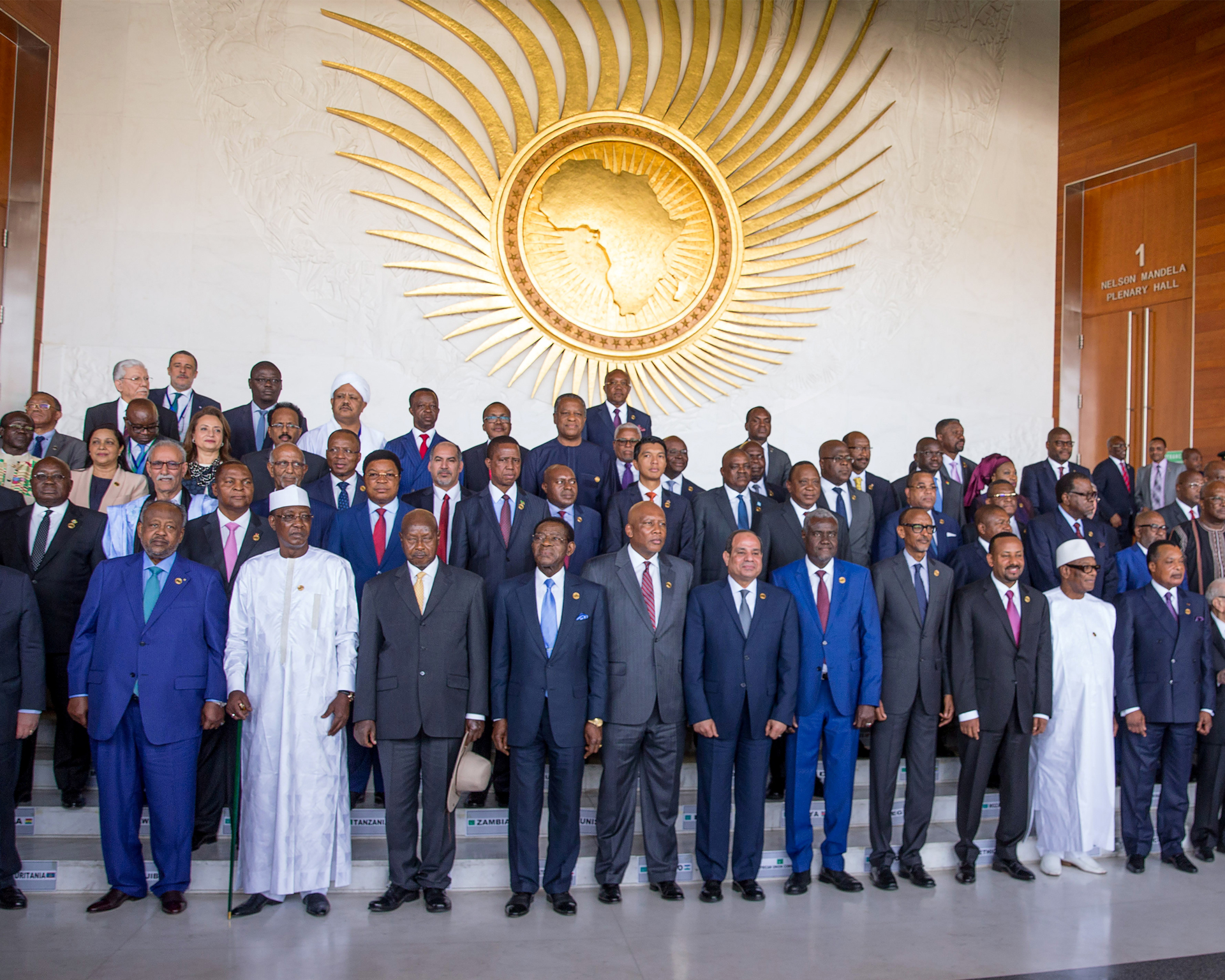
The Addis-Ababa-based continental body is mobilising resources to support member countries in their implementation of the Paris Agreement on Climate Change and Nationally Determined Contributions (NDCs), said Leah Naess Wanambwa, Senior Policy Officer at the Department of Rural Economy and Agriculture at the AU. To date, 51 of the 54 UN-recognised African countries, which are members of the AU, have ratified the Paris Agreement. Currently, four countries are receiving technical and financial support through a joint initiative between the AU Commission and the United Nations Food and Agricultural Organization (FAO), Wanambwa added, without naming these countries.
“The African Commission is in the process of mobilising additional support to cover more countries,” she told Africa in Fact. The continent’s leadership had shown consistent and coordinated resolve to support actions at the country, continental and global levels, said Kwame Ababio, Senior Programme Officer at the New Partnership for Africa’s Development (NEPAD)’s Technical Cooperation and Advisory Services, an AU economic development agency.

“For the continent, climate change presents an existential danger, both now and in the immediate future. The Intergovernmental Panel on Climate Change (IPCC), in its fifth assessment report, described Africa as being among the most vulnerable continents to climate change and its impacts,” Ababio told Africa in Fact. He added that the limits of Africa’s adaptive capacity to climate change were exacerbated by widespread poverty and an “overwhelming” dependence on the continent’s environmental resources for livelihoods.
The AU’s high-level approach to supporting affected countries is led by the Conference of African Heads of State and Government on Climate Change (CAHOSCC), the standing committee of the African Union Heads of State and Government Architecture. Implementation, particularly with regard to policymaking and finding coordinated African positions on issues on climate change, is led by the African Ministerial Conference on Environment (AMCEN). In recent decades, African countries have sometimes been at odds with one another due to the divergent political agendas of their leaders. This has sometimes affected the continent’s ability to solve its own problems.
Recently, in January 2020, the AU expressed serious doubts about the credibility of the 2019 presidential election in the Democratic Republic of Congo (DRC), and called for the announcement of the results to be suspended. The DRC government, led at the time by Joseph Kabila, rejected the AU’s call on national sovereignty grounds. In the event, in early February the country’s independent electoral commission accepted the results, and the international community, African countries included, accepted the outcome of the DRC’s January elections in the name of stability. “In doing so, they have failed the Congolese people,” wrote Mo Ibrahim and Alan Doss on 9 February in The Guardian.
Analysts believe that Kabila manipulated the results to place his ally Felix Tshisekedi on top, instead of Martin Fayulu, who is thought to have won the election outright. The issue divided African leaders, with politicians holding economic interests in the DRC swiftly siding with Kabila. The gathering economic and social crisis in Zimbabwe that resulted from Robert Mugabe’s long occupation of the top spot is another recent example. While South African leaders opted for quiet diplomacy on Zimbabwe, Botswana’s former president Ian Khama openly called on the late Mugabe to step down.
However, African leaders have moved to tackle climate change by uniting and speaking with one voice, said Wanambwa. As an important part of this, in 1995 the African Group of Negotiators on Climate Change (AGN) was established at COP1, the first UN climate change conference, in Berlin, Germany, to represent the interests of the region with a common and unified voice. Currently, the African Commission also provides some support to the AGN with regard to its participation in the climate change negotiations which have been ongoing since then, she told Africa in Fact.
The AGN negotiates the continent’s position at the climate conventions at the experts’ level. The African Commission’s support has been aimed at ensuring that experts provide technical backing to the AGN on the different thematic areas under the convention. The African voice at climate negotiations has grown from strength to strength and been united, according to Wanambwa. Ababio agreed, saying the AGN had engaged with a wide range of groupings to arrive at a common African stance in relation to many issues raised within the UN Framework Convention on Climate.
It is critical for Africa’s very survival that climate change be mainstreamed into major economic sectors, he added. African governments were spending an estimated 2-9% of their Gross Domestic Product (GDP) [estimated between $51.6 billion and $232.2 billion] on tackling climate change, while the annual costs of building resilience could range from $140 billion to $300 billion by 2030,” Ababio explained (The estimation above is calculated on the basis of Africa’s total nominal GDP, which was about $2.58 trillion in 2017).
“Bold climate action” could deliver at least $26 trillion in global economic benefits between now and 2030, according to a September 2018 report, Unlocking the Inclusive Growth Story of the 21st Century, released by the Global Commission on the Economy and Climate. In 2007, the AU launched the Great Green Wall of the Sahara and the Sahel Initiative, in partnership with the UN Convention to Combat Desertification (UNCCD). The proposed 8,000 km-long line of trees and plants will stretch across the entire Sahel and traverse some 20 countries from the Atlantic coast of Senegal to Djibouti.
It’s an ambitious undertaking that many observers describe as the AU’s biggest climate change project to date. According to the AU, the aim is to reverse land degradation and desertification in the Sahel and Sahara region, boost food security and support local communities to adapt to climate change