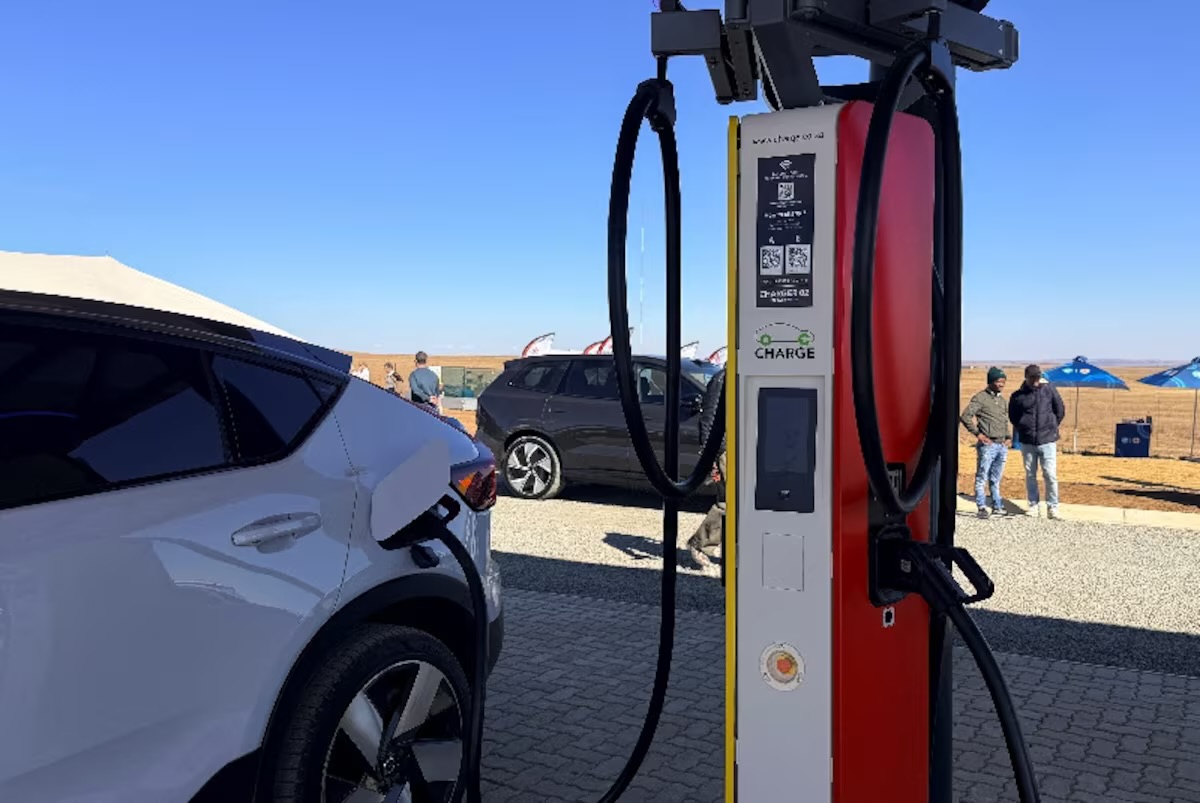
South African electric vehicle infrastructure firm Zero Carbon Charge has launched the first of two off grid, solar powered charging stations along the busy Johannesburg to Durban N3 corridor, marking a notable step in the country’s transition toward cleaner transport.
The rollout speaks to a growing effort to expand EV infrastructure in Africa’s most industrialised economy, even as persistent energy constraints continue to shape how that transition unfolds. By operating entirely off grid, the stations sidestep reliance on Eskom, whose ageing infrastructure, transmission bottlenecks and recurring power cuts have raised concerns about its ability to support large scale electrification.
Recent market signals suggest rising consumer interest. Data from AutoTrader South Africa shows EV searches climbed 45% between February and March 2026, while overall engagement surged more than 200%. Industry body naamsa reports that new energy vehicle sales rose 7.1% in 2025 to 16,716 units, following a sharp jump the year before. Even so, EVs still account for just 2.8% of total new vehicle sales, underlining how early the market remains.



Positioned along one of South Africa’s busiest freight and passenger routes, the new charging stations are designed to function independently of the national grid. The model reflects a broader strategic shift, where infrastructure development is being tailored to local constraints rather than imported wholesale from more energy secure markets.

“By building off grid EV charging infrastructure along key transport corridors like the N3, we are reducing dependence on volatile fuel prices while creating greater energy and transport cost stability over the long term,” said Joubert Roux, co founder and chair of Zero Carbon Charge.
The company plans to scale quickly, targeting 60 stations nationwide by the end of next year as it works toward a denser national network. While the current rollout focuses on passenger vehicles, the next phase will extend into commercial transport, including truck charging hubs, signalling a longer term play in logistics and freight.
The move comes at a time when South Africa is grappling with both the urgency of decarbonisation and the practical limits of its energy system. Off grid solutions like these may offer a workable bridge, enabling EV adoption to grow without placing additional strain on an already fragile grid.