

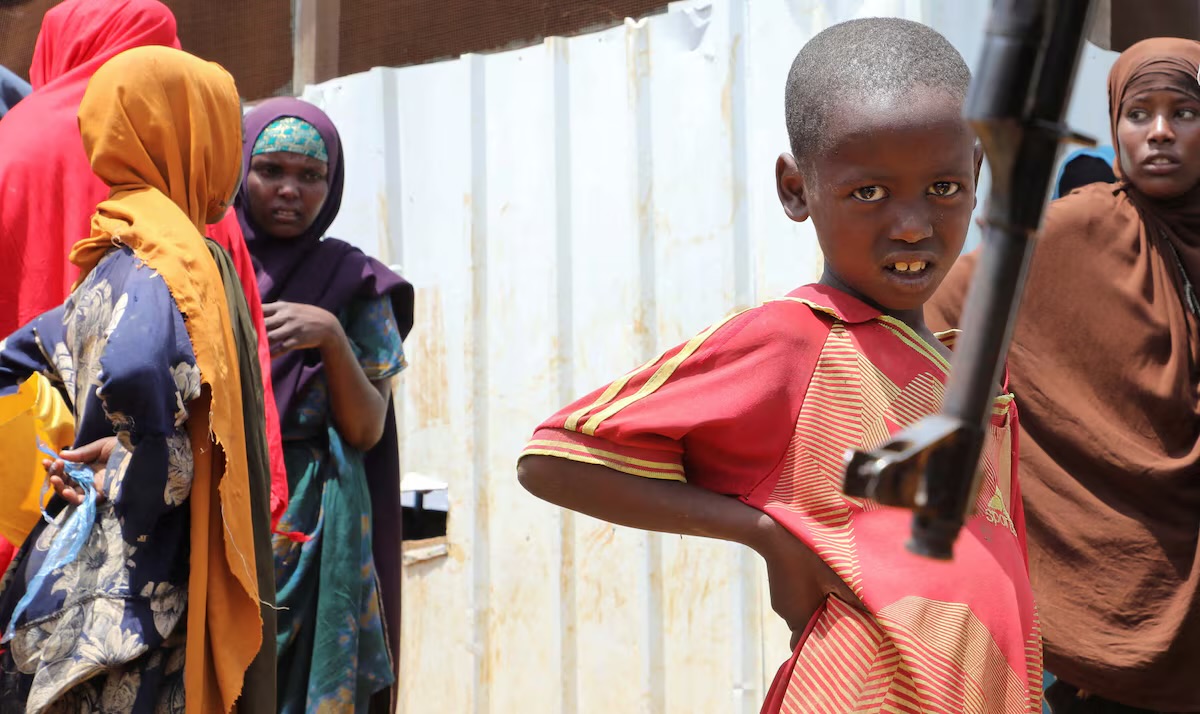
Parts of southern Somalia are edging dangerously close to famine, according to new assessments by global food security monitors, with conditions in at least one district reaching levels of hunger not seen since 2022.
The warnings come as a combination of failed rainy seasons, ongoing conflict, and shrinking international aid push millions deeper into food insecurity in one of the world’s most fragile humanitarian contexts.
In Burhakaba District, located in the Bay Region, more than 37% of young children are suffering from acute malnutrition, surpassing one of the key thresholds used to classify famine. The district, home to roughly 200,000 people, is now considered at high risk under a worst-case scenario that includes further failed rains, rising food prices, and insufficient humanitarian assistance.



According to the Integrated Food Security Phase Classification, famine is declared when at least 20% of households face extreme food shortages, 30% of children are acutely malnourished, and daily death rates linked to hunger exceed critical levels.

The situation remains precarious across southern Somalia. Famine Early Warning Systems Network said its most likely scenario assumes some improvement in seasonal rains, which could stabilise conditions temporarily. However, it warned that another failed harvest could rapidly tip vulnerable areas into famine.
Around 6 million Somalis are currently facing crisis levels of hunger or worse, a figure that remains alarmingly high despite being slightly below earlier projections. Analysts say the marginal improvement reflects short-term aid interventions rather than any meaningful recovery.
What sets this crisis apart from previous near-famine situations is the sharp decline in global humanitarian funding. Total aid for Somalia in 2026 stands at just $160 million, down from $531 million last year and far below the $2.38 billion mobilised during the 2022 drought response.
Humanitarian assistance currently reaches only about 12% of those in urgent need, leaving vast populations without support.
Aid groups warn that broader geopolitical developments are compounding the crisis. The economic fallout from conflict in the Middle East has disrupted supply chains and driven up food costs, while cuts to foreign aid budgets, particularly from major donors like the United States, have constrained response efforts.
The result is what some analysts describe as the emergence of a “post-aid era,” where humanitarian needs are rising but the global capacity to respond is shrinking.
For Somalia, a country that last experienced full-scale famine in 2011 with devastating human cost, the warning signs are once again flashing red.


