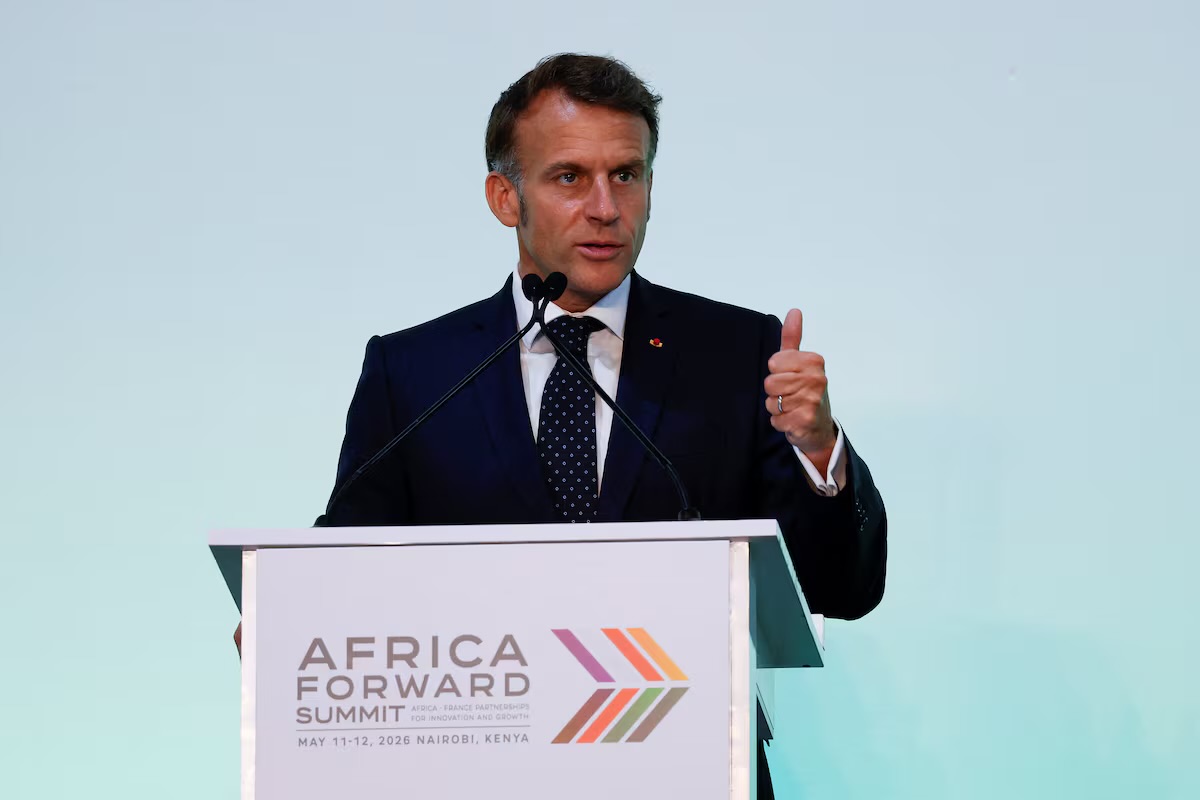
French President Emmanuel Macron used a high-profile summit in Nairobi to signal renewed economic engagement with Africa, announcing $27 billion in investment commitments and backing reforms to the global financial system.
The visit blended symbolism and policy. Macron jogged alongside marathon legend Eliud Kipchoge and engaged with university students, projecting a softer diplomatic image while positioning France as a partner in Africa’s economic future.
At the core of his proposals is a “first-loss guarantee” mechanism, designed to encourage private investment by having governments or institutions absorb initial losses on major projects. The idea is to reduce perceived risk and unlock capital flows into African economies at a time when traditional development financing is shrinking.



But for many analysts and campaigners, the proposals do not go far enough.
Critics argue that while such mechanisms may attract investment, they leave intact the structural issues that keep borrowing costs high for African countries. Calls for more direct interventions, including debt relief and payment pauses, were notably absent from the summit’s outcomes.
Hannah Ryder of Development Reimagined said the measures would ultimately “preserve the architecture as it stands,” rather than fundamentally shift the global financial system in Africa’s favour.
African leaders, including William Ruto, have been pushing for reforms to how credit ratings are determined, arguing that the continent’s risk profile is overstated, making borrowing unnecessarily expensive. Ratings agencies, however, maintain that their assessments follow global standards.
Macron’s push comes amid a broader shift among Western governments, many of which are reallocating budgets away from development financing toward defence and domestic priorities. In that context, mobilising private capital has become a central strategy.
Yet civil society groups, including Oxfam France and African Forum and Network on Debt and Development, say stronger action is needed. They have called on France to use its influence to support debt cancellation for Global South countries facing mounting fiscal pressure.
Macron, who currently holds the G7 presidency, is expected to carry these proposals into next month’s summit, where discussions on risk-sharing mechanisms and development finance reform will continue.

For now, the Nairobi summit has highlighted a growing divide: between incremental reform backed by global powers and the more radical restructuring many African economies say is urgently required.