The United States congressional report China’s Minerals Mafia presents Zimbabwe’s lithium sector as a cautionary tale of foreign exploitation. Its central thesis is clear: Chinese capital dominates, governance is weak, and the result is a system of extraction that disproportionately benefits Beijing at Harare’s expense.
It is an argument that resonates politically. It is also economically incomplete.
Zimbabwe’s lithium sector is not best understood through the lens of geopolitical rivalry. It is better understood as a function of industrial structure, capital formation and value chain asymmetry. The critical question is not who owns the mines. It is who captures the value.



The economics of lithium: where value actually resides
Lithium is not a commodity in the classical sense. Its economic value is not realised at the point of extraction but through chemical transformation. Spodumene concentrate, the primary export from Zimbabwe, typically trades at a substantial discount to lithium carbonate and lithium hydroxide, the refined products used in battery cathodes.
This distinction defines the entire industry.
Upstream producers operate on thinner margins and are exposed to price volatility. Midstream and downstream processors capture higher margins and exert greater influence over pricing, standards and market access. At present, that segment is overwhelmingly concentrated in China, which controls the majority of global lithium refining capacity and has integrated it with battery manufacturing.
Zimbabwe, like most resource-rich developing economies, entered this market at the lowest rung of the value chain.
The report identifies this imbalance but misattributes its cause. It frames the issue as one of Chinese extraction rather than structural positioning within a global industry dominated by downstream processing hubs.
Capital, risk and the reality of project execution
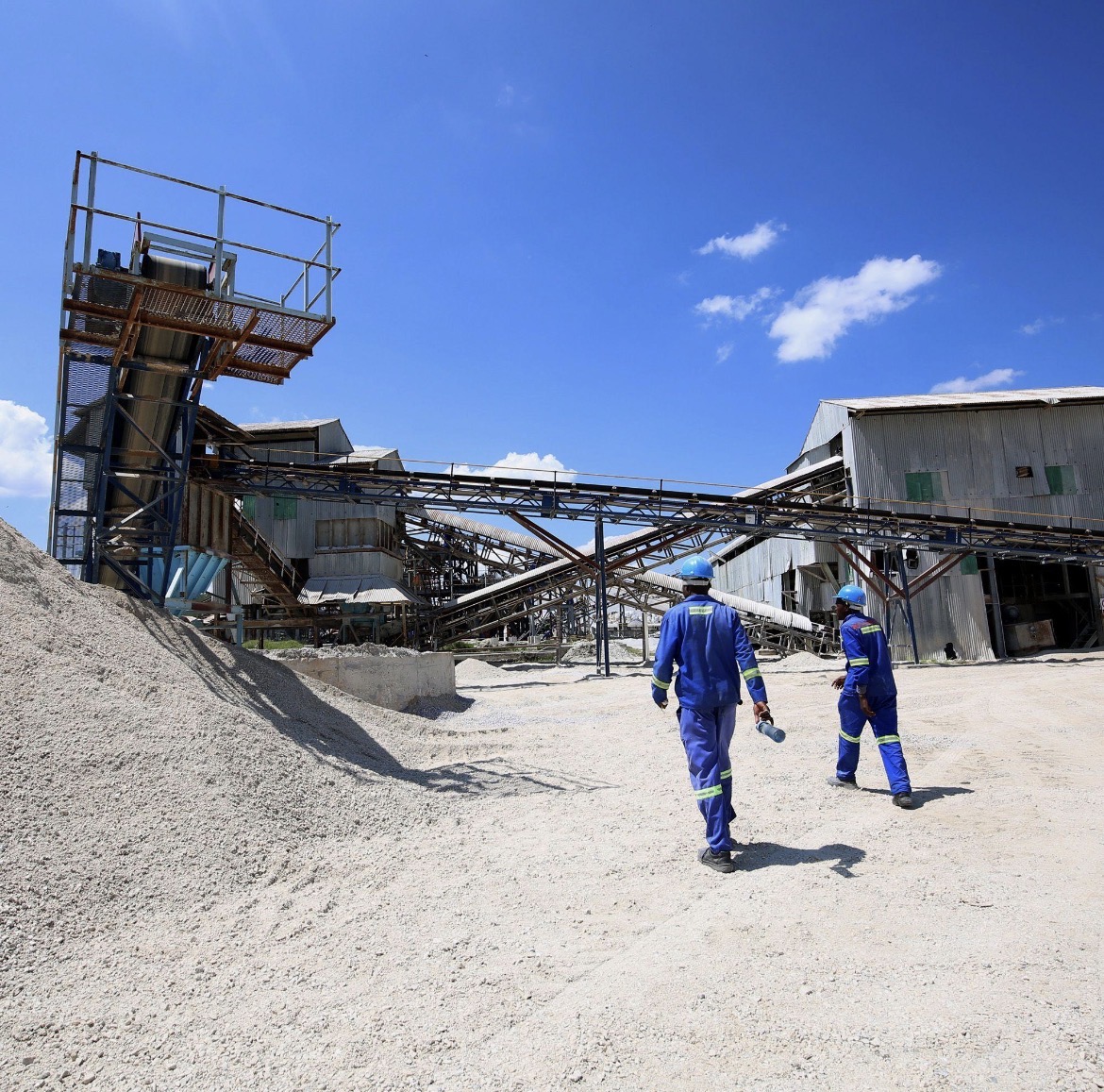
Zimbabwe’s lithium expansion over the past decade has been rapid. Between 2010 and 2023, Chinese firms invested more than $1.5 billion into the sector, acquiring assets such as Bikita Minerals, developing projects like Arcadia, and financing associated infrastructure.
The output data reflects this. In 2025, Zimbabwe exported approximately 1.128 million tonnes of spodumene concentrate, representing an 11 per cent increase on 2024. This scale of production has positioned the country as Africa’s leading lithium supplier and a significant contributor to global supply chains.
The more relevant question is not whether Chinese firms dominate the sector. It is why they do.
Lithium mining in emerging markets is capital intensive, technically demanding and subject to regulatory uncertainty. Projects require significant upfront expenditure, long development timelines and secure offtake agreements to be commercially viable. Chinese firms, supported by state-backed financing and integrated into downstream processing networks, have been willing to absorb these risks.

Western capital has been present, but more cautious. Projects backed by London-listed or Australian firms have often encountered delays, funding constraints or reliance on Chinese offtake agreements. The result is not a moral dichotomy, but a divergence in risk appetite and execution speed.
China did not displace Western capital in Zimbabwe. In many respects, it arrived where Western capital hesitated.

Beneficiation policy: from extraction to processing
Zimbabwe has sought to alter its position in the value chain through policy intervention. In 2022, it banned the export of raw lithium ore. It later indicated its intention to restrict the export of lithium concentrates and, in February 2026, suspended exports of unprocessed minerals following allegations of under-invoicing and smuggling.
These measures are not without risk. They can disrupt supply chains and create uncertainty for investors. Yet their economic logic is clear. By restricting raw exports, the state seeks to compel the establishment of domestic processing capacity.
There is evidence that this strategy is beginning to yield results.
In April 2026, Huayou Cobalt exported lithium sulphate produced in Zimbabwe, marking the country’s entry into midstream chemical processing. The plant, commissioned in 2025 at a cost of approximately $400 million, has an annual capacity of around 50,000 tonnes.
Lithium sulphate is not a final product, but it is a critical intermediate. Its production represents a transition from primary extraction to chemical processing, a stage that has historically been externalised to foreign jurisdictions.
Zimbabwe is, at present, the only African country to have achieved this at scale.
A continental benchmark: Zimbabwe in context
The report’s critique is undermined by its lack of comparative perspective. Zimbabwe is assessed as though it were an outlier, rather than part of a broader African lithium landscape characterised by uneven progress.
Across the continent, projects remain at various stages of development. Ghana’s Ewoyaa project has attracted Western capital but has faced delays linked to fiscal negotiations. Mali’s Bougouni project has reached production, but with Chinese partnership playing a critical role. The Goulamina project, one of Africa’s largest deposits, similarly relies on Chinese investment and offtake structures.
In the Democratic Republic of Congo, the Manono project remains stalled by ownership disputes and regulatory uncertainty. Namibia’s projects are promising but not yet fully scaled.
Against this backdrop, Zimbabwe’s trajectory appears comparatively advanced. It has moved from exploration to production at scale, established multiple operating mines and begun exporting intermediate chemical products. In 2025, it accounted for a significant share of China’s lithium concentrate imports, integrating itself into global supply chains.
This does not imply that Zimbabwe’s model is optimal. It does suggest that the report’s characterisation of systemic failure is overstated.

Governance risks: leakage, compliance and institutional capacity
The report’s most credible contribution lies in its identification of governance risks. It cites instances of smuggling, under-reporting of exports and practices designed to conceal higher-grade material within lower-value consignments.

These issues are economically significant. Revenue leakages reduce fiscal receipts, distort production data and undermine the credibility of regulatory frameworks. They also complicate efforts to design effective industrial policy.
However, these risks are not unique to Chinese operators. They are characteristic of extractive industries in jurisdictions with limited regulatory capacity. Similar patterns can be observed in gold smuggling across West Africa and cobalt supply chains in the Democratic Republic of Congo.
The appropriate response is institutional, not geopolitical. It involves strengthening customs enforcement, improving mineral traceability systems, enhancing audit capacity and ensuring transparency in licensing and reporting.
Zimbabwe has begun to implement such reforms. The introduction of an electronic mining cadastre system is intended to improve transparency and reduce administrative opacity.
The effectiveness of these measures will depend on consistent enforcement and institutional discipline.

The question of Western capital
The report implicitly contrasts Chinese investment with Western models, suggesting that Western firms operate under higher environmental and governance standards.
This distinction warrants examination.
Western mining companies are subject to shareholder scrutiny, disclosure requirements and legal accountability in their home jurisdictions. These factors can improve compliance. However, they do not eliminate risk. Historical and contemporary examples of environmental damage, tax disputes and labour issues demonstrate that governance outcomes are shaped by local regulatory frameworks as much as by investor origin.
More importantly, Western capital has not deployed at scale in Zimbabwe’s lithium sector. Where it has participated, it has often done so in partnership with, or reliant upon, Chinese processing capacity.
This raises a practical question. If Western firms are the preferred alternative, why have they not built lithium processing infrastructure in Africa at comparable scale?
The answer lies in industrial strategy. China has invested systematically in midstream and downstream capacity over two decades, creating an integrated ecosystem that supports upstream investment. Western economies, by contrast, are only now attempting to rebuild such capacity.
Zimbabwe’s current configuration reflects this global imbalance.
China’s industrial logic and Zimbabwe’s opportunity
China’s presence in Zimbabwe is not incidental. It is part of a broader strategy to secure upstream supply for its battery and electric vehicle industries. By integrating mining operations with processing capacity, Chinese firms reduce supply chain risk and optimise cost structures.
For Zimbabwe, this creates both dependency and opportunity.
Dependency arises from the concentration of processing capacity in China, which limits alternative markets for raw and intermediate products. Opportunity arises from the potential for technology transfer, infrastructure development and integration into global value chains.
The challenge is to convert participation into leverage.
Zimbabwe must ensure that investment agreements include provisions for local processing, skills development and infrastructure. It must also diversify its investor base where feasible, without undermining existing production.
Policy coherence and the risk of overcorrection
Zimbabwe’s recent policy interventions reflect a desire to capture greater value from its resources. However, there is a risk of overcorrection.
Abrupt export bans and regulatory shifts can create uncertainty for investors, delay project development and reduce capital inflows. Beneficiation policies must therefore be calibrated carefully. They should incentivise processing without rendering projects economically unviable.
This requires coordination between fiscal policy, regulatory frameworks and industrial strategy.

Conclusion: an economic, not ideological, challenge
The China’s Minerals Mafia report frames Zimbabwe’s lithium sector as a case of external exploitation. This interpretation captures certain risks but overlooks the underlying economic dynamics.
Zimbabwe’s position is defined by its role as an upstream producer in a supply chain dominated by downstream processing capacity. Chinese investment has accelerated the development of this sector and initiated a transition towards midstream processing.
The challenges identified in the report are real. They relate to governance, enforcement and value capture. They do not arise solely from the nationality of investors.
Zimbabwe’s policy objective should be clear. It must move further up the value chain, strengthen regulatory capacity and ensure that resource extraction translates into sustainable economic development.
This is not a geopolitical contest. It is an economic strategy.
The question is not whether China is present. It is whether Zimbabwe can govern its resources effectively enough to convert geological advantage into industrial capability.
That is the measure by which its lithium sector will ultimately be judged.
Farai Ian Muvuti, Chief Executive Officer of The Southern African Times; Nyashadzashe Nguwo, partner at Sankofa Capital; and Hopewell Mauwa, Managing Director at Strategen Advisory Ltd, write on African industrial policy, investment strategy and global supply chains.