Saturday, April 25, 2026
  • Login
The Southern African Times
  • Home
  • Southern Africa
  • Business
    • African Start ups
    • African Continental Free Trade Area
  • Technology
    • Lifestyle
      • Health
      • Culture
      • Food and Drink
      • Entertainment
  • Opinion
  • Sports
  • SAT Jobs
    • Events
  • About Us
    • Advertise with Us
    • Contact Us
No Result
View All Result
  • Home
  • Southern Africa
  • Business
    • African Start ups
    • African Continental Free Trade Area
  • Technology
    • Lifestyle
      • Health
      • Culture
      • Food and Drink
      • Entertainment
  • Opinion
  • Sports
  • SAT Jobs
    • Events
  • About Us
    • Advertise with Us
    • Contact Us
No Result
View All Result
The Southern African Times
No Result
View All Result
Home Finance

BII Targets £9billion to Boost Investment in Africa’s Frontier Markets

by SAT Reporter
April 25, 2026
in Finance
0
BII Targets £9billion to Boost Investment in Africa’s Frontier Markets

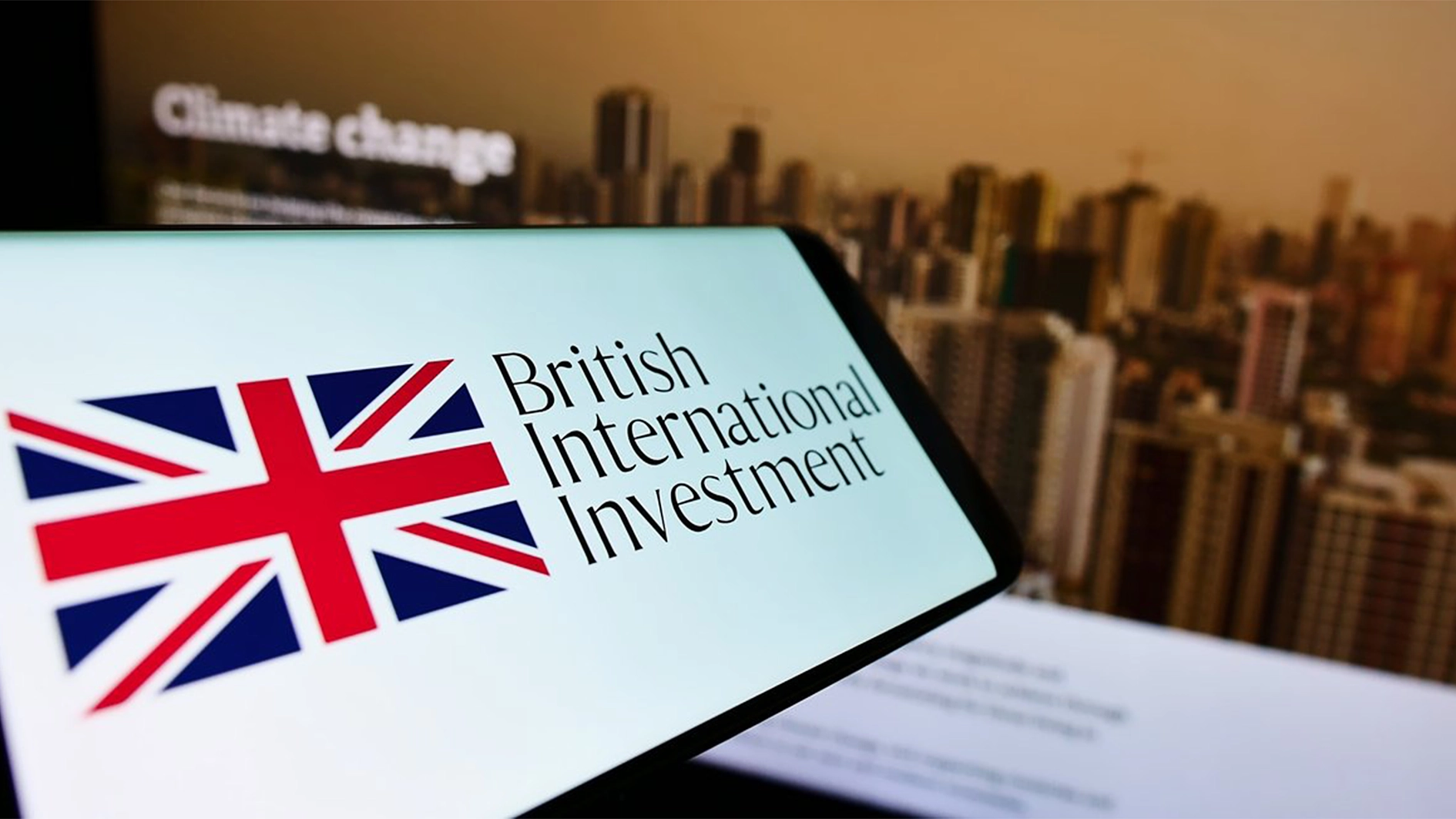
British International Investment has set out a new five year strategy that seeks to mobilise nine billion pounds into African economies, signalling a continued shift in development finance towards long term capital partnerships and market shaping interventions rather than grant based assistance.

According to details published by British International Investment, the United Kingdom’s development finance institution intends to commit close to five billion pounds directly, while catalysing additional investment from private sector partners across Africa and globally. The approach reflects a broader policy direction within UK development strategy that places emphasis on leveraging public capital to crowd in private finance.

The plan places particular weight on frontier and least developed markets, where structural constraints continue to limit access to capital despite clear development need and demographic potential. BII has indicated that at least a quarter of its investments will be directed towards these economies. Countries such as Sierra Leone and Zambia have been identified as priority contexts where capital deployment will be combined with technical assistance, policy engagement and institutional partnerships aimed at strengthening local investment ecosystems.


ADVERTISEMENT

Across the continent, the institution has identified sectors such as financial services, energy, transport, trade, digital infrastructure and sustainable industries as central to its investment thesis. These sectors are widely regarded as foundational to productivity growth and economic diversification in many African economies, particularly where gaps in infrastructure and access to finance continue to constrain enterprise development.

Energy access remains a critical area of focus. Estimates from institutions such as the World Bank suggest that hundreds of millions of people across Africa still lack reliable electricity. Within this context, BII has committed to increasing its allocation to climate related investments to forty percent of new commitments. This includes support for renewable energy generation, transmission infrastructure and distributed energy systems, with alignment to continental initiatives such as Mission 300, which aims to expand electricity access to 300 million people by 2030.

The strategy also outlines a continued emphasis on mobilising domestic capital alongside international finance. African pension funds, sovereign institutions and regional financial actors are increasingly recognised as critical participants in long term investment, yet often face regulatory and market constraints. BII’s model seeks to use its balance sheet and risk tolerance to create entry points for such actors, particularly in markets that are perceived as high risk by conventional investors.

In parallel, the institution has reaffirmed its commitment to gender focused investment through the global 2X Challenge framework, with a target of thirty percent of investments contributing to women’s economic empowerment. This reflects growing evidence that inclusive economic participation is closely linked to broader development outcomes, including household resilience and enterprise growth.

From an African perspective, the renewed focus on frontier markets raises both opportunities and questions. While increased capital flows may support infrastructure expansion and enterprise development, the effectiveness of such investment will depend on local institutional capacity, regulatory coherence and the extent to which projects are aligned with national and regional development priorities. There is also ongoing debate within African policy and academic circles about the balance between external capital mobilisation and the strengthening of domestic financial systems.

What emerges from the strategy is a recognition that Africa’s economic trajectories cannot be understood through a singular narrative. The continent encompasses a wide spectrum of markets, each shaped by distinct historical, political and economic dynamics. Efforts to deepen investment must therefore engage with this diversity, moving beyond uniform models and towards approaches that are responsive to local contexts and knowledge systems.

BII’s long history of operating across African markets is likely to inform this approach, although outcomes will ultimately be measured by the extent to which investments translate into sustained economic activity, improved livelihoods and resilient institutions. As African governments, regional bodies and private sector actors continue to articulate their own development agendas, the interaction between these priorities and externally mobilised capital will remain a central feature of the continent’s evolving economic landscape.

Tags: africaBritish International Investmentclimate financedevelopment financeEconomic Developmentenergy accessfrontier marketsgender lens investingInfrastructureprivate investmentSierra LeoneUnited KingdomZambia
Previous Post

Zimbabwe’s Vice-President pitches investment re-rating to global markets

Next Post

Nigeria–South Africa Trade Reaches 2.16 Billion Dollars as Energy Ties Grow

SAT Reporter

Related Posts

Investors pledge over $1.3bn towards Zambia–Angola rail corridor
Investment

Investors pledge over $1.3bn towards Zambia–Angola rail corridor

by SAT Reporter
April 25, 2026
TDB Restructures Ownership to Reinforce Multilateral Status in Global Debt Debate
Finance

TDB Restructures Ownership to Reinforce Multilateral Status in Global Debt Debate

by SAT Reporter
April 23, 2026
AfDB, European Stability Mechanism Sign Cooperation Pact
Finance

AfDB, European Stability Mechanism Sign Cooperation Pact

by SAT Reporter
April 17, 2026
Afreximbank Launches US$10bn Gulf Crisis Support Programme
Finance

Afreximbank Launches US$10bn Gulf Crisis Support Programme

by SAT Reporter
April 16, 2026
Nicholas Mukasa appointed Bank of Namibia Deputy Governor
Finance

Nicholas Mukasa appointed Bank of Namibia Deputy Governor

by SAT Reporter
April 15, 2026
Next Post
Nigeria–South Africa Trade Reaches 2.16 Billion Dollars as Energy Ties Grow

Nigeria–South Africa Trade Reaches 2.16 Billion Dollars as Energy Ties Grow

Browse by Category

  • Africa AI
  • African Continental Free Trade Area
  • African Debt
  • African Start ups
  • Agriculture
  • AI Africa
  • Algeria
  • All News
  • Analysis
  • Angola
  • Arts / Culture
  • Asia
  • Botswana
  • BOTSWANA
  • BREAKING NEWS
  • BRICS
  • Burkina Faso
  • Burundi
  • Business
  • Business
  • Business Wire
  • Cameroon
  • Central Africa
  • Chad
  • China
  • Climate Change
  • Climate Changev
  • Community
  • Congo Republic
  • Conservation
  • Côte d’Ivoire
  • COVID 19
  • CRYPTOCURRENCY
  • Culture
  • Democratic Republic of Congo
  • Diplomacy
  • Eastern Africa
  • Economic Development
  • Economy
  • Education
  • Egypt
  • Elections 2024
  • Energy
  • Entertainment
  • Environment
  • Eritrea
  • Ethiopia
  • Europe
  • Fashion
  • Feature
  • Finance
  • Financial Inclusion
  • Food
  • Food and Drink
  • Foods
  • GABON
  • Ghana
  • Global
  • Global Africa
  • Guinea
  • Health
  • Immigration
  • in Southern Africa
  • International news
  • International Relations
  • Investment
  • Ivory Coast
  • Just In
  • Kenya
  • Lesotho
  • Libya
  • Life Style
  • Lifestyle
  • Literature
  • Malawi
  • Malawi
  • Mali
  • Markets
  • Mauritius
  • Middle East
  • Mining in Africa
  • Morocco
  • Mozambique
  • Namibia
  • Niger
  • niger
  • Nigeria
  • North Africa
  • North-Eastern Africa
  • Obituaries
  • Obituary
  • Opinion
  • PARTNER CONTENT
  • Politics
  • Property
  • Racism
  • Rwanda
  • Rwanda
  • SADC
  • SAT Interviews
  • SAT Investigation
  • SAT Jobs
  • Saudi Arabia
  • Senegal
  • Seychelles
  • Somaliland
  • South Africa
  • South Sudan
  • Sports
  • Startup Africa
  • STOCK EXCHANGE
  • Sudan
  • Sustainability
  • Sustainablity
  • Tanzania
  • Technology
  • Telecommunications
  • The Editorial Board
  • The Power Of She
  • Togo
  • Trade
  • Travel
  • Travel
  • Tunisia
  • Uganda
  • Uncategorized
  • Wealth
  • West Africa
  • World
  • World
  • Zambia
  • ZAMBIA
  • Zimbabwe
  • ZIMBABWE

Browse by Tags

#NewsUpdate #SouthAfrica #SouthernAfricanTimes #TheSouthernAfricanTimes AfCFTA africa African Continental Free Trade Area African development African Development Bank African economies African economy African Union Agriculture Angola Botswana Business China Climate change Cyril Ramaphosa Economic Development economic growth energy transition fiscal policy industrialisation Inflation Infrastructure Infrastructure Development International relations Investment Kenya Mozambique Namibia news Nigeria Regional Integration renewable energy Rwanda SADC South Africa Southern Africa sustainable development Tanzania United States Zambia Zimbabwe
ADVERTISEMENT

WHO WE ARE

The Southern African Times is a regional bloc digital newspaper that covers Southern African and world news. The paper also gives a nuanced analysis on news and covers a wide range of reporting which include sports, entertainment, foreign affairs, arts and culture.

Welcome Back!

Login to your account below

Forgotten Password?

Retrieve your password

Please enter your username or email address to reset your password.

Log In

  • Home
  • Southern Africa
  • Business
    • African Start ups
    • African Continental Free Trade Area
  • Technology
    • Lifestyle
      • Health
      • Culture
      • Food and Drink
      • Entertainment
  • Opinion
  • Sports
  • SAT Jobs
    • Events
  • About Us
    • Advertise with Us
    • Contact Us
Are you sure want to unlock this post?
Unlock left : 0
Are you sure want to cancel subscription?