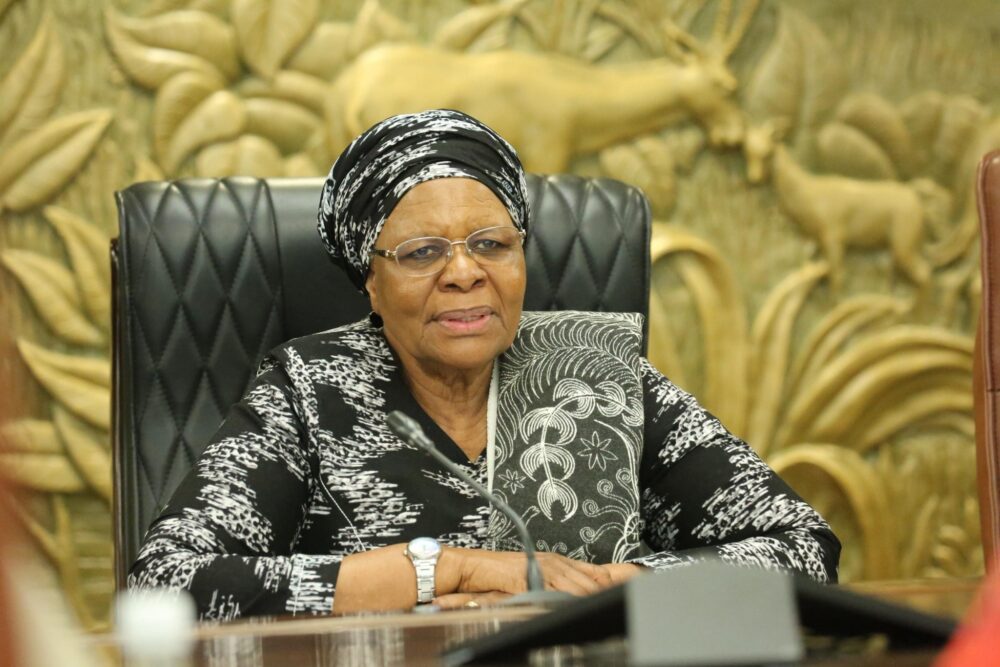
Namibia’s president Dr Netumbo Nandi-Ndaitwah has announced a renewed push to fast track petroleum sector reforms, signalling a decisive move to strengthen governance and investment frameworks as Namibia edges closer to first oil production.
Speaking at the Namibia International Energy Conference 2026 in Windhoek, the President confirmed progress on a Petroleum Exploration and Production Amendment Bill, positioning it as central to improving regulatory efficiency, boosting investor confidence and ensuring that the country’s emerging offshore oil industry delivers broad based economic benefits.
The reform agenda comes at a critical juncture for Namibia, as momentum builds around major discoveries in the Orange Basin. Policymakers and industry leaders are increasingly aligned on the need for legal and institutional readiness to keep pace with rapidly advancing upstream activity, particularly as operators move from exploration into appraisal and development phases.



President Ndaitwah framed the reforms as essential to shaping Namibia’s long term development trajectory, emphasising that the transition to production will require both capital and credible partnerships. Her remarks reflected a broader policy shift toward creating a predictable and efficient operating environment capable of attracting sustained international investment.
This emphasis on execution was echoed by NJ Ayuk of the African Energy Chamber, who described Namibia’s recent exploration success as a turning point in how the country is perceived globally. He argued that the immediate challenge lies not in further discovery, but in ensuring that legislation, infrastructure and skills development align with the pace of industry growth.
Ayuk noted that Namibia is now competing directly with other emerging hydrocarbon hubs for global capital, underscoring the urgency of maintaining policy momentum. He added that the country’s expanding resource base presents an opportunity to address energy poverty while building a competitive and self sustaining upstream sector.
At the same forum, Ndapwilapo Selma Shimutwikeni of RichAfrica Consultancy stressed that the true measure of success will extend beyond production volumes. She highlighted the importance of developing supporting industries, expanding local participation and embedding collaboration between government and investors to ensure inclusive economic growth.

That collaboration is already beginning to translate into tangible activity across the Orange Basin. Chevron confirmed plans to drill the Nabba 1X exploration well in late 2026, signalling confidence in the basin’s long term potential. The move represents a significant step in the company’s expanding footprint in Namibia’s deepwater sector.
Further momentum is being driven by other operators. Rhino Resources is preparing to drill the Capricornus well, while TotalEnergies is advancing its Venus development toward a final investment decision expected in mid 2026. These developments are widely seen as precursors to large scale production and a broader wave of investment across Namibia’s offshore assets.

Taken together, the policy reforms and accelerating upstream activity underscore Namibia’s rapid transition from an exploration frontier to an emerging production hub. As global demand evolves and capital becomes more selective, the country’s ability to align governance, investment conditions and execution will determine whether it can fully realise the promise of its energy sector.