The Democratic Republic of Congo has announced that it will begin receiving third country nationals deported from the United States under a new bilateral arrangement, in a development that situates migration governance within a broader matrix of geopolitical, economic and regional security considerations.
In a statement issued in Kinshasa on 5 April, the Congolese government confirmed that deportations are expected to commence within the month. While the authorities did not disclose the number or nationalities of individuals to be transferred, they indicated that reception facilities have been prepared in proximity to the capital. The government further stated that the operational costs of the arrangement will be borne by the United States, thereby placing no direct financial burden on the Congolese state.
The agreement forms part of a wider pattern in which the United States has sought cooperation from several African countries to receive deportees who are not citizens of those states. Comparable arrangements have been reported with countries including Ghana, Cameroon, Equatorial Guinea and Eswatini, reflecting an evolving externalisation approach to migration management. This approach has drawn scrutiny from legal scholars and human rights organisations, particularly in relation to questions of jurisdiction, due process and the long term welfare of deported individuals.



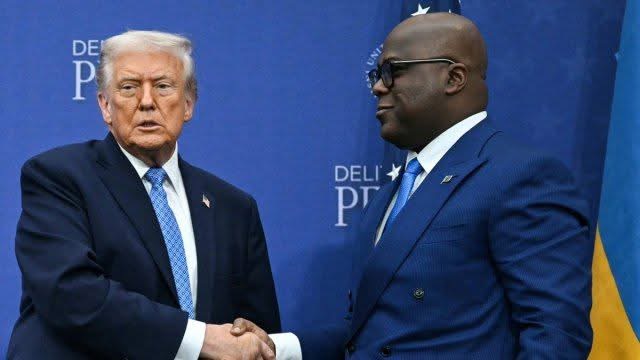
Within the Congolese context, the announcement intersects with ongoing diplomatic engagements between Kinshasa and Washington. These include efforts to consolidate a peace framework between the Democratic Republic of Congo and Rwanda following years of instability in the eastern provinces. Observers have also noted the parallel negotiation of agreements aimed at securing access to critical minerals, a sector in which the Democratic Republic of Congo holds significant global importance, particularly in the production of cobalt and other resources central to energy transitions.
Regional analysts have cautioned against interpreting the arrangement through a singular lens. While some perspectives frame the agreement primarily in terms of migration control, others situate it within a broader continuum of statecraft, where African governments exercise agency in negotiating partnerships that align with domestic priorities, fiscal considerations and regional diplomacy. The Congolese government has not publicly elaborated on how deportees will be integrated, monitored or supported beyond initial reception, leaving key implementation questions open.
Across the African continent, responses to similar agreements have varied, reflecting diverse national contexts and policy frameworks. In some instances, governments have emphasised the potential for financial and infrastructural support, while civil society actors have raised concerns about sovereignty, accountability and the human rights implications of hosting non national deportees.

As the first transfers are expected to take place in April, attention is likely to focus on the operationalisation of the agreement and its implications both within the Democratic Republic of Congo and across the region. The development underscores the increasing entanglement of migration policy with broader geopolitical and economic negotiations, highlighting the need for continued scrutiny from regional institutions, policymakers and communities.
Further details are expected to emerge as implementation begins, including clarification on legal frameworks, oversight mechanisms and the lived experiences of those affected by the arrangement. For ongoing coverage, readers may refer to reporting by Reuters Africa and institutional context provided by the International Organization for Migration.