Thursday, April 16, 2026
  • Login
The Southern African Times
  • Home
  • Southern Africa
  • Business
    • African Start ups
    • African Continental Free Trade Area
  • Technology
    • Lifestyle
      • Health
      • Culture
      • Food and Drink
      • Entertainment
  • Opinion
  • Sports
  • SAT Jobs
    • Events
  • About Us
    • Advertise with Us
    • Contact Us
No Result
View All Result
  • Home
  • Southern Africa
  • Business
    • African Start ups
    • African Continental Free Trade Area
  • Technology
    • Lifestyle
      • Health
      • Culture
      • Food and Drink
      • Entertainment
  • Opinion
  • Sports
  • SAT Jobs
    • Events
  • About Us
    • Advertise with Us
    • Contact Us
No Result
View All Result
The Southern African Times
No Result
View All Result
Home Markets

PMI Data to Gauge Market Impact of Middle East Conflict

by SAT Reporter
March 23, 2026
in Markets
0
PMI Data to Gauge Market Impact of Middle East Conflict

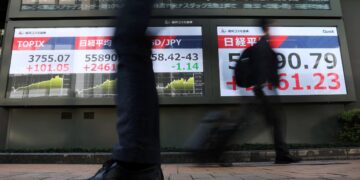
Global financial markets enter the week of 23 March under heightened sensitivity to geopolitical developments, with provisional business activity data expected to provide one of the first structured insights into how the ongoing Middle East conflict is shaping economic sentiment and capital flows. Early indications from market reporting suggest that rising energy prices have already begun to influence both foreign exchange positioning and sovereign bond yields, reflecting broader concerns about inflation persistence and policy responses.

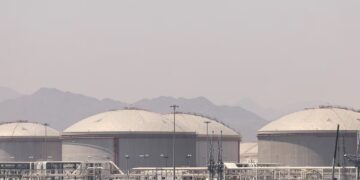
Purchasing managers’ indices in the United States and across Europe are due for release early in the week and are expected to serve as a near real time barometer of business confidence since the escalation of conflict in the Middle East. These surveys, widely regarded as leading indicators of economic momentum, arrive at a moment when global oil and gas prices have experienced notable volatility. According to recent market coverage from Dow Jones Newswires, economists anticipate that uncertainty linked to the conflict may begin to weigh on manufacturing activity in particular, given its sensitivity to energy costs.

The implications of these developments extend beyond traditional economic centres. For African economies, especially net energy importers across Southern and Eastern Africa, elevated fuel prices have historically translated into currency pressures, higher import bills, and inflationary spillovers. Conversely, energy exporters on the continent may experience temporary fiscal relief, although such gains are often moderated by global demand uncertainty and exchange rate volatility. This duality underscores the importance of interpreting global indicators such as PMI data through a differentiated African lens rather than a singular global narrative.


ADVERTISEMENT

In the United States, the Federal Reserve has maintained its policy rate while signalling that inflation risks remain tilted to the upside. The country’s status as a net energy exporter provides some insulation compared with energy dependent economies, yet bond markets continue to reflect caution. Treasury auctions scheduled throughout the week are expected to test investor appetite amid shifting expectations around future rate cuts. Market participants remain divided on whether slowing labour market conditions will ultimately compel the Federal Reserve to ease policy despite inflation concerns.

Across the euro area, sentiment indicators including PMI releases and consumer confidence data are likely to reflect the immediate impact of higher energy costs. Manufacturing sectors in Germany and France are particularly exposed due to their industrial intensity. Financial markets have already begun pricing in the possibility of further monetary tightening by the European Central Bank should inflation accelerate again. This recalibration has contributed to movements in European bond yields and the euro’s exchange rate against major currencies.

The United Kingdom faces a similar tension between inflation control and economic stability. Inflation data due this week will offer a backward looking snapshot, yet it is expected to influence expectations for future policy adjustments. Government bond yields have risen to levels not seen in over a decade, indicating investor concern about sustained price pressures. The Bank of England has signalled readiness to act if inflation expectations become unanchored.

Elsewhere, central banks in emerging markets are navigating a more complex terrain. Mexico is expected to consider a modest rate cut while maintaining a cautious outlook due to external shocks. South Africa’s monetary authorities are widely anticipated to hold rates steady, with attention focused on how energy driven inflation risks are communicated. These decisions highlight the balancing act faced by policymakers in economies where currency stability, inflation control, and growth objectives are tightly interlinked.

In Asia, Japan’s inflation trajectory remains comparatively subdued, aided in part by energy subsidies, though wage developments continue to be closely monitored as a determinant of sustainable price growth. China’s policy stance reflects an emphasis on financial stability and energy security, with authorities seeking to manage both domestic economic pressures and external volatility linked to geopolitical tensions.

For African policymakers and investors, the current environment reinforces the importance of resilience strategies that account for external shocks. Diversification of energy sources, regional trade integration, and prudent fiscal management remain central to mitigating the transmission of global volatility into domestic economies. At the same time, financial markets across the continent are increasingly responsive to global risk sentiment, particularly through currency movements and sovereign debt pricing.

As the week unfolds, the interaction between geopolitical developments, energy markets, and macroeconomic data will continue to shape investor behaviour. The forthcoming PMI releases are unlikely to provide definitive conclusions but will offer an early indication of how deeply the current crisis is filtering into global economic activity, with implications that extend well beyond traditional financial centres and into the lived economic realities of African societies.

Tags: African economiesbond yieldscentral bankseconomic outlookenergy pricesforeign exchangeGlobal MarketsInflationMiddle East conflictPMI data
Previous Post

Top 10 Happiest Countries in Africa: The Surprising 2026 Rankings

Next Post

Cape Town International Airport Named Africa’s Best in 2026 Skytrax Awards

SAT Reporter

Related Posts

China’s Zero Tariff Policy Opens New Export Pathways for Zimbabwe’s Blueberry Industry
Markets

China’s Zero Tariff Policy Opens New Export Pathways for Zimbabwe’s Blueberry Industry

by SAT Reporter
April 12, 2026
Africa’s Growth Holds Steady but Beneath the Surface Pressures Are Mounting
Markets

Africa’s Growth Holds Steady but Beneath the Surface Pressures Are Mounting

by SAT Reporter
April 12, 2026
South Africa’s Private Sector Returns to Modest Growth as PMI Edges Above 50
Markets

South Africa’s Private Sector Returns to Modest Growth as PMI Edges Above 50

by SAT Reporter
April 8, 2026
WTI Crude Drops 4 Per Cent to $108.50 on Hormuz Tensions
Markets

WTI Crude Drops 4 Per Cent to $108.50 on Hormuz Tensions

by SAT Reporter
April 8, 2026
African Capital Markets Conference spotlights diaspora capital for market growth
Markets

African Capital Markets Conference spotlights diaspora capital for market growth

by SAT Reporter
April 7, 2026
Next Post
Cape Town International Airport Named Africa’s Best in 2026 Skytrax Awards

Cape Town International Airport Named Africa’s Best in 2026 Skytrax Awards

Browse by Category

  • Africa AI
  • African Continental Free Trade Area
  • African Debt
  • African Start ups
  • Agriculture
  • AI Africa
  • Algeria
  • All News
  • Analysis
  • Angola
  • Arts / Culture
  • Asia
  • BOTSWANA
  • Botswana
  • BREAKING NEWS
  • BRICS
  • Burkina Faso
  • Burundi
  • Business
  • Business
  • Business Wire
  • Cameroon
  • Central Africa
  • Chad
  • China
  • Climate Change
  • Climate Changev
  • Community
  • Congo Republic
  • Conservation
  • Côte d’Ivoire
  • COVID 19
  • CRYPTOCURRENCY
  • Culture
  • Democratic Republic of Congo
  • Diplomacy
  • Eastern Africa
  • Economic Development
  • Economy
  • Education
  • Egypt
  • Elections 2024
  • Energy
  • Entertainment
  • Environment
  • Eritrea
  • Ethiopia
  • Europe
  • Fashion
  • Feature
  • Finance
  • Financial Inclusion
  • Food
  • Food and Drink
  • Foods
  • GABON
  • Ghana
  • Global
  • Global Africa
  • Guinea
  • Health
  • Immigration
  • in Southern Africa
  • International news
  • International Relations
  • Ivory Coast
  • Just In
  • Kenya
  • Lesotho
  • Libya
  • Life Style
  • Lifestyle
  • Literature
  • Malawi
  • Malawi
  • Mali
  • Markets
  • Mauritius
  • Middle East
  • Mining in Africa
  • Morocco
  • Mozambique
  • Namibia
  • Niger
  • niger
  • Nigeria
  • North Africa
  • North-Eastern Africa
  • Obituaries
  • Obituary
  • Opinion
  • PARTNER CONTENT
  • Politics
  • Property
  • Racism
  • Rwanda
  • Rwanda
  • SADC
  • SAT Interviews
  • SAT Investigation
  • SAT Jobs
  • Saudi Arabia
  • Senegal
  • Seychelles
  • South Africa
  • South Sudan
  • Sports
  • Startup Africa
  • STOCK EXCHANGE
  • Sudan
  • Sustainability
  • Sustainablity
  • Tanzania
  • Technology
  • Telecommunications
  • The Editorial Board
  • The Power Of She
  • Togo
  • Trade
  • Travel
  • Travel
  • Tunisia
  • Uganda
  • Uncategorized
  • Wealth
  • West Africa
  • World
  • World
  • Zambia
  • ZAMBIA
  • Zimbabwe
  • ZIMBABWE

Browse by Tags

#NewsUpdate #SouthAfrica #SouthernAfricanTimes #TheSouthernAfricanTimes AfCFTA africa African Continental Free Trade Area African development African Development Bank African economies African economy African Union Agriculture Angola Botswana Business China Climate change Cyril Ramaphosa Economic Development economic growth energy transition fiscal policy food security industrialisation Inflation Infrastructure Development International relations Investment Kenya Mozambique Namibia news Nigeria Regional Integration renewable energy Rwanda SADC South Africa Southern Africa sustainable development Tanzania United States Zambia Zimbabwe
ADVERTISEMENT

WHO WE ARE

The Southern African Times is a regional bloc digital newspaper that covers Southern African and world news. The paper also gives a nuanced analysis on news and covers a wide range of reporting which include sports, entertainment, foreign affairs, arts and culture.

Welcome Back!

Login to your account below

Forgotten Password?

Retrieve your password

Please enter your username or email address to reset your password.

Log In

  • Home
  • Southern Africa
  • Business
    • African Start ups
    • African Continental Free Trade Area
  • Technology
    • Lifestyle
      • Health
      • Culture
      • Food and Drink
      • Entertainment
  • Opinion
  • Sports
  • SAT Jobs
    • Events
  • About Us
    • Advertise with Us
    • Contact Us
Are you sure want to unlock this post?
Unlock left : 0
Are you sure want to cancel subscription?