Egypt’s recent deployment of advanced combat drones to its south western frontier has drawn renewed attention to the regional dimensions of Sudan’s protracted civil war, signalling a potential deepening of Cairo’s involvement in a conflict that has already exacted a devastating human toll across north eastern Africa.
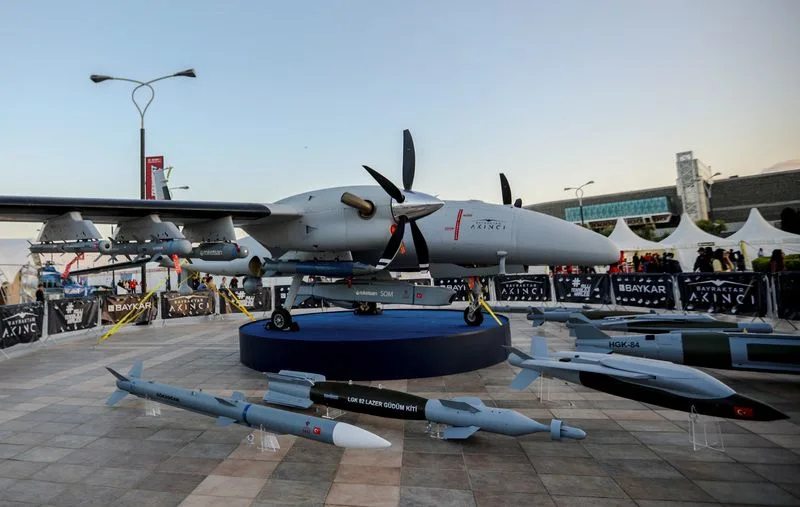
According to reporting by Reuters, satellite imagery and regional security assessments indicate that Egypt has stationed Turkish made Bayraktar Akinci drones at the remote East Oweinat airstrip, close to the Sudanese and Libyan borders. Analysts suggest that the move reflects heightened concern in Cairo following territorial gains by Sudan’s Rapid Support Forces in Darfur, particularly the capture of al Fashir, the last major stronghold of the Sudanese Armed Forces in the region. The fall of the city in late 2025 marked a critical moment in the war, intensifying displacement and deepening humanitarian crises documented by the United Nations Office for the Coordination of Humanitarian Affairs.
Egypt has long framed developments in Sudan as directly linked to its national security, citing shared borders, historic ties along the Nile basin and the risk of cross border instability. While Egyptian officials have previously acknowledged providing logistical and technical assistance to Sudan’s military, they have publicly avoided confirming direct combat operations. Nevertheless, satellite images reviewed by independent defence specialists show repeated appearances of Akinci drones at East Oweinat over several months, alongside runway upgrades and expanded support infrastructure. These observations have been corroborated by analysis from firms such as Planet Labs and flight tracking data from FlightRadar24, which record multiple cargo flights from Turkey to southern Egypt.



The Akinci, produced by Turkish defence company Baykar, is among the most capable unmanned aerial vehicles currently in service, designed for long endurance missions and capable of carrying precision guided munitions. Turkey confirmed in 2024 that it had agreed to sell drones to Egypt following the normalisation of diplomatic relations between the two countries, though details of operational deployment have not been formally disclosed. Turkish officials have defended Egypt’s actions as legitimate security measures, while emphasising Ankara’s broader engagement with multiple actors in the region.
Sudan’s war, which erupted in April 2023 from a power struggle between the national army and the Rapid Support Forces, has increasingly drawn in external stakeholders. Egypt is part of the so called Quad, alongside Saudi Arabia, the United Arab Emirates and the United States, that has sought to mediate an end to the conflict, albeit without success. At the same time, UN experts have accused the UAE of supplying arms to the Rapid Support Forces, a claim Abu Dhabi denies, underscoring the complex web of alliances shaping the war. Reporting by Reuters and analysis from the Royal United Services Institute highlight how these competing interests have turned Sudan into a theatre of regional rivalry.
From an African perspective, the implications extend beyond state security calculations. The war has displaced millions of civilians, disrupted pastoral and agricultural livelihoods across Darfur and neighbouring regions and strained fragile border communities from Chad to South Sudan. Observers warn that any escalation involving neighbouring states risks further entrenching violence and diverting attention from urgently needed humanitarian access and inclusive political dialogue. The African Union and regional bodies such as IGAD have repeatedly called for African led solutions that prioritise civilian protection and accountability, though their influence has been constrained by geopolitical pressures.

Egyptian analysts argue that Cairo’s actions are defensive in nature, aimed at preventing armed groups from consolidating control near its borders. Critics counter that increased military engagement could widen the conflict and complicate peace efforts. What remains clear is that Sudan’s crisis cannot be understood through a single narrative of external intervention or internal collapse. It is shaped by colonial legacies, uneven development, regional power politics and the resilience of communities striving to survive amid prolonged violence.
As Sudan’s war approaches its third year, the presence of advanced drones on Egypt’s border symbolises both the changing character of warfare in Africa and the urgent need for diplomacy that centres Sudanese voices. Any sustainable resolution will depend not only on the calculations of powerful neighbours, but on a collective commitment to human security, regional cooperation and the dignity of those most affected by the conflict.