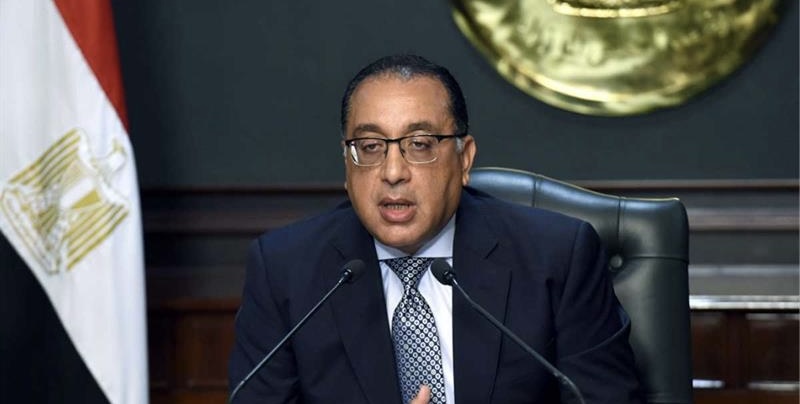
Egypt has formalised agreements totalling over $1.8 billion to establish two large-scale renewable energy and battery manufacturing projects, marking a significant step in the country’s pursuit of energy security and sustainable industrialisation. The accords were signed in the presence of Prime Minister Mostafa Madbouly, reflecting growing investor confidence in Egypt’s green energy ambitions and wider economic reform strategy.
The first initiative, led by Norway’s renewable energy firm Scatec ASA, will see the development of an extensive solar power complex known as Energy Valley – Valley for Sustainable Energy in Minya Governorate. This project will integrate battery energy storage systems to ensure continuous clean power supply. According to the Egyptian Cabinet, the project will deliver an estimated capacity of 1.7 gigawatts of solar energy supported by four gigawatt hours of battery storage, making it one of the world’s most extensive integrated renewable energy undertakings and the first in the region to provide round-the-clock clean electricity at competitive rates.
Complementing this is a second project headed by China’s Sungrow, a global leader in renewable energy technology. Sungrow will construct a battery energy storage system (BESS) manufacturing facility within the Suez Canal Economic Zone (SCZone). The factory, which will occupy 50,000 square metres, is expected to have an annual production capacity of 10 gigawatt hours once fully operational. Production is scheduled to begin in April 2027. A portion of its output will be dedicated to supplying the Energy Valley solar project, further embedding local value chains within Egypt’s renewable energy sector.



The agreements were finalised in collaboration with the Ministry of Electricity and Renewable Energy and the Suez Canal Economic Zone Authority. The Egyptian Electricity Transmission Company signed a long-term power purchase agreement with Scatec’s local subsidiary, Valley for Sustainable Energy. Land usufruct contracts were also signed with the New and Renewable Energy Authority for the Minya solar site and with the SCZone for the Sungrow plant located in the TEDA Egypt industrial zone in Ain Sokhna.
Scatec has awarded Sungrow the contract to supply the battery systems used in the Energy Valley project, strengthening technological cooperation between both entities and supporting Egypt’s strategy to localise renewable energy component manufacturing.
Prime Minister Madbouly emphasised that localising renewable energy industries forms a cornerstone of Egypt’s green transformation agenda. He noted that attracting such substantial investment demonstrates the international community’s confidence in Egypt’s economic direction and policy environment.
The Energy Valley initiative is particularly significant for the African continent. It underscores Egypt’s growing role as a renewable energy hub and industrial gateway, connecting Africa, the Middle East, and Europe through green infrastructure. The inclusion of local manufacturing within the Suez Canal Economic Zone signifies a shift towards technology transfer and value addition within Africa, aligning with continental objectives outlined in the African Union’s Agenda 2063.
Both projects are positioned to contribute to regional energy stability and industrial development, offering a model for other African economies seeking to balance sustainable energy expansion with domestic industrialisation. As the continent continues to face energy security challenges, Egypt’s partnership with both Norwegian and Chinese firms may serve as a pragmatic demonstration of how global collaboration can advance African-led development priorities.

This development follows Scatec’s recent expansion across Africa, including new operations in Botswana and South Africa. The company’s growing presence illustrates a broader trend of renewable energy investment in emerging African markets, where the potential for solar and wind generation remains among the highest globally.
Through these agreements, Egypt is not only scaling up clean energy capacity but also positioning itself as a critical manufacturing and technology centre within the wider African renewable energy landscape.