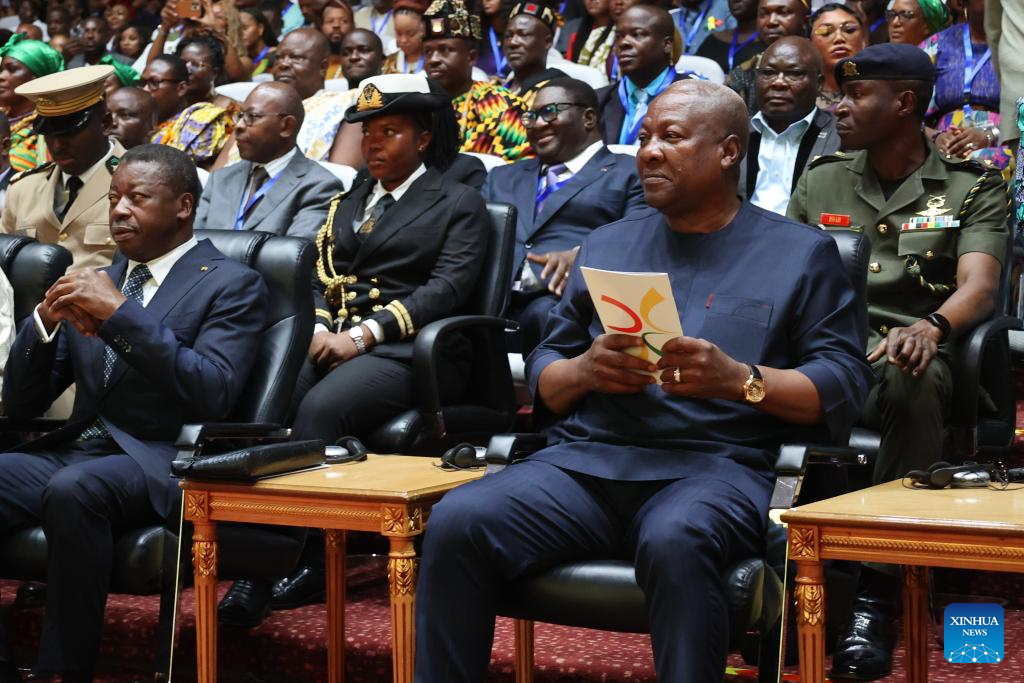
Ghana’s President John Dramani Mahama has been urged to mobilise his counterparts across the African continent to support a coordinated call for reparations in response to the enduring legacies of slavery and colonialism. The appeal came during discussions in Accra with an international delegation representing Africa, the Caribbean, Europe, Latin America, and the United States, which presented a series of recommendations aligned with the African Union’s reparations agenda.
The delegation encouraged President Mahama to exercise what it termed “courage over comfort,” calling on African heads of state to demonstrate leadership and unity in advancing the reparations dialogue within both regional and global fora. The appeal reflects a renewed continental effort to consolidate advocacy around restorative justice, as the African Union continues to refine its vision for reparations through financial compensation, formal acknowledgment of historical injustices, and policy reform.
Earlier this year, the African Union launched a continent-wide initiative to establish a “unified vision” for reparations, aimed at addressing the human and socio-economic consequences of centuries of transatlantic slavery and European colonial domination. The initiative seeks to define what meaningful reparations might entail for African nations and the diaspora, from moral and institutional redress to the creation of frameworks that confront the structural inequalities rooted in that history.



Historical records indicate that between the fifteenth and nineteenth centuries, approximately 12.5 million Africans were forcibly removed from their homelands and transported across the Atlantic aboard European ships. The transatlantic slave trade represented one of the most extensive forced migrations in history, underpinning the economic rise of European and American societies while devastating African social structures and economies. Advocates for reparations argue that the social and economic disparities experienced today across the African world are direct continuations of that historical injustice.

While Ghana has long positioned itself at the forefront of the reparations movement in Africa, the delegation meeting in Accra emphasised the importance of continental coherence and collaboration. They stressed that a unified African stance, informed by the participation of civil society, academia, and affected communities, would strengthen the continent’s negotiating position within international dialogues.
During the engagement, Ghana’s Foreign Minister Samuel Okudzeto Ablakwa and the presidential envoy on reparations, Ekwow Spio-Garbrah, joined discussions with the delegation to explore strategic approaches to deepening regional engagement. The delegation’s visit follows the recent European Union–African Union summit in Luanda, where both regions formally acknowledged the immense suffering caused by slavery and colonialism. However, the summit stopped short of endorsing a reparations framework or committing to tangible measures of restitution.
Ghana’s Vice President Jane Opoku-Agyemang used the summit platform to call upon European Union member states to support a United Nations resolution proposed by Ghana, which seeks to classify slavery as one of the “gravest crimes against humanity.” The resolution is expected to further stimulate international debate on moral accountability, recognition, and redress for historical wrongs.
Discussions around reparations remain complex and deeply contested. While advocates view reparations as a necessary pathway toward historical justice and societal healing, critics argue that current governments and institutions should not bear responsibility for the actions of their predecessors. Nonetheless, the movement’s supporters maintain that reparative measures are not solely about financial compensation but about moral reckoning, systemic reform, and the rebalancing of global narratives that have historically marginalised African agency.
For Ghana and other African nations, the pursuit of reparations has evolved beyond a call for compensation to a broader demand for historical truth, equitable global relationships, and the recognition of Africa’s centrality in world history. The growing momentum around the African Union’s initiative suggests that the conversation, once confined to academic and activist circles, is now increasingly entering the realm of policy and diplomacy.
As the movement continues to gain traction, Ghana’s leadership in advocating for an African-centred, collaborative approach may shape how the continent articulates its demands for justice and remembrance on the international stage.