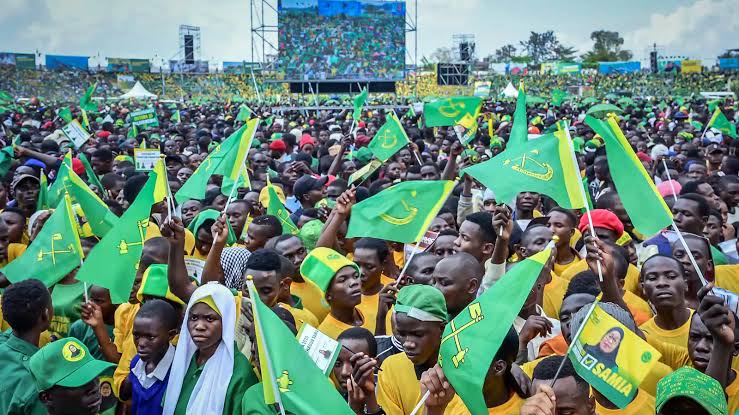
Tanzanian authorities have imposed a night-time curfew across the nation’s commercial capital, Dar es Salaam, following widespread civil unrest that coincided with the country’s general elections held on Wednesday. The decision was announced by the Inspector General of Police, Camillus Wambura, during a nationally televised address on Wednesday evening.
According to Wambura, the curfew prohibits movement in public spaces after 6 p.m., with the exception of law enforcement personnel assigned to special duties. The Inspector General did not disclose the duration of the curfew, leaving many residents uncertain about the length of the restrictions and the implications for daily life and business operations in the city.
The announcement follows incidents of public disorder reportedly linked to frustration over electoral processes, with several instances of property destruction confirmed in parts of Dar es Salaam. Local eyewitness accounts and preliminary security reports suggest that confrontations between demonstrators and police forces escalated in some areas, with law enforcement allegedly responding with live ammunition. While no official casualty figures have been released, images and video footage circulated online suggest that the unrest had significant intensity in several neighbourhoods.




Amid the unfolding events, internet access across the country has been significantly disrupted, raising concerns among civil society organisations and international observers about access to information, freedom of expression, and the transparency of the electoral process. Connectivity interruptions were confirmed by global internet observatory NetBlocks, which reported a drop in real-time connectivity levels in multiple regions of the country. See NetBlocks report.
In addition to the disruption of communication services, multiple incidents of vandalism were reported, including the destruction of police stations, petrol stations, commuter buses, and polling centres. It remains unclear whether these incidents were spontaneous or orchestrated, and authorities have yet to release an official statement attributing responsibility or outlining the scale of arrests or injuries.
The Tanzanian Police Force has called for calm, urging citizens to allow constitutional institutions to address any grievances arising from the electoral process. The National Electoral Commission (NEC) has not yet released final results, though it reiterated that vote counting is ongoing and that all electoral complaints will be handled through established legal channels.
This latest development unfolds within a broader historical and regional context in which elections across the African continent frequently present a complex intersection of democratic aspiration, institutional maturity, and citizen engagement. While electoral contests often reflect the vibrancy of political pluralism, they also expose longstanding tensions over governance, state legitimacy, and the social contract between governments and the governed.
Observers note that incidents such as those witnessed in Dar es Salaam highlight the importance of safeguarding civic space while maintaining public order. According to regional democracy advocacy groups such as the Electoral Institute for Sustainable Democracy in Africa (EISA), the emphasis should be on inclusive dialogue and institutional accountability to rebuild trust in electoral outcomes. Explore EISA’s electoral governance insights.
The Tanzanian government has yet to indicate when internet services will be restored or whether the curfew will extend beyond Dar es Salaam. In the absence of clear timelines, civil society actors and international monitors have called for transparent communication and lawful procedures in addressing electoral grievances.
As the region continues to grapple with the complexities of democratisation, the unfolding situation in Tanzania underscores the broader imperative of balancing state security concerns with the inalienable rights of citizens to political participation and peaceful assembly.