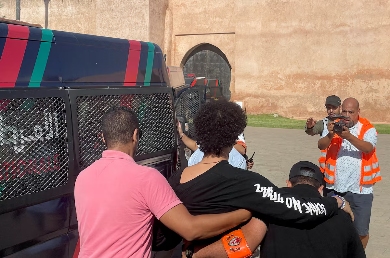
Moroccan security forces on Monday night moved swiftly to block youth-led demonstrations for the third day running, arresting dozens in cities including Rabat, Casablanca, Agadir, Tangier and Oujda, as calls for better healthcare and education continue to reverberate across the country.
The protests were mobilised online by a loosely organised group calling itself “GenZ 212,” which has been using TikTok, Instagram and the gaming platform Discord to rally support. Although the gatherings were largely peaceful, a heavy police presence, both uniformed and in plain clothes, ensured that marches were contained almost as soon as they began. In Rabat, witnesses saw young protesters detained the moment they attempted to chant slogans or speak to the press.
Among those arrested was Najat Anouar, president of a child protection association, who had arrived at the protest to investigate claims that minors were being detained. “I came here to investigate allegations that the under-age have been arrested and got arrested myself,” she told Reuters after being released two hours later.



Despite the clampdown, a small group of demonstrators in central Rabat briefly managed to cry out “freedom, dignity, and social justice,” a rallying cry that recalls the 2011 protests which led to constitutional reform and greater powers for Morocco’s elected government. In Casablanca the night before, protesters had blocked a major highway, while in Agadir videos posted online showed police dispersing students near the university campus.
The current wave of anger was sparked earlier this month by protests in Agadir over poor hospital conditions, where patients and families denounced overcrowding, shortages of staff, and a chronic lack of basic medical supplies. The outrage quickly spread, tapping into wider frustrations over unemployment and social inequality. According to the national statistics agency, Morocco’s overall unemployment rate stands at 12.8 percent, with youth unemployment at a staggering 35.8 percent and nearly one in five graduates unable to find work.

The government and judicial authorities have yet to comment on the protests or the scale of the arrests, and the Interior Ministry did not respond to requests for clarification. The absence of an official response has done little to quell speculation about how authorities intend to manage the growing discontent among younger citizens.
For many of those who took to the streets, the issue is not only about healthcare but also about trust in public institutions. “We want a better health system and accountability,” said Brahim, a 25-year-old protester in Rabat, moments before fleeing to avoid detention. His words reflect a sentiment increasingly voiced by Morocco’s Generation Z, who have grown up online, networked, and impatient with what they perceive as entrenched failings.
What began as outrage over hospital conditions has now evolved into a broader conversation about the social contract between Morocco’s rulers and its youth. The slogans of “freedom, dignity, and social justice” echo a decade-old struggle, yet they also signal that a new generation, born after the Arab Spring, is seeking to redefine its future. Whether the government chooses engagement or suppression in the days ahead may determine if these protests fade or ignite a deeper reckoning.