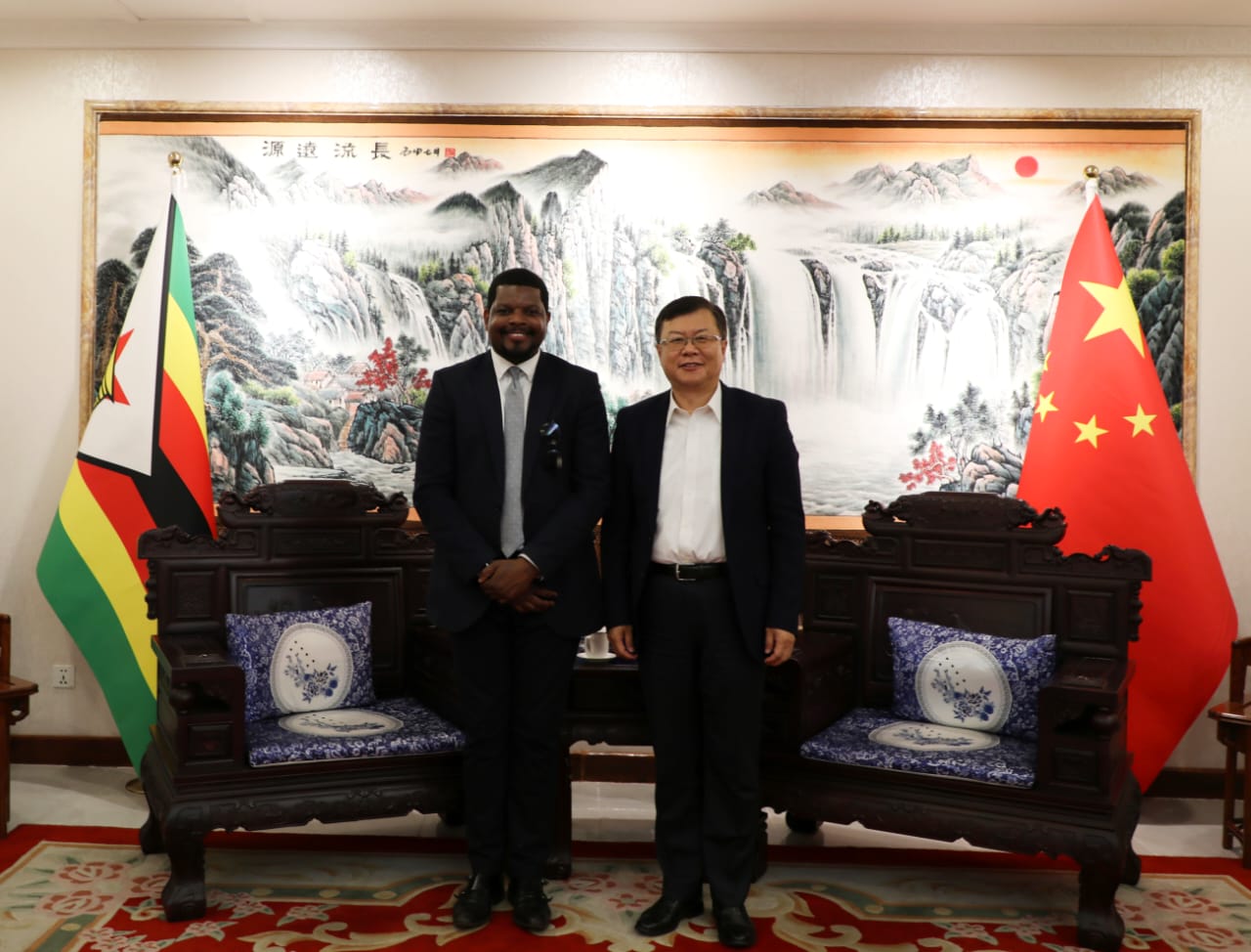
Writing from London, but reflecting on my recent visit to Harare, I had the privilege of meeting H.E. Zhou Ding, Ambassador of the People’s Republic of China to Zimbabwe. I travelled as Chief Executive of The Southern African Times and as founder of Sankofa Capital, our advisory arm that introduces international investors into Africa. This engagement followed similar work in Botswana and South Africa, where I accompanied UK-based investors seeking exposure to southern Africa’s growth opportunities. For me, the meeting with Ambassador Zhou was not simply a diplomatic courtesy; it was an opportunity to interrogate the data behind China’s African investments, to understand the regional implications, and to ensure that our reportage and advisory work remain impartial, evidence-led, and global in outlook.
My Zimbabwean heritage inevitably shapes my perspective. Having grown up in a country that has often been a frontline for both opportunity and volatility, I recognise the stakes of foreign capital more acutely than most. Yet the questions I raised with Ambassador Zhou — and the answers they require — are not limited to Zimbabwe alone. They speak to Africa’s wider investment landscape, where Chinese capital has become a defining feature of infrastructure, mining, manufacturing, and energy projects across the continent.
A useful place to begin is employment. Figures widely circulated by the Chamber of Chinese Enterprises in Zimbabwe suggest that more than 100,000 Zimbabweans are employed directly by Chinese-linked firms. Similar patterns are observable elsewhere: in Ethiopia, Chinese industrial parks have created tens of thousands of jobs in textiles and light manufacturing; in Nigeria, Chinese-backed ventures in free trade zones support thousands more; and in Kenya, the Standard Gauge Railway project engaged local workers on a vast scale during construction. Yet in each case, the headline numbers are often contested, as disaggregated labour data are scarce and independent verification is limited.



Still, narrowing the analysis to formal payrolls risks missing the wider footprint. Africa’s economies are heavily informalised — Zimbabwe perhaps more than most — and it is within these spaces that Chinese commercial activity often has its deepest resonance. In Harare’s Mbare Musika, in Johannesburg’s China Mall, in Lusaka’s Kamwala market, or in Dakar’s Sandaga district, SMEs and informal traders depend heavily on Chinese supply chains, whether in textiles, electronics, construction materials, or household goods. Their livelihoods are not captured in FDI statistics but are nonetheless shaped by them. This dual dynamic — formal jobs plus informal spillovers — makes measuring impact both complex and essential.

Global comparisons help anchor the conversation. The World Steel Association estimates that every direct job in steel supports up to eight additional jobs downstream. In India, more than 2.5 million people are employed directly and indirectly in steel, with construction absorbing the majority of demand. In China, the figure exceeds 10 million, underpinned by construction, automotive, and machinery. In Brazil, hundreds of thousands of jobs in automotive and fabrication are sustained by local steel supply. These examples demonstrate a key investment principle: steel and other heavy industries are not merely productive sectors in themselves; they are multipliers that generate employment and industrial activity far beyond their factory gates.

Zimbabwe’s Manhize Steel Plant illustrates this logic at the country level, but the principle applies continent-wide. If well planned, Africa’s nascent steel sector could shift the balance of trade, reduce import dependence, and stimulate entire industrial clusters. Manhize is projected to create 25,000 direct jobs and up to 150,000 indirect ones — numbers that, if realised, would transform local labour markets. But similar opportunities exist in Nigeria, Angola, and Mozambique, where steel and heavy manufacturing could anchor value chains in construction, energy, and automotive. For policymakers, the challenge is not to secure projects alone, but to design the tax, labour, and skills ecosystems that convert capital investment into durable employment.
This is where fiscal and educational policy become decisive. Across Africa, unpredictable or extractive tax regimes deter investment just as industrialisation gains momentum. Investors require fiscal clarity and consistency to plan long-term deployments. Equally important is human capital. Universities and technical colleges must expand curricula not only in engineering and metallurgy but also in Chinese language, culture, and economic outlooks as they pertain to Africa. Understanding the rationale of one of the continent’s largest capital providers is not a concession of sovereignty; it is a prerequisite for negotiating from a position of strength.
The policy choices matter beyond heavy industry. Consider Ethiopia, where the success of Chinese-built industrial parks in creating jobs has been tempered by questions of sustainability and integration into local supply chains. Or Kenya, where the Standard Gauge Railway delivered modern infrastructure but left behind a challenging debt burden and debates about cost-benefit balance. Or Zambia, where Chinese involvement in mining has generated significant employment while also prompting public scrutiny of labour standards. Each case underscores the importance of measuring not only outputs but also outcomes: whether jobs are durable, skills are transferred, and fiscal space remains intact.
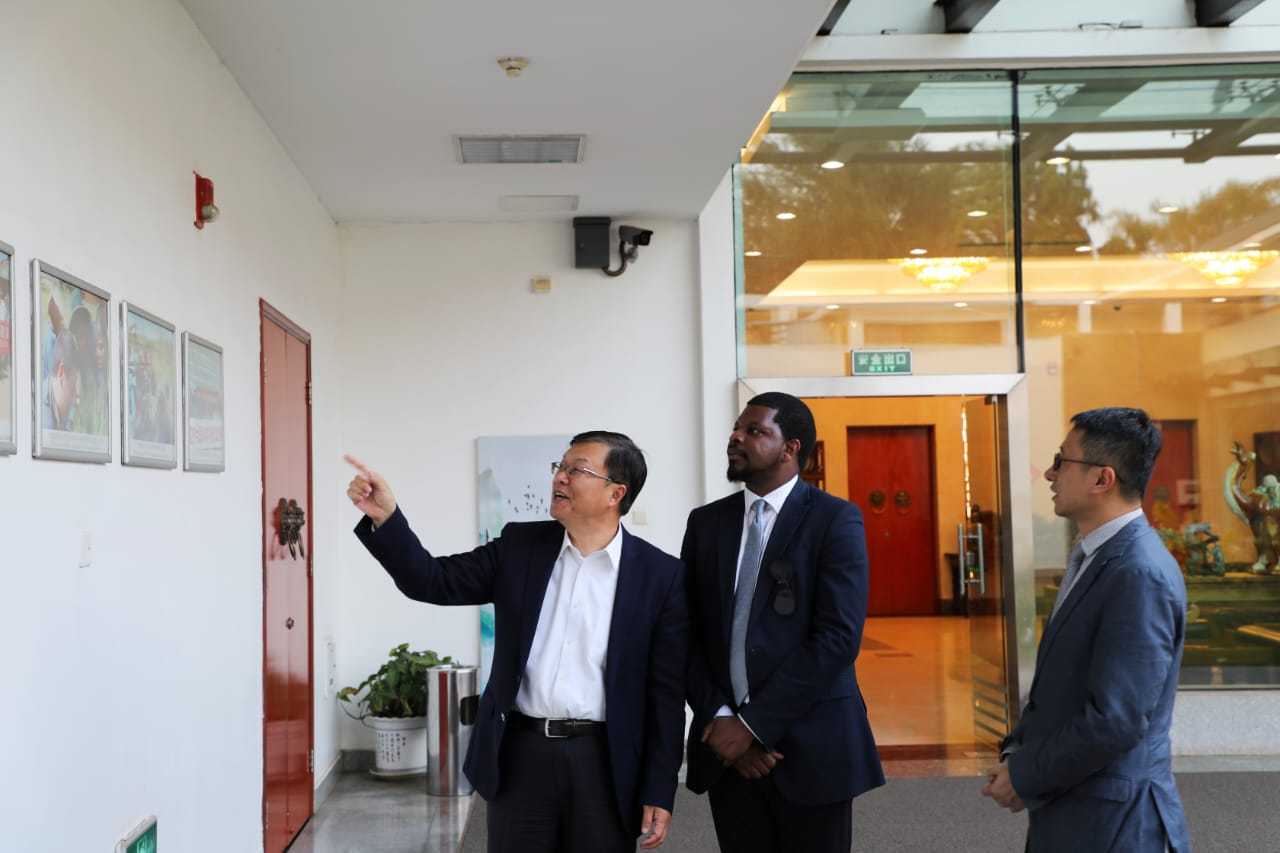
My meeting with Ambassador Zhou underscored these dynamics. We discussed employment, capital flows, and the architecture beneath the numbers: disclosure standards for wages, the design of local-content requirements, and mechanisms to ensure that infrastructure spend — whether hydroelectric projects, roads, or industrial plants — links into industrial strategy rather than remaining isolated balance-sheet items. These are not Zimbabwean questions alone. They are continental ones, relevant wherever Africa must decide how to balance foreign capital inflows with domestic development priorities.
From my vantage point in the UK, working both as Chief Executive of The Southern African Times and through Sankofa Capital to introduce investors into Africa, impartiality is more than journalistic discipline; it is an investment principle. Narratives about Africa’s partnerships must be tested against evidence, recognising both the opportunities and the risks. When Chinese investors create jobs, pay taxes, and transfer skills, we will acknowledge it. When there are deficiencies — in safety, environmental compliance, or labour relations — we will report those with equal clarity.
As a Zimbabwean, I am acutely aware of how narratives can shape both domestic policy and international capital flows. As a London-based executive, I also know that investors — whether from the UK, China, or elsewhere — are watching Africa through a global lens. Our role is to bridge those perspectives, telling Africa’s story with integrity, context, and rigour. That is the standard with which I approached my meeting with Ambassador Zhou, and it is the standard with which I will continue to cover Africa’s engagement with China — and with every other partner — in the months ahead.