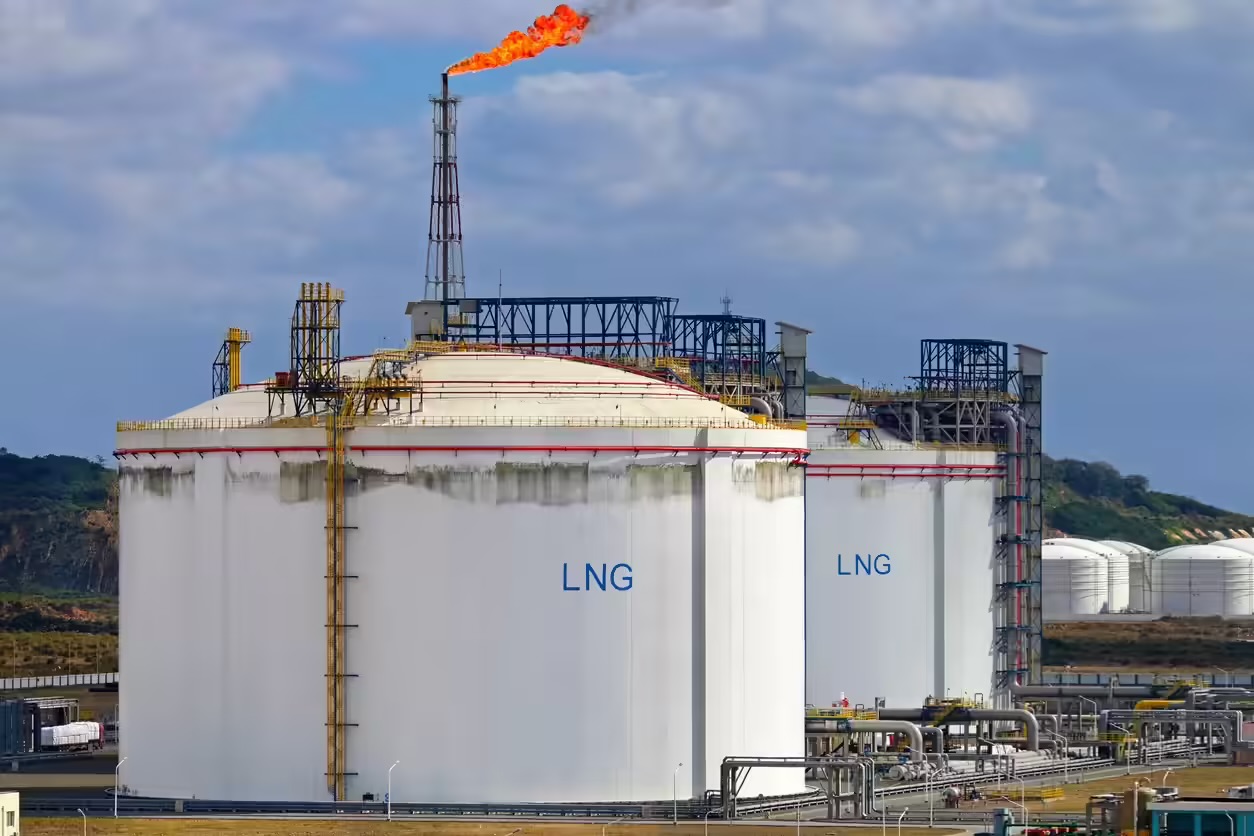
Oil India Ltd, the state-run energy company, has indicated that development of the long-stalled Mozambique liquefied natural gas (LNG) project could resume by the second quarter of 2025, citing improved security conditions in the northern province of Cabo Delgado. The $20 billion project, operated by TotalEnergies, was suspended in 2021 following a deadly insurgent attack that led the French multinational to declare force majeure.
At Oil India’s annual shareholders’ meeting, Chairman Ranjit Rath noted that the project is “well positioned” to respond to India’s rising demand for natural gas. His statement aligns with earlier remarks by TotalEnergies’ Chief Executive, Patrick Pouyanné, who announced in June that development could restart as early as this year, depending on continued improvements in regional stability.
The project structure reflects a diverse mix of international and regional investment. TotalEnergies holds the largest share at 26.5%, followed by Japan’s Mitsui & Co. with 20% and Mozambique’s state-owned Empresa Nacional de Hidrocarbonetos (ENH) with 15%. Indian state-owned companies – ONGC Videsh, Bharat Petroleum Resources, and Oil India – collectively own 30%, while Thailand’s PTTEP is also a stakeholder.




The Mozambique LNG initiative represents one of the largest foreign investments in Africa, with the potential to transform Mozambique into a leading global supplier of LNG. Analysts have highlighted its significance not only for export markets but also for its possible contribution to domestic electrification and economic diversification, provided that revenues are managed transparently (Ndungu, 2024; World Peace Foundation, 2023).
Oil India’s announcement also came alongside news of substantial dividends from its Russian energy investments, including stakes in Vankorneft and Taas-Yuryakh. Rath confirmed that dividends worth $942 million have already been realised, equivalent to more than 91% of its initial investment, with full recovery expected in the next year.
For Mozambique, the prospect of restarting LNG operations is tied closely to the wider security situation in Cabo Delgado, where insurgency and displacement have shaped local realities. The project’s resumption will therefore be watched carefully across Southern Africa, where governments are weighing the dual imperatives of energy development and stability. Critics note that while LNG projects promise significant revenues, they must also address local community impacts, regional energy justice, and environmental concerns (Bond, 2022; Kohnert, 2023).
The Mozambique LNG project exemplifies Africa’s complex role in the evolving global energy order. For some, it symbolises economic opportunity and new partnerships with Asia, particularly India and China, both of which are expanding their African energy ties (Kiryakova et al., 2025). For others, it represents the challenge of reconciling fossil fuel expansion with global commitments to a just energy transition.
As development edges closer to restarting, Mozambique finds itself at the crossroads of competing global energy imperatives – balancing export potential, domestic development, and the urgent need for inclusive, sustainable outcomes.