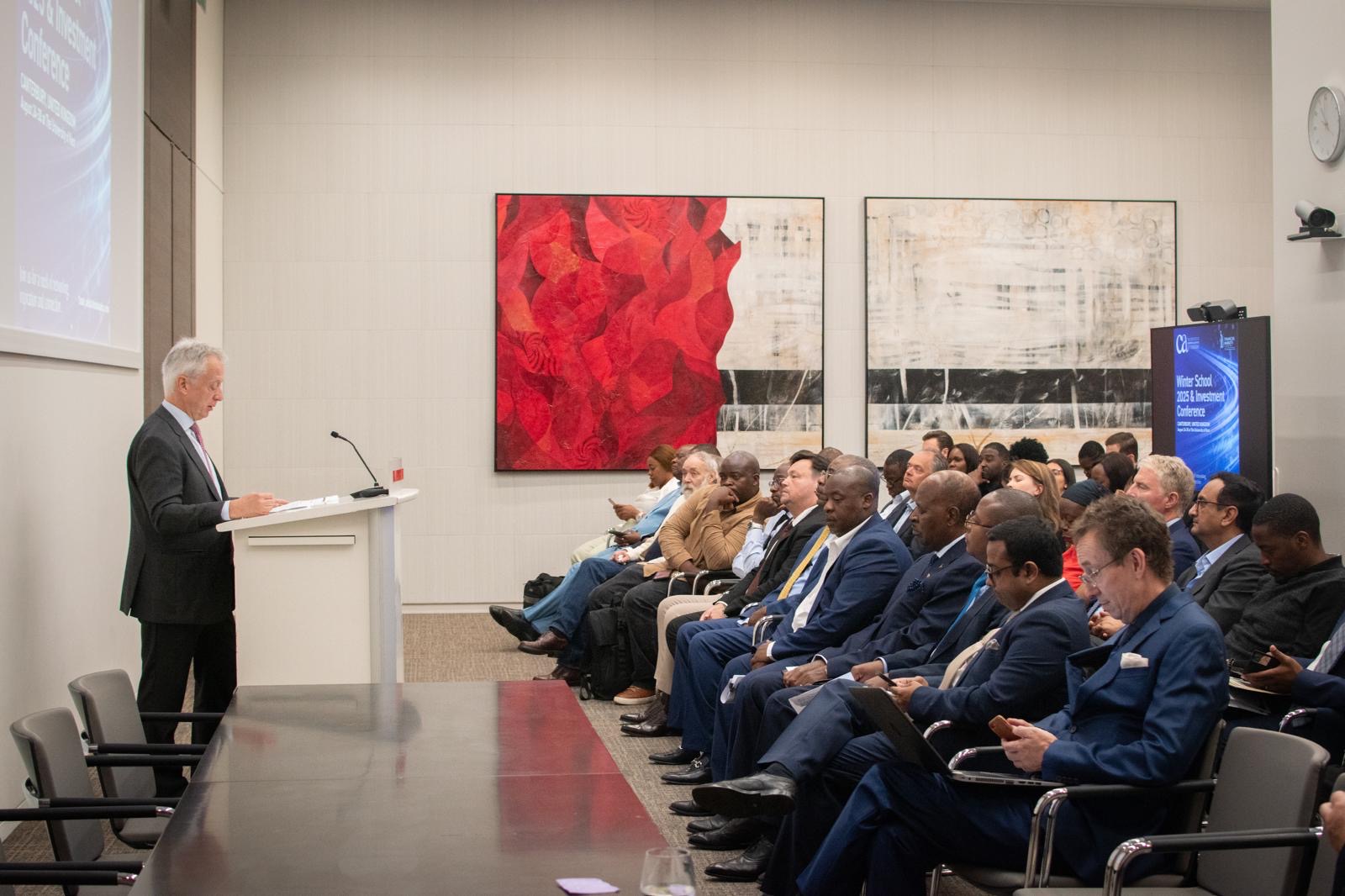
The Financial Markets Indaba (FMI), in partnership with the Institute of Chartered Accountants of Zimbabwe (ICAZ), convened the 2025 Winter School and Investment Conference across Canterbury and London, drawing policymakers, corporate leaders, investors, and the diaspora into three days of deliberations on Zimbabwe’s evolving investment landscape. The programme underscored the country’s potential to attract capital across diverse sectors while embedding its story within broader African economic narratives.
Held under the theme Global Perspectives, Local Impact: The Evolving Role of Finance Experts, the conference spotlighted Zimbabwe’s deal pipeline in mining, infrastructure, financial services, energy, and fintech. At its core was the ambition to foster deeper connections between Zimbabwean institutions and the international investment community, including global financiers and members of the diaspora eager to participate in shaping the country’s economic future.
The opening sessions at the University of Kent in Canterbury examined policy, regulation, and fintech-driven innovation. Zimbabwe’s Deputy Minister of Mines and Mining Development, Hon. Eng. Polite Kambamura, reaffirmed the country’s mineral endowment, particularly in lithium, gold, and platinum, while stressing the importance of value addition and responsible mining practices. Alongside this, Tafadzwa Chinamo, Chief Executive of the Zimbabwe Investment and Development Agency (ZIDA), highlighted the government’s investor-friendly reforms aimed at simplifying investment processes, noting that predictable regulation is central to attracting long-term capital.



A range of corporate voices complemented these policy insights. Ngoni Mudzamiri, Group CFO of the Mutapa Investment Fund, discussed strategies for managing a portfolio of over sixty state-owned enterprises to ensure sustainable returns. From the aviation sector, Verengai Ruswa of the Airports Company of Zimbabwe outlined modernisation projects designed to align Zimbabwe’s infrastructure with international standards. Meanwhile, Tandiwe Masunda of ZB Financial Holdings emphasised financial solutions enabling capital mobilisation, and Justin Bgoni, Chief Executive of the Victoria Falls Stock Exchange (VFEX), highlighted how USD-denominated investments could boost liquidity and deepen market confidence. Contributions from CBZ Holdings and Old Mutual Zimbabwe further reflected the financial sector’s pivotal role in economic stabilisation and growth.
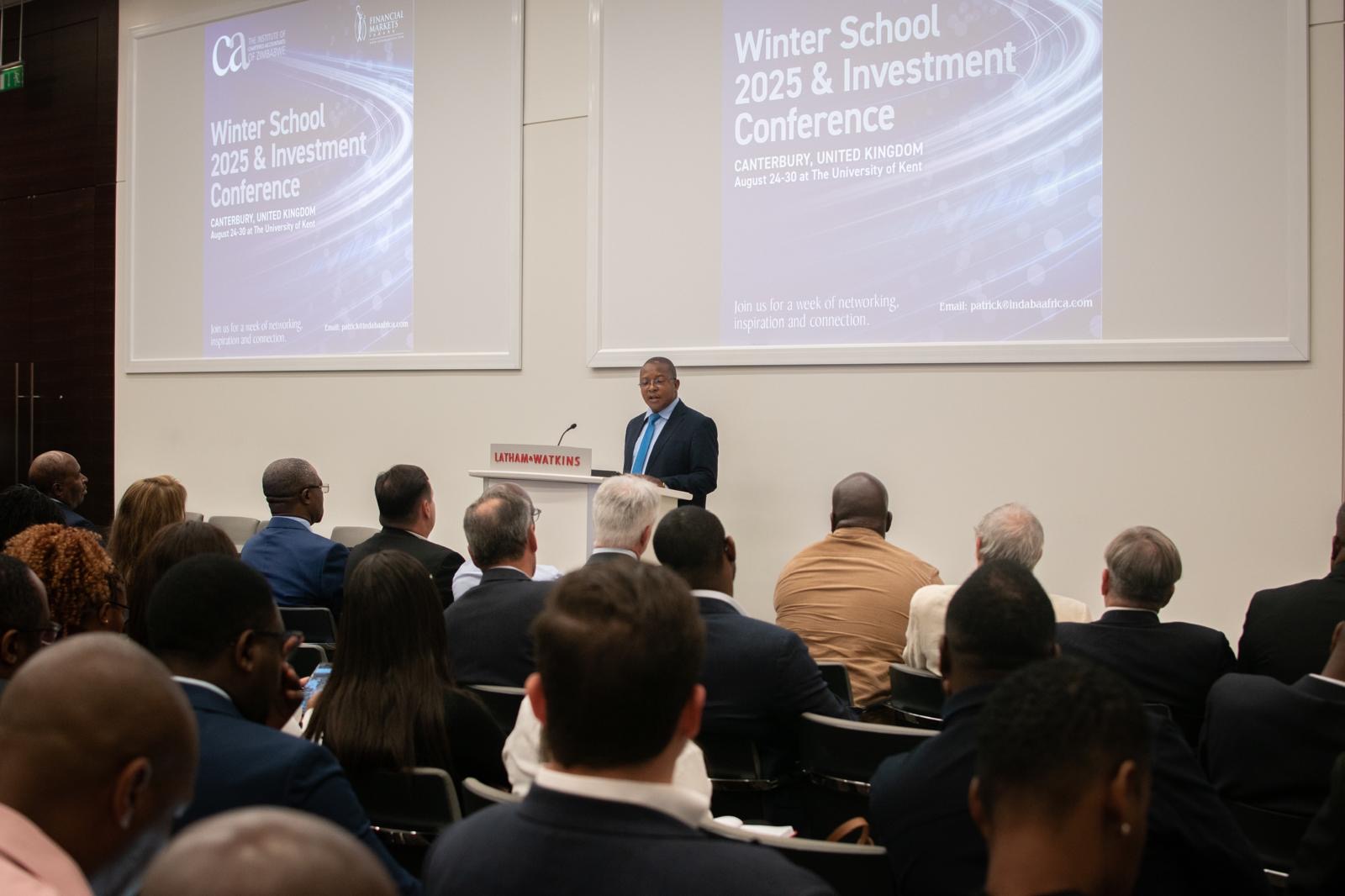
The London leg of the conference pivoted towards practical investment engagements. Project-based presentations, exclusive roundtables, and one-to-one sessions allowed Zimbabwean sponsors to connect directly with international financiers, capital market actors, and legal advisers. Attendees included representatives from the UK’s Department for Business and Trade, resource giant Glencore, and the Private Infrastructure Development Group (PIDG), underscoring the breadth of interest in Zimbabwe’s frontier-market opportunities.

Sustainability and the global energy transition featured prominently. Organisations such as SolarCentury Africa, Pineapple Power Corporation Plc, and EcoStim brought expertise in renewable energy, while the Critical Minerals Association discussed the importance of transparent supply chains in global markets increasingly reliant on African critical minerals. The event also attracted the Westminster Africa Business Association, which promotes UK-Africa trade, TLG Capital, known for high-impact African investments, investment bank Peel Hunt LLP, and the global law firm Latham & Watkins LLP. Their participation reflected the growing diversity of actors considering Zimbabwe as part of broader African strategies.
The final day of the conference was marked by the Zimbabwe Business Forum at the Embassy of Zimbabwe in London. This gathering centred on diaspora engagement, highlighting how financial institutions can design solutions that meet the needs of Zimbabweans abroad while reinforcing economic ties with the homeland. The Victoria Falls Stock Exchange presented offshore capital participation opportunities, EcoCash, Zimbabwe’s leading mobile money platform, showcased its cross-border payment innovations, and Old Mutual Zimbabwe highlighted tailored diaspora investment products. Makesure Risk Solutions added insurance and risk management solutions to the spectrum of offerings. Collectively, these services were framed as instruments for strengthening diaspora linkages, facilitating remittances, and expanding channels for long-term investment partnerships.
Beyond the immediate discussions, the conference illuminated several broader realities. First, Zimbabwe’s integration into global markets is increasingly tied to its ability to demonstrate transparency, accountability, and sustainability. Second, while opportunities exist in traditional sectors such as mining, there is a strong push towards renewable energy and digital financial solutions, aligning Zimbabwe with global investment trends. Third, diaspora engagement is being reframed not merely as remittances but as structured, long-term participation in the national economy.
The conference also reflected a shift in how African investment dialogues are framed. Rather than being positioned only as extractive opportunities, discussions increasingly situated Zimbabwe within a wider African and global context, emphasising partnership, capacity building, and shared prosperity. This pan-African orientation reflects the continent’s agency in defining its investment pathways, rather than being confined to linear or externally imposed narratives.
For over a decade, the Financial Markets Indaba has facilitated investment flows into Africa by convening governments, corporate leaders, institutional investors, and the diaspora. Its track record spans multiple jurisdictions, from Johannesburg to London, and it has consistently emphasised the need to de-risk African opportunities and connect them with global capital. The latest London conference reinforced this commitment, underscoring that sustainable economic growth in Africa depends on creating frameworks that are inclusive, forward-looking, and regionally interconnected.
The ICAZ Winter School and Investment Conference therefore served not merely as an investment showcase but as a platform for nuanced, pan-African dialogue. By embedding Zimbabwe’s story within the continent’s broader economic trajectory, it highlighted that the future of African investment is one where local expertise, diaspora capital, and international partnerships converge to create shared value.