Monday, June 29, 2026
  • Login
The Southern African Times
  • Home
  • Southern Africa
  • Business
    • African Start ups
    • African Continental Free Trade Area
  • Technology
    • Lifestyle
      • Health
      • Culture
      • Food and Drink
      • Entertainment
  • Opinion
  • Sports
  • SAT Jobs
    • Events
  • About Us
    • Advertise with Us
    • Contact Us
No Result
View All Result
  • Home
  • Southern Africa
  • Business
    • African Start ups
    • African Continental Free Trade Area
  • Technology
    • Lifestyle
      • Health
      • Culture
      • Food and Drink
      • Entertainment
  • Opinion
  • Sports
  • SAT Jobs
    • Events
  • About Us
    • Advertise with Us
    • Contact Us
No Result
View All Result
The Southern African Times
No Result
View All Result
Home Business

Tata Motors returns to South Africa with new SUV and hatchback lineup

by SAT Reporter
August 20, 2025
in Business
0
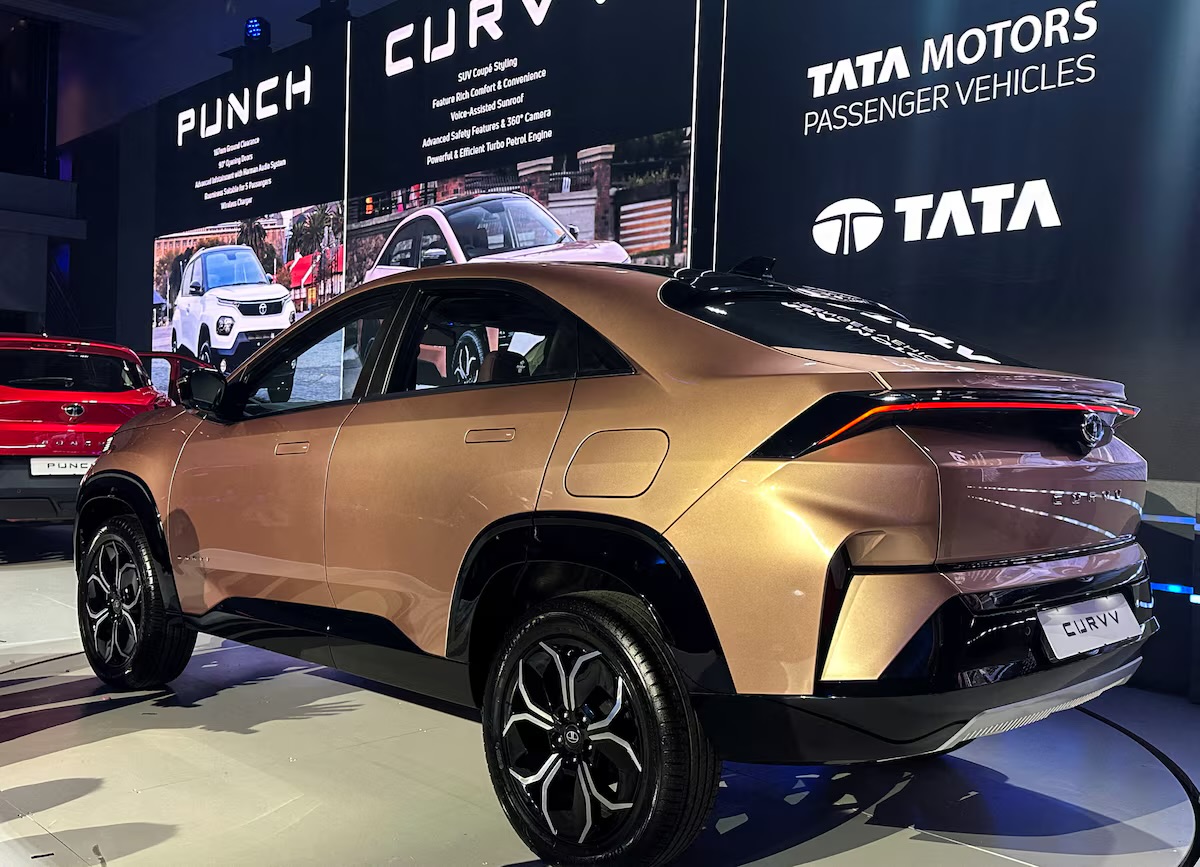
Tata Motors returns to South Africa with new SUV and hatchback lineup

India’s Tata Motors has staged a comeback to South Africa’s passenger vehicles market after six years, betting on a new generation of SUVs and hatchbacks to win over cost-conscious buyers and reclaim lost ground in one of the continent’s most competitive automotive sectors.

The relaunch, announced at a Johannesburg event on Tuesday, featured the Punch compact SUV, the Curvv coupe-inspired SUV, the Tiago compact hatchback and Tata’s flagship Harrier SUV. All four combustion-engine models will go on sale in September. The move signals the company’s determination to build a stronger foothold in South Africa, with plans to capture a 6% to 8% share of the passenger vehicle market in the medium term. “Our aspiration, as part of our mid-term plan, is to be one of the top five passenger vehicles in South Africa,” said Thato Magasa, newly appointed country head for Tata Motor Passenger Vehicles.

Tata’s return comes at a pivotal moment for South Africa’s auto industry, where consumer demand is being reshaped by affordability pressures and an influx of Asian imports. Chinese automakers such as Chery, BYD, Beijing Automotive and GWM have carved out growing market share in recent years, offering competitively priced vehicles across different powertrains. Their success has challenged Japanese and European incumbents while putting pressure on South Africa’s domestic production base, which is still geared toward exports and higher-priced models.


ADVERTISEMENT

The Indian manufacturer is positioning itself as an alternative to this Chinese wave, emphasising value for money while highlighting a more mature product lineup compared to its earlier offerings. Tata’s last stint in the South African passenger market ended in 2019, with models like the Indica hatchback gaining traction among price-sensitive buyers but failing to build long-term brand loyalty. Some consumers complained about quality and after-sales support, issues that ultimately led Tata to retreat and focus solely on its commercial vehicle division. That arm of the business remained active, selling trucks and buses and keeping the Tata badge visible on South African roads.

This time, Tata executives say the strategy is different. “We have listened, we have learned, and we have tailored our offering to meet South Africa’s needs,” said Shailesh Chandra, managing director for Tata Motor Passenger Vehicles and electric mobility. By leveraging global platforms while adapting to local preferences, Tata hopes to convince South African buyers that its new generation of cars is a leap forward from its earlier products.

The distribution model is also key to its comeback. Tata has partnered with Motus Holdings, South Africa’s largest automotive distributor, to serve as its exclusive partner for imports, sales and after-sales support. The cars will initially be available through 40 dealerships, with plans to expand the network to 60 outlets by 2026. This widespread presence is expected to give Tata an advantage in reaching buyers across urban and rural areas, a crucial factor in a country where service and parts availability can make or break a brand’s reputation.

Market analysts say Tata’s timing could work in its favour. The South African auto market has been under strain from weak consumer spending, high interest rates and inflation, yet demand for small and affordable cars remains resilient. Budget-conscious households are prioritising fuel efficiency and low maintenance costs, often at the expense of brand loyalty. This environment has already benefited Chinese brands, whose sales have risen sharply in the past five years. Tata is now betting that its own low-cost production base in India can give it the pricing flexibility to compete head-to-head with its Asian rivals.

In the second phase of its rollout, Tata plans to introduce the Nexon and Sierra SUVs, adding further variety to its local portfolio. The Nexon, in particular, is one of India’s best-selling compact SUVs and could appeal to South African buyers seeking an affordable yet well-equipped crossover. If these models gain traction, Tata could achieve the scale necessary to position itself firmly among the country’s top automakers, a goal it has openly set.

Still, questions remain over whether Tata can shake off lingering perceptions from its earlier presence in South Africa. While the company insists its cars now meet higher standards, building consumer trust may take time. After-sales service, parts availability and resale value are areas where competitors have historically held the upper hand. In a market as competitive as South Africa’s, price alone may not be enough to secure long-term loyalty.

Yet Tata’s return is more than just a test of one company’s fortunes. It reflects broader shifts in South Africa’s auto industry, where global automakers are recalibrating their strategies in response to Chinese expansion and changing consumer dynamics. The re-entry of an Indian player adds a new layer to this contest, creating more choice for buyers but also intensifying pressure on domestic assembly plants that already face questions about competitiveness.

For Tata, success in South Africa would not only mark redemption after a failed first attempt but also strengthen its global push into emerging markets. The brand is already a leader in India and has been expanding across Asia and Africa. By re-establishing itself in South Africa, the continent’s most developed auto market, Tata hopes to create a platform for wider regional growth.

The next few years will reveal whether the strategy pays off. For now, the Punch, Curvv, Tiago and Harrier represent more than just new models on showroom floors, they mark a second chance for Tata Motors to convince South African drivers that it deserves a place among the country’s top five automakers.

Tags: #BeijingMotors#Chery#DistributionDeal#GWM#MotusMotors#NewsUpdate#Return#SouthAfrica#TataMotors#TheSouthernAfricanTimesafricaBusiness
Previous Post

Zimbabwean David Muchacha Helps Africans Build Wealth Through Property

Next Post

Study warns luxury tourism in Africa brings inequality, not community gains

SAT Reporter

Related Posts

African Banks Eye Kenya Despite Fierce Competition
Business

African Banks Eye Kenya Despite Fierce Competition

by SAT Reporter
June 29, 2026
Lafarge Africa Enters a New Corporate Era Following Ownership Transition
Business

Lafarge Africa Enters a New Corporate Era Following Ownership Transition

by Times Reporter
June 25, 2026
SPAR Group Completes UK Exit with Sale of Appleby Westward to AF Blakemore
Business

SPAR Group Completes UK Exit with Sale of Appleby Westward to AF Blakemore

by SAT Reporter
June 1, 2026
Pepkor targets 1.8 million customers with 2027 bank launch
Business

Pepkor targets 1.8 million customers with 2027 bank launch

by SAT Reporter
May 27, 2026
South Africa Raises Steel Import Duties to Shield Industry
Business

South Africa Raises Steel Import Duties to Shield Industry

by SAT Reporter
May 20, 2026
Next Post
Study warns luxury tourism in Africa brings inequality, not community gains

Study warns luxury tourism in Africa brings inequality, not community gains

Browse by Category

  • Africa AI
  • African Continental Free Trade Area
  • African Debt
  • African Start ups
  • Agriculture
  • AI Africa
  • Algeria
  • All News
  • Analysis
  • Angola
  • Arts / Culture
  • Asia
  • Botswana
  • BOTSWANA
  • BREAKING NEWS
  • BRICS
  • Burkina Faso
  • Burundi
  • Business
  • Business
  • Business Wire
  • Cameroon
  • Central Africa
  • Chad
  • China
  • Climate Change
  • Climate Changev
  • Community
  • Congo Republic
  • Conservation
  • Côte d’Ivoire
  • COVID 19
  • CRYPTOCURRENCY
  • Culture
  • Democratic Republic of Congo
  • Diplomacy
  • Eastern Africa
  • Economic Development
  • Economy
  • Education
  • Egypt
  • Elections 2024
  • Energy
  • Entertainment
  • Environment
  • Eritrea
  • Ethiopia
  • Europe
  • Fashion
  • Feature
  • Finance
  • Financial Inclusion
  • Food
  • Food and Drink
  • Foods
  • GABON
  • Ghana
  • Global
  • Global Africa
  • Guinea
  • Health
  • Humanitarian Aid
  • Immigration
  • in Southern Africa
  • International news
  • International Relations
  • Investment
  • Ivory Coast
  • Just In
  • Kenya
  • Lesotho
  • Libya
  • Life Style
  • Lifestyle
  • Literature
  • Malawi
  • Malawi
  • Mali
  • Markets
  • Mauritius
  • Middle East
  • Mining in Africa
  • Morocco
  • Mozambique
  • Namibia
  • niger
  • Niger
  • Nigeria
  • North Africa
  • North-Eastern Africa
  • Obituaries
  • Obituary
  • Opinion
  • PARTNER CONTENT
  • Politics
  • Property
  • Racism
  • Rwanda
  • Rwanda
  • SADC
  • SAT Interviews
  • SAT Investigation
  • SAT Jobs
  • Saudi Arabia
  • Senegal
  • Seychelles
  • Somaliland
  • South Africa
  • South Sudan
  • Sports
  • Startup Africa
  • STOCK EXCHANGE
  • Sudan
  • Sustainability
  • Sustainablity
  • Tanzania
  • Technology
  • Telecommunications
  • The Editorial Board
  • The Power Of She
  • Togo
  • Trade
  • Travel
  • Travel
  • Tunisia
  • Uganda
  • Uncategorized
  • Wealth
  • West Africa
  • World
  • World
  • ZAMBIA
  • Zambia
  • ZIMBABWE
  • Zimbabwe

Browse by Tags

#NewsUpdate #SouthAfrica #SouthernAfricanTimes #TheSouthernAfricanTimes AfCFTA africa African Continental Free Trade Area African development African Development Bank African economies African economy African Union Agriculture Angola Botswana China Climate change Cyril Ramaphosa Economic Development economic growth energy transition fiscal policy governance industrialisation Inflation Infrastructure Infrastructure Development International relations Investment Kenya Mozambique Namibia news Nigeria Regional Integration renewable energy Rwanda SADC South Africa Southern Africa sustainable development Tanzania United States Zambia Zimbabwe
ADVERTISEMENT

WHO WE ARE

The Southern African Times is a regional bloc digital newspaper that covers Southern African and world news. The paper also gives a nuanced analysis on news and covers a wide range of reporting which include sports, entertainment, foreign affairs, arts and culture.

Welcome Back!

Login to your account below

Forgotten Password?

Retrieve your password

Please enter your username or email address to reset your password.

Log In
  • Home
  • Southern Africa
  • Business
    • African Start ups
    • African Continental Free Trade Area
  • Technology
    • Lifestyle
      • Health
      • Culture
      • Food and Drink
      • Entertainment
  • Opinion
  • Sports
  • SAT Jobs
    • Events
  • About Us
    • Advertise with Us
    • Contact Us
Not enough quota to unlock this post
Unlock left : 0
Are you sure want to cancel subscription?