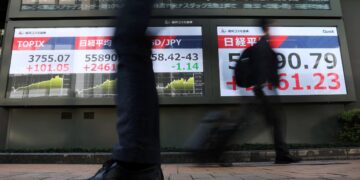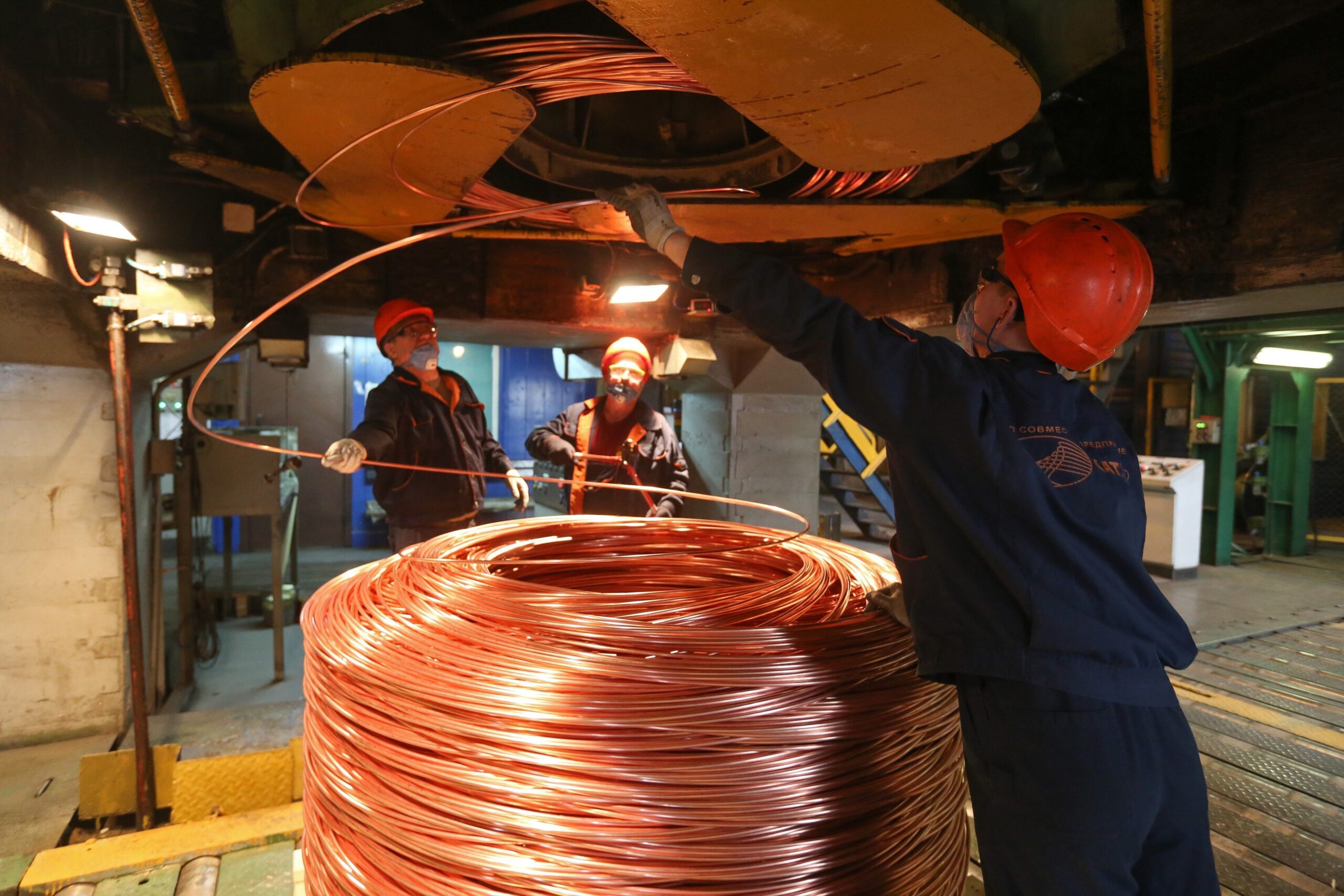
Global base metal markets experienced a sharp uptick on Thursday, buoyed by a surprise shift in United States trade policy. The S&P GSCI Copper Index rose by 4.71%, closing at 638.69 points, while London Metal Exchange (LME) copper prices climbed by 4.3% to $8,980 per metric ton. The increase followed an unexpected decision by U.S. President Donald Trump to pause the recently imposed tariffs on several countries, easing market anxieties that had recently weighed heavily on commodity prices.
The decision came after days of intense market volatility, during which global equities lost trillions in value. Markets had been reeling from the rapid escalation of the trade dispute between the United States and China, the world’s largest consumer of industrial metals. President Trump’s announcement of a 90-day suspension on many new duties provided immediate relief to financial markets and reignited optimism among investors in the commodities sector.
The three-month LME copper contract had previously fallen by 12% since reaching a high of $10,164.50 per ton on 26 March 2025, a peak not seen in over nine months. The downturn was widely attributed to worsening trade tensions and fears over slowing global demand. Thursday’s rebound suggests a significant shift in market sentiment, albeit one that analysts caution may prove temporary given the political volatility surrounding U.S. trade policy.



Market participants in Asia mirrored this positive momentum. The most-traded copper contract on the Shanghai Futures Exchange (SHFE) climbed 3.2%, closing at 74,810 yuan per metric ton (approximately $10,187.80), reversing losses that had pushed it to an eight-month low just one day earlier. Traders reported that sentiment had improved dramatically following President Trump’s announcement, with many seeing the pause as an opportunity to reassess short-term risk exposures.
Despite the relief, tensions remain high. As part of a mixed policy approach, the United States simultaneously increased tariffs on Chinese metals to 125%, up from the previous rate of 104%. This move was reportedly in response to Beijing’s own tariff escalation, which raised duties on U.S. imports to 84%. The tit-for-tat measures underscore the fragility of current trade negotiations and suggest that any respite could be short-lived.
One trader, speaking on condition of anonymity, described the situation as a “temporary reprieve” rather than a fundamental shift. “Trump’s sudden shift in tariff policy caught the market off guard. Investors, initially pessimistic about economic prospects, found renewed confidence with the reprieve. However, this boost may be fleeting given his unpredictable stance,” the trader observed.
The broader industrial metals market also saw gains. On the SHFE, aluminium rose 1.9% to 19,810 yuan per ton, zinc increased by 2.3% to 22,575 yuan, lead climbed 1.6% to 16,735 yuan, and nickel gained 1.2%, settling at 120,370 yuan. Tin was the only base metal to fall on the Chinese exchange, declining 1.5% to 255,610 yuan per ton.
Meanwhile, the London market recorded strong performances across the board. LME aluminium advanced 3.7% to $2,400 per ton, lead rose 3% to $1,896, tin surged 6.8% to $31,850, zinc increased by 3.6% to $2,651, and nickel climbed 3.9% to $14,630. These increases reflect not only the reduced geopolitical risk premium but also some degree of short-covering and speculative positioning by traders anticipating further market reactions.
A notable driver behind the strength in copper and other industrial metals is the broader macroeconomic backdrop. While recent data from China suggested some slowdown in manufacturing activity, other indicators — including power demand and infrastructure investment — continue to point towards resilience in commodity-intensive sectors. Copper, often referred to as “Dr. Copper” due to its role as a bellwether for economic activity, remains particularly sensitive to these macro shifts.

The outlook remains highly contingent on geopolitical developments. Analysts at various investment firms warned that should tariff tensions escalate again after the 90-day pause, the recent gains could quickly reverse. The current rally is therefore viewed by many as tactical rather than structural, driven more by sentiment than a change in supply-demand fundamentals.
South African and broader African markets, though somewhat insulated from the direct effects of U.S.-China trade policy, are not immune to its ripple effects. The surge in copper and industrial metals prices is likely to benefit mineral-exporting nations across the continent, including Zambia and the Democratic Republic of the Congo. Rising export values could translate into improved trade balances and fiscal revenues, although these benefits would depend on sustained price momentum and favourable exchange rates.
For now, global commodities appear to be in recovery mode, driven by political developments rather than economic fundamentals. Investors and policymakers alike are watching closely to determine whether this is the beginning of a sustained rally or merely a pause before renewed volatility.