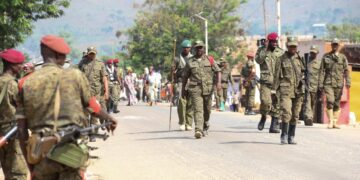
Chaos erupted in the eastern Democratic Republic of Congo (DRC) city of Bukavu on Thursday as gunfire rang out during a rally led by M23 rebel leader Corneille Nangaa. The sudden violence sent crowds fleeing in panic, marking another tense moment in a region already gripped by conflict and uncertainty.
Eyewitnesses reported hearing bursts of gunfire at the event, though it remains unclear who was responsible for the shooting or whether there were any casualties. The rally was intended to showcase M23’s control over Bukavu, which the rebel group seized nearly two weeks ago in its latest offensive against the Congolese army.
The M23 rebellion, which has escalated since the beginning of the year, has significantly altered the balance of power in eastern Congo. The conflict has drawn international condemnation, with the Congolese government, the United Nations, and Western powers accusing Rwanda of backing the rebel movement—an allegation Rwanda strongly denies. The ongoing clashes have fueled fears of a broader regional war that could pull in neighboring countries.



Thursday’s rally marked Nangaa’s first public appearance in Bukavu since M23 took control of the city. The group has been attempting to assert its authority by reopening schools and ports, presenting itself as a stabilizing force in the areas it now occupies. However, the eruption of gunfire at their rally casts doubt on the security situation and the rebel group’s ability to maintain order.

M23’s resurgence represents the most significant escalation of violence in eastern Congo in over a decade. The conflict traces its roots to the aftermath of the 1994 Rwandan genocide, which saw Hutu militia groups flee into Congo, sparking a series of wars over control of the region’s vast mineral wealth. Rwanda has justified its involvement in Congo’s affairs by citing security threats from these Hutu militias, which it claims are fighting alongside the Congolese military.
The growing instability in eastern Congo has raised alarm among international observers. Diplomatic efforts to broker peace have so far failed to halt M23’s advance, and with each territorial gain, the group tightens its grip on one of Africa’s most resource-rich but war-ravaged regions.
As the situation unfolds, the gunfire in Bukavu underscores the fragile and volatile nature of M23’s rule. Whether the group can maintain control without further bloodshed remains uncertain, and the potential for an even larger conflict looms over the region.