In a harrowing development in the Democratic Republic of the Congo (DRC), Rwanda-backed M23 insurgents have reportedly executed three boys who had picked up weapons abandoned by retreating Congolese soldiers in the eastern city of Bukavu. The United Nations (UN) confirmed these deaths, adding to the catalogue of grave human rights violations reported amidst the ongoing conflict.
According to Ravina Shamdasani, spokesperson for the UN human rights office in Geneva, footage circulating on social media depicts children, seemingly between the ages of 11 and 15, wielding firearms and wearing uniforms discarded by the Congolese army. Shamdasani stated that credible sources verified that three boys were executed by M23 fighters in Bukavu’s Latin Quarter after refusing to relinquish the weapons they had salvaged from an abandoned military encampment.
The M23 alliance, which has seized control of multiple towns and cities in eastern Congo, denied responsibility for the killings. A spokesperson for the group claimed on X (formerly Twitter) that the deaths were accidental and resulted from other children mishandling firearms.



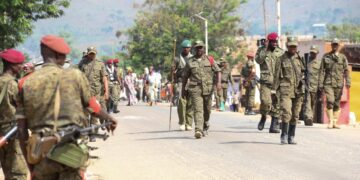
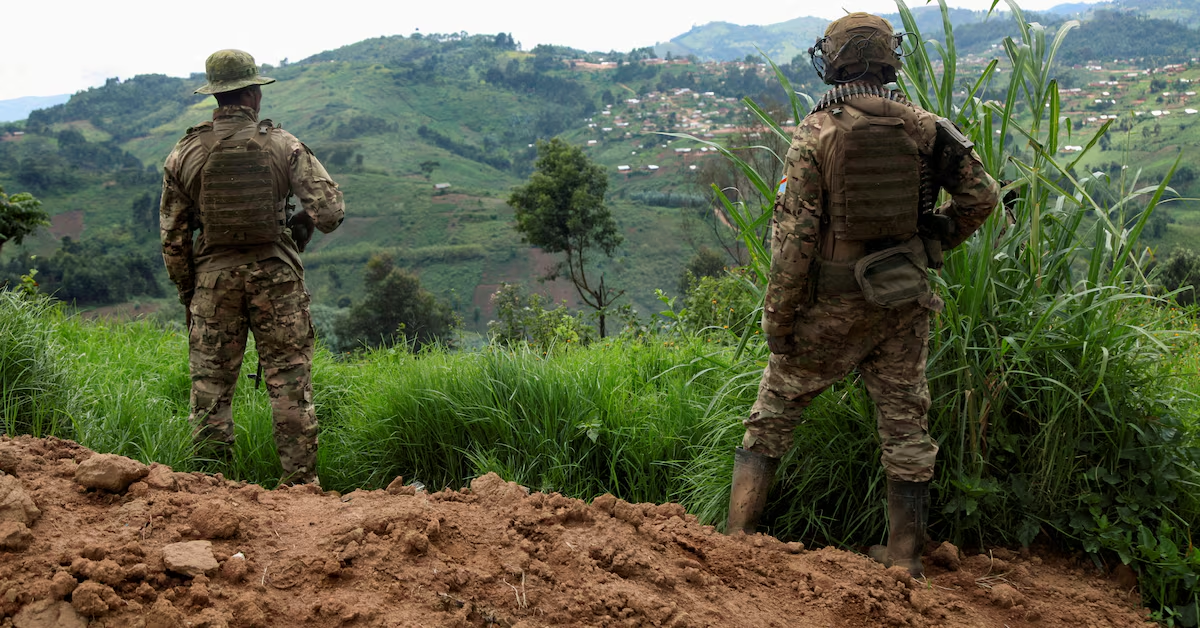
The situation in Bukavu is emblematic of a broader deterioration in security as the Congolese military struggles to contain the M23 advance. Government forces, together with local militia allies, have been engaged in sporadic clashes to the south of Bukavu, defying initial orders to retreat to avoid large-scale urban combat. Instead, the withdrawal has descended into chaos, leaving civilians trapped in the crossfire.

A Congolese general and a senior officer speaking on condition of anonymity revealed that the army’s exit from Bukavu was meant to be a tactical repositioning. However, resistance from local militia groups, known collectively as the Wazalendo, disrupted the planned manoeuvre. The Wazalendo, often described as an undisciplined yet determined coalition, were unwilling to cede the city without a fight, despite the Congolese army’s directive to withdraw and regroup.
As the army fell back, disorder spread rapidly. Soldiers hastily abandoned key defensive positions, leaving weapons and uniforms behind. This vacuum not only facilitated M23’s entry into Bukavu but also created an environment where children and untrained civilians began arming themselves, leading to the tragic incident of summary executions.
Further south, in towns along the N5 road, retreating Congolese forces have clashed with Wazalendo fighters seeking to prevent the military’s withdrawal. Community leaders report that villages along this route are emptying as residents flee escalating violence. One leader from Kamanyola described hearing persistent gunfire, signalling the intensity of the confrontations.
The Congolese government has not issued an official response regarding the unfolding events. However, frustration within military ranks is evident. A senior officer stationed in the region acknowledged that morale among soldiers had reached a critical low, with many displaying little inclination to fight. Poorly coordinated retreats and a sense of abandonment have further eroded confidence in the government’s ability to mount a meaningful resistance.
The rapid advance of the M23 has triggered fears of deeper regional instability. Observers warn that the ease with which the rebels have seized key territories raises concerns about the potential fragmentation of the DRC. Additionally, the spectre of a broader regional conflict looms, particularly given the persistent accusations that Rwanda is backing M23, a claim that Kigali continues to deny. Rwanda asserts that it is defending itself from Hutu militias operating alongside the Congolese army—an allegation Kinshasa dismisses as a pretext for aggression.
Mineral resources further complicate the conflict. Eastern Congo is home to vast reserves of tantalum, cobalt, and copper—key components in modern electronics and electric vehicles. Control over these resources has long been a contentious issue, with multiple armed groups vying for dominance. The Wazalendo, initially armed by the Congolese government to serve as a counterforce against M23, are now accused of exacerbating instability. Footage allegedly recorded in the N5 town of Sange shows Wazalendo fighters distributing rifles from the back of a seized military truck to untrained civilians. While Reuters could not verify the authenticity of the video, sources within the security sector corroborated that such an incident had occurred.
A senior Congolese general, expressing frustration with the militia’s actions, admitted that the government’s strategy of rearming disparate groups had backfired. “The presidency rearmed all the armed groups thinking that these individuals would serve their cause,” he said. However, the Wazalendo have proven to be unpredictable, often acting outside official military command structures.
Meanwhile, the humanitarian situation in eastern Congo is deteriorating. The UN refugee agency estimates that around 350,000 people have been displaced as a result of the fighting. Emergency shelters have been destroyed, leaving many without protection amid worsening conditions.
The retreat from Bukavu marks yet another painful chapter in the DRC’s long struggle against armed insurgencies. Since the resurgence of the M23 in 2022, the Congolese military has suffered repeated setbacks, with soldiers frequently abandoning posts under pressure. The current crisis echoes the region’s turbulent past, which has been shaped by conflicts dating back to the 1990s, following the Rwandan genocide.
One video, widely circulated among Congolese social media users, shows a group of soldiers clambering onto a truck filled with supplies as one exasperated soldier mutters, “At the Bukavu stage, we flee again.” The sentiment reflects growing disillusionment with the government’s ability to protect its citizens and maintain territorial integrity.

With fears of a coup in Kinshasa, rising tensions between Rwanda and Uganda, and increasing instability in South Kivu, the conflict shows no signs of abating. As armed groups continue to exploit the chaos for territorial and economic gains, civilians—particularly vulnerable children—remain the most tragic casualties of this relentless cycle of violence.