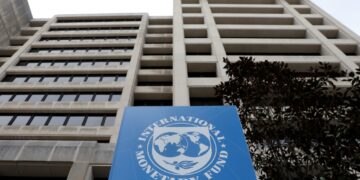
The International Monetary Fund (IMF) has approved $181.74 million in new funding for Rwanda, reflecting the country’s strong performance under its ongoing three-year economic reform plan. The package comprises $94.23 million under the Resilience and Sustainability Facility (RSF) and $87.51 million from the Standby Credit Facility (SCF).
The IMF’s decision follows its fourth review of Rwanda’s Policy Coordination Instrument (PCI) and associated RSF and SCF arrangements, which underscored the country’s achievement of key economic targets. Significant reforms to enhance transparency in public investment and foreign exchange market operations were noted, alongside Rwanda’s progress in macroeconomic stability despite persistent external challenges.
Rwanda’s economy has displayed notable resilience, supported by robust growth in key sectors and a recovery in agricultural production. Yet vulnerabilities remain, particularly with a widening current account deficit and sustained exchange rate pressures. IMF Deputy Managing Director Bo Li emphasised the importance of fiscal consolidation to safeguard economic stability and rebuild fiscal buffers. “Efforts to enhance domestic revenue mobilisation should focus on broadening the tax base, streamlining exemptions, and improving compliance,” Mr Li stated.




Inflation has been contained within target ranges, aided by tight monetary policy and favourable food prices, while international reserves are projected to cover 4.5 months of imports by year-end. Bo Li lauded Rwanda’s ability to maintain monetary discipline amidst global economic uncertainties.
Notably, Rwanda continues to demonstrate leadership in climate-conscious economic reform. It was the first African nation to access the RSF, securing $319 million in 2022 to address long-term structural challenges related to climate change. The IMF recognised Rwanda’s integration of climate considerations into its broader macroeconomic policies as an exemplar for other emerging economies.
However, sustained progress will require an unwavering focus on fiscal sustainability. The IMF highlighted the necessity of accelerating domestic revenue mobilisation, mitigating fiscal risks from state-owned enterprises, and rationalising government expenditure. These measures are critical for ensuring macroeconomic stability, strengthening Rwanda’s policy space to respond to shocks, and achieving its broader development objectives.
While challenges persist, Rwanda’s strategic reforms, prudent policy implementation, and focus on transparency signal a nation poised for continued resilience amidst global economic headwinds. The IMF’s endorsement serves as a vote of confidence in the country’s reform trajectory and fiscal discipline, as well as its efforts to balance growth with sustainability.