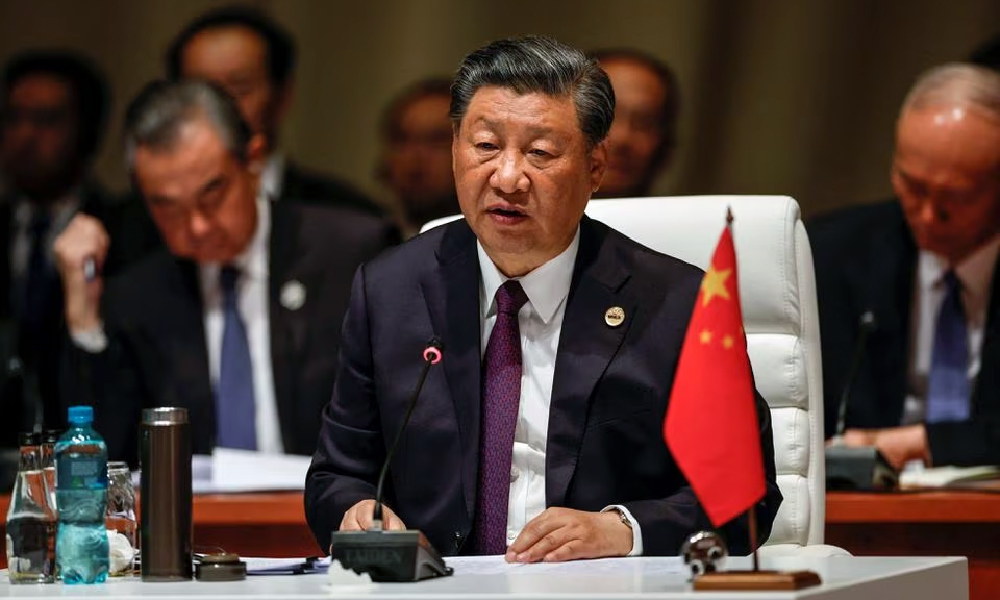
Chinese President Xi Jinping underscored his nation’s commitment to advancing the interests of the Global South during the Group of 20 (G20) Summit held in Rio de Janeiro, presenting a comprehensive framework aimed at fostering sustainable development and multilateral cooperation.
President Xi, addressing leaders of the world’s major economies, articulated a vision underpinned by eight initiatives, including the expansion of the Belt and Road Initiative (BRI). This hallmark policy seeks to enhance connectivity and development through extensive infrastructure investment in developing nations. Xi described the initiative as “high quality,” signalling a shift towards sustainable and inclusive growth models.
In an additional demonstration of China’s dedication to the Global South, Xi announced the launch of the Open Science International Cooperation Initiative, a collaborative endeavour involving Brazil, South Africa, and the African Union. This initiative aims to accelerate the dissemination of scientific and technological innovation across the developing world, fostering capacity-building and bridging global divides in research and development.
Highlighting China’s economic engagement with developing nations, Xi projected that the country’s imports from the Global South would exceed $8 trillion by 2030. This commitment, he stressed, reflects China’s position as a consistent ally of emerging economies and a proponent of their modernisation trajectories.
“China has always been a member of the Global South, a reliable and long-term partner of developing countries, and an activist and doer in support of global development,” he remarked. Rejecting unilateralism, Xi affirmed China’s aspiration to foster an environment where diverse nations thrive in unity, encapsulated by the phrase “100 flowers will blossom.”
The summit also underscored the growing prominence of Global South nations in shaping the multilateral agenda. Brazilian President Luiz Inácio Lula da Silva, hosting the event, amplified the call for inclusive representation, notably championing the African Union’s permanent membership in the G20, akin to the European Union’s status. This advocacy reflects Brazil’s intent to elevate the voice of the Global South in global governance structures.
China’s alignment with these objectives underscores its strategic economic and political partnerships, particularly with African nations where it remains a pivotal investor and lender. However, the shift in focus towards the Global South within the G20 has elicited cautious responses from some wealthier nations.
Established in the aftermath of the 2007–08 financial crisis to integrate emerging economies into global decision-making, the G20 represents 85% of global GDP, over 75% of global trade, and nearly two-thirds of the world’s population. This expansive mandate highlights the forum’s importance as a platform for fostering global economic stability and inclusivity.
The concept of the Global South has evolved from its origins as a Cold War-era term to encompass a diverse group of developing and emerging nations, primarily in the southern hemisphere. Its increasing influence in forums such as the G20 reflects a shift in global dynamics, where nations of the Global South seek equitable participation in shaping the international order.