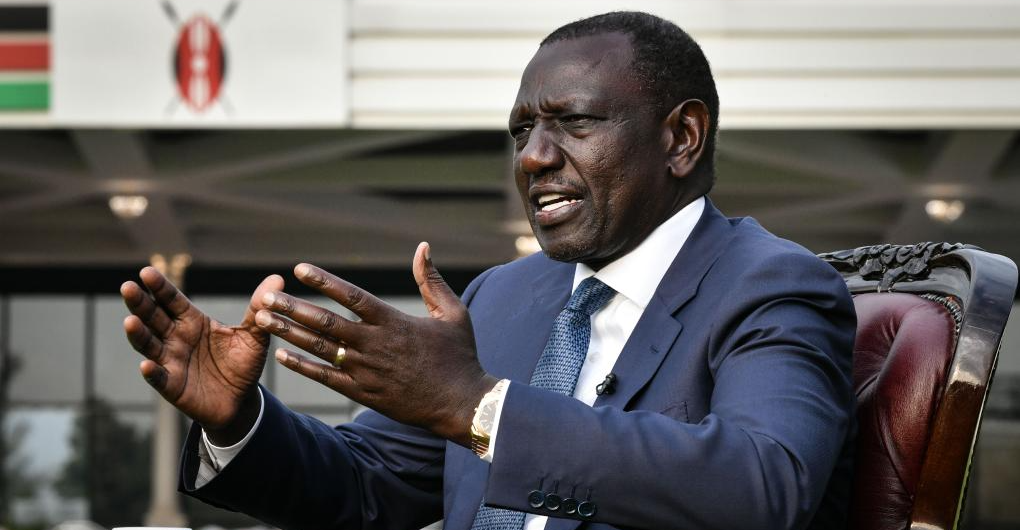
Kenya’s President, William Ruto, has underscored the deepening ties between Africa and China, highlighting the imperative of green and inclusive growth as the cornerstone of their future cooperation. Speaking to Chinese media ahead of the highly anticipated 2024 Forum on China-Africa Cooperation (FOCAC) Summit in Beijing, Ruto extolled China’s economic prowess as a beacon for African nations striving for shared prosperity, peace, and stability.
Ruto’s remarks come at a critical juncture in Sino-African relations, which have flourished over six decades, with Kenya emerging as a pivotal partner. Key infrastructure projects, such as the Mombasa-Nairobi Standard Gauge Railway and the Nairobi Expressway, stand as testaments to this robust partnership. As Kenya and China seek to broaden their collaboration, there is an increasing emphasis on invigorating the private sector, an area that Ruto identifies as ripe for enhanced cooperation.
The President pointed to the burgeoning interest in Nairobi’s Global Trade Center, a landmark of Chinese investment, which has rapidly become a magnet for enterprises seeking to establish a foothold in East Africa. Ruto envisions Kenya’s private sector benefiting significantly from the expertise and technology transfer facilitated by Chinese investment, fostering a dynamic synergy between the two nations.



Looking ahead to the FOCAC summit, scheduled for 4-6 September, Ruto articulated a vision for deeper engagement that transcends infrastructure to encompass industrialisation, youth talent development, and agricultural modernisation. He particularly emphasised the potential for collaboration in the realm of clean energy, where China’s advances in technology could dovetail with Africa’s abundant renewable energy resources—a strategic alignment poised to accelerate the continent’s transition to a green economy.
Ruto framed this collaboration within the broader context of China’s Global Development Initiative, Global Security Initiative, and Global Civilization Initiative. These frameworks, he argued, are crucial for achieving comprehensive prosperity, peace, and unity across the Global South. With Africa and China at the vanguard, Ruto advocated for these initiatives as catalysts for reforming global governance, advancing climate action, and ensuring long-term geopolitical stability.
In a nod to the growing economic interdependence between Kenya and China, Ruto highlighted the increased exportation of Kenyan avocados, tea, and coffee to the Chinese market as emblematic of the deepening trade ties. He also extended an invitation to Chinese tourists, urging them to explore Kenya’s rich tapestry of natural and cultural heritage, from the coastal splendours to the iconic Maasai Mara and the majestic Mount Kenya.

This emphasis on cultural exchange underscores Ruto’s broader vision of fostering mutual understanding and deepening the bonds between the Kenyan and Chinese peoples, which he sees as vital to sustaining the enduring partnership between the two nations.
As the FOCAC Summit approaches, Ruto’s message is clear: the confluence of Africa’s resources and China’s technological expertise offers a path to a sustainable, inclusive, and prosperous future—a blueprint for the Global South in an era of profound geopolitical shifts.