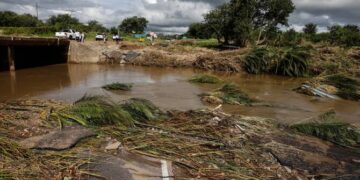
Zimbabwe is currently grappling with a severe food security crisis, with over half of its harvest decimated by a historic drought exacerbated by the El Nino weather phenomenon. This crisis has placed approximately 7.6 million individuals at risk of acute hunger, according to statements made on Wednesday by Farhan Haq, the deputy spokesman for the UN Secretary-General, during a daily briefing.
The UN Office for the Coordination of Humanitarian Affairs has reported a precipitous decline in the food security situation in Zimbabwe. This decline follows the unprecedented drought, which has wreaked havoc on agricultural productivity and subsequently strained the nation’s already fragile economy. The economic ramifications are further compounded by a significant rise in the number of school-aged children who have been compelled to abandon their education, now exceeding one fifth of the school-aged population.
In response to the escalating crisis, UN Assistant Secretary-General and Climate Crisis Coordinator Reena Ghelani, along with Valerie Guarnieri, the Assistant Executive Director of the World Food Programme, recently concluded a comprehensive week-long mission in Zimbabwe. Their assessment underscores the profound impact of the drought on the nation and calls for augmented international assistance to bolster humanitarian efforts.
The Zimbabwean authorities declared a nationwide state of disaster in April. Current projections indicate that 57 percent of the rural population, equating to approximately 5.9 million individuals, will face food insecurity at the peak of the hunger season between January and March of the forthcoming year. The drought has also precipitated severe water shortages, compounding the humanitarian emergency.
Despite the ongoing efforts by the United Nations and its partners to collaborate with the Zimbabwean government in addressing this crisis, financial support remains critically insufficient. The emergency flash appeal, launched in May with an objective of raising $429 million to aid over 3 million people, has thus far secured a mere 11 percent of its target. This shortfall underscores the urgent need for increased international support to mitigate the devastating effects of this crisis.
As Zimbabwe confronts this unparalleled humanitarian disaster, the global community’s prompt and sustained intervention remains imperative to alleviate the suffering and prevent further deterioration of the situation. The ongoing climate-induced challenges highlight the necessity for robust, coordinated efforts to address the multifaceted impacts of climate change on vulnerable populations.