In a nation grappling with severe income inequality, South Africa’s politicians are emerging as some of the highest-paid individuals. Although ordinary Members of Parliament (MPs) may not yet belong to the top 1% of earners, they are certainly approaching this echelon. Conversely, ministers and their deputies unequivocally rank among the elite, receiving substantial salaries and numerous tax-free perks.
Climbing the Salary Ladder
The criteria for the top 1% of earners in South Africa depend on varying data sources. According to Knight Frank, an annual gross income exceeding $109,000 (approximately R2 million or R160,000 per month) places an individual in this exclusive group. This aligns with the World Inequality Database (WID), which cites a monthly income threshold of around R151,600 (R1.8 million annually) for entry into the top 1%.
Consequently, many of South Africa’s leading politicians are now part of this elite group, standing out in a country known for its pronounced income disparity.
Recent Salary Adjustments
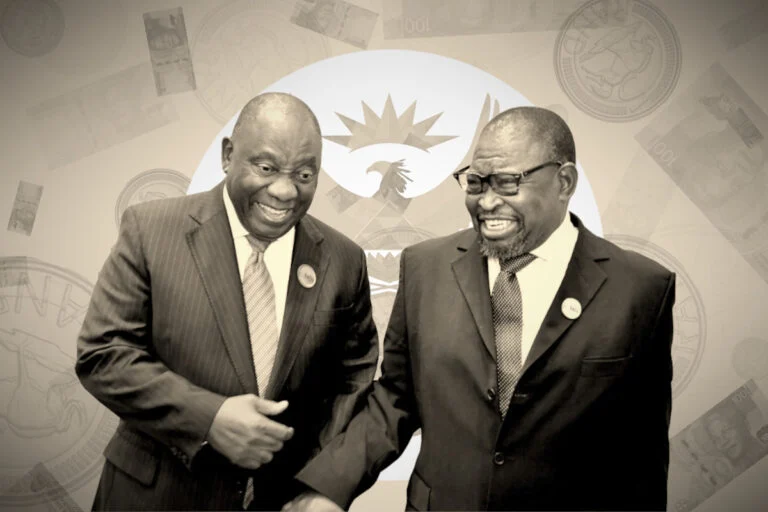
President Cyril Ramaphosa recently announced a 2.5% salary increase for MPs, ministers, and deputies. This adjustment underscores the high earnings of the nation’s top politicians, with cabinet ministers now drawing salaries of R2.7 million annually. On top of this, they benefit from a range of tax-free perks funded by taxpayers.
Ordinary MPs, following the recent increment, will now earn over R1.26 million per year. While this figure situates them in the top 3% of earners in South Africa, deductions for medical aid, pensions, and taxes significantly reduce their take-home pay. Corne Mulder, an FF Plus MP and chief whip, highlighted that after these deductions, most MPs are left with “just over R50,000” monthly.
Comparative Earnings in South Africa
To provide context, the average formal worker in South Africa earns R26,894 per month, positioning them within the top 11% of earners. The median salary, shockingly, is R5,417 per month, placing workers within the top 36% of earners.
Even if ordinary MPs do not quite make it into the top 1%, their earnings still place them among the country’s highest-paid individuals, particularly as they advance within the parliamentary ranks.
Breakdown of Political Salaries
Below is a table outlining the salaries of various political roles in South Africa, illustrating their position relative to the top 1% of earners:
| Position | Annual Salary (R) | Monthly Salary (R) | Percentage of Top Earners |
|---|---|---|---|
| President | 3,100,000 | 258,333 | Top 1% |
| Cabinet Ministers | 2,700,000 | 225,000 | Top 1% |
| Deputy Ministers | 2,000,000 | 166,667 | Top 1% |
| Ordinary MPs | 1,260,000 | 105,000 | Top 3% |
| Average Formal Worker | 322,728 | 26,894 | Top 11% |
| Median Worker | 65,004 | 5,417 | Top 36% |
This disparity highlights the considerable earnings of South African politicians amidst the broader context of the nation’s economic challenges. While there are calls for increased transparency and fairness, the current remuneration structure places these politicians among the highest earners in a country facing profound inequality.