

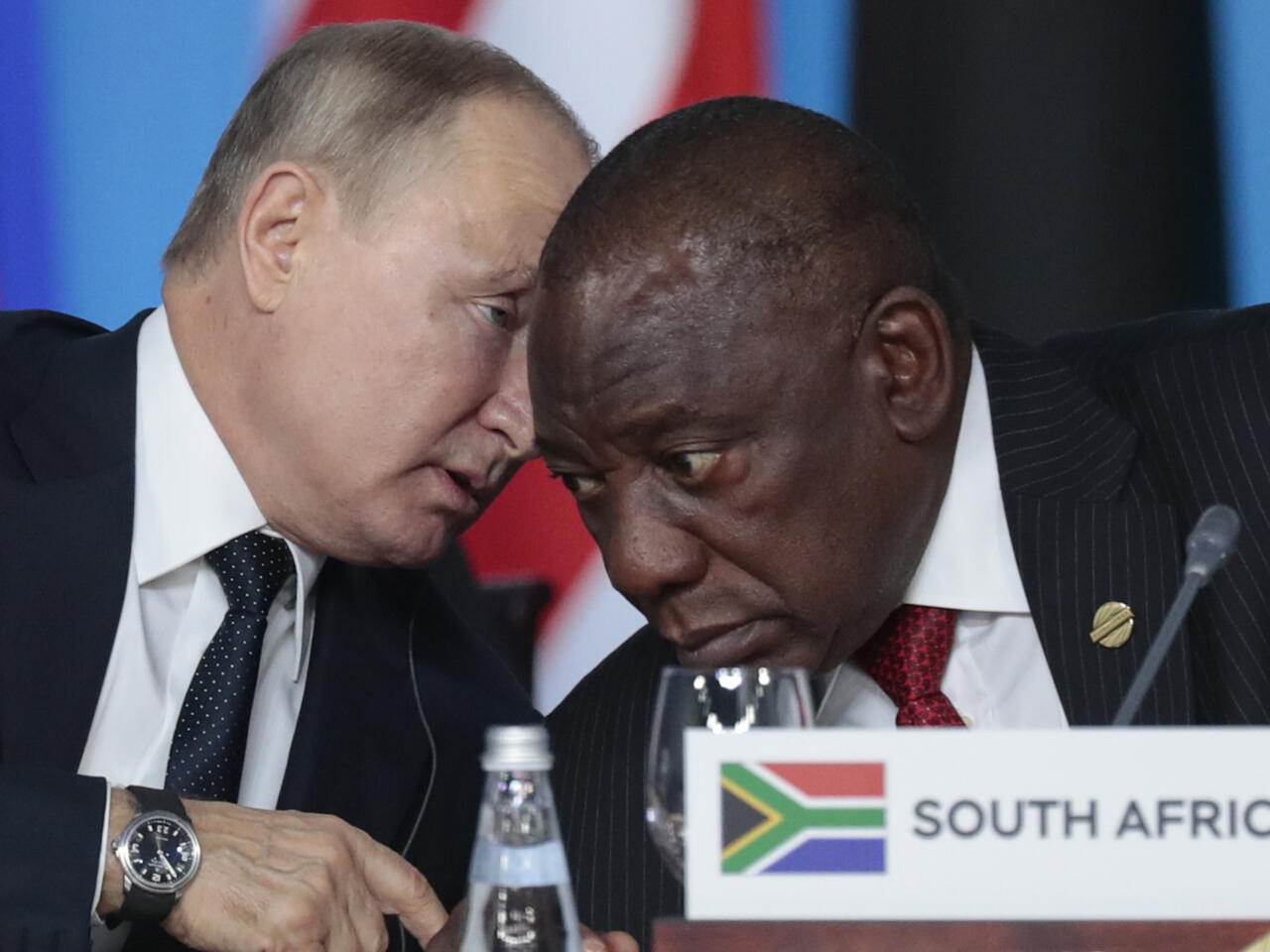
Adelegation comprising the esteemed heads of state from South Africa, Egypt, Senegal, Uganda, Zambia, and the Republic of Congo has arrived in Russia to engage in crucial talks with President Vladimir Putin. This remarkable effort, part of a series of mediation initiatives, aims to bring an end to the ongoing conflict in Ukraine, which has caused significant disruptions to trade and strained relations across the globe.
The African leaders, chosen for their diplomatic prowess and commitment to peace, also intend to visit Kyiv to engage in discussions with Ukrainian President Volodymyr Zelenskiy. The proposals put forth by these leaders have not been publicly disclosed, but they represent a united front of African nations determined to play an integral role in resolving this international crisis.
President Putin, acknowledging the imminent arrival of the African delegation, expressed his willingness to address current issues. However, reaching a consensus and convincing the warring sides to lay down their weapons will undoubtedly prove to be a challenging task. President Zelenskiy has categorically rejected any deal that involves Ukraine ceding territory to Russia, while President Putin remains hesitant to agree to conditions that include a complete troop withdrawal.



The details of the delegation’s mission have been shrouded in secrecy due to security concerns, further emphasizing the significance and sensitivity of their peace efforts. This initiative, announced by South African President Cyril Ramaphosa last month, comes in addition to separate interventions led by France and China, all aimed at bringing an end to the devastating conflict in Ukraine.
It is worth noting that just over half of Africa’s 55 nations voted in favor of United Nations resolutions condemning the Russian invasion of Ukraine, while the majority abstained from voting. The African continent has been profoundly affected by the conflict, witnessing disruptions in vital trade sectors such as grain and fertilizer, leading to increased prices and economic challenges.
South Africa, in particular, finds itself in a delicate position. As the host of an upcoming meeting of heads of state from BRICS nations, scheduled for August, the country faces a dilemma. Being a member of the International Criminal Court (ICC), South Africa would be obligated to execute an arrest warrant issued by the tribunal for President Putin if he were to attend the meeting. To avoid this predicament, Pretoria is now contemplating relocating the gathering to China, which is not an ICC member.

While South Africa maintains a non-aligned position in relation to the conflict, it has faced accusations from US Ambassador Reuben Brigety of supplying weapons to Russia. South Africa firmly denies these allegations, as fears mount that this altercation could strain relations with its second-largest trading partner. The resulting concern drove the value of the rand to a record low against the dollar last month.
In response to recent developments, US lawmakers from both sides of the aisle penned a letter, published by the New York Times, expressing their reservations about South Africa’s close ties with Russia. They called on the Biden administration to reconsider hosting the Africa Growth and Opportunity Act (AGOA) Forum in South Africa in November. AGOA grants duty-free access to American markets for several African nations, and the congressmen argued that South Africa’s actions raised questions about its eligibility to benefit from this program.
Despite these concerns, no decision has been made to relocate the forum, and South Africa continues to enjoy the support of the US government, as affirmed by Clayson Monyela, spokesperson for South Africa’s Department of International Relations, on Twitter.
Vincent Magwenya, spokesperson for President Ramaphosa, unequivocally dismissed any notion of potential
censure over South Africa’s relations with Russia, stating, “It’s difficult to entertain speculation about sanctions, which we find to be reckless and undermining efforts underway to rebuild our economy, which is under strain and pressure.” This firm stance reflects South Africa’s commitment to prioritizing its economic recovery while actively participating in diplomatic initiatives.
The arrival of the African delegation in Russia signifies a significant milestone in the pursuit of peace in Ukraine. By leveraging their diplomatic expertise and representing the collective voice of the African continent, these leaders aim to uphold principles of sovereignty, self-determination, and peaceful resolution of conflicts.
The involvement of African nations in the mediation efforts not only demonstrates their commitment to global peace and stability but also highlights the growing influence of Africa on the world stage. As an emerging powerhouse with a rich history of overcoming colonialism and promoting pan-African unity, Africa seeks to make meaningful contributions to global affairs, using diplomacy and dialogue as key instruments.


