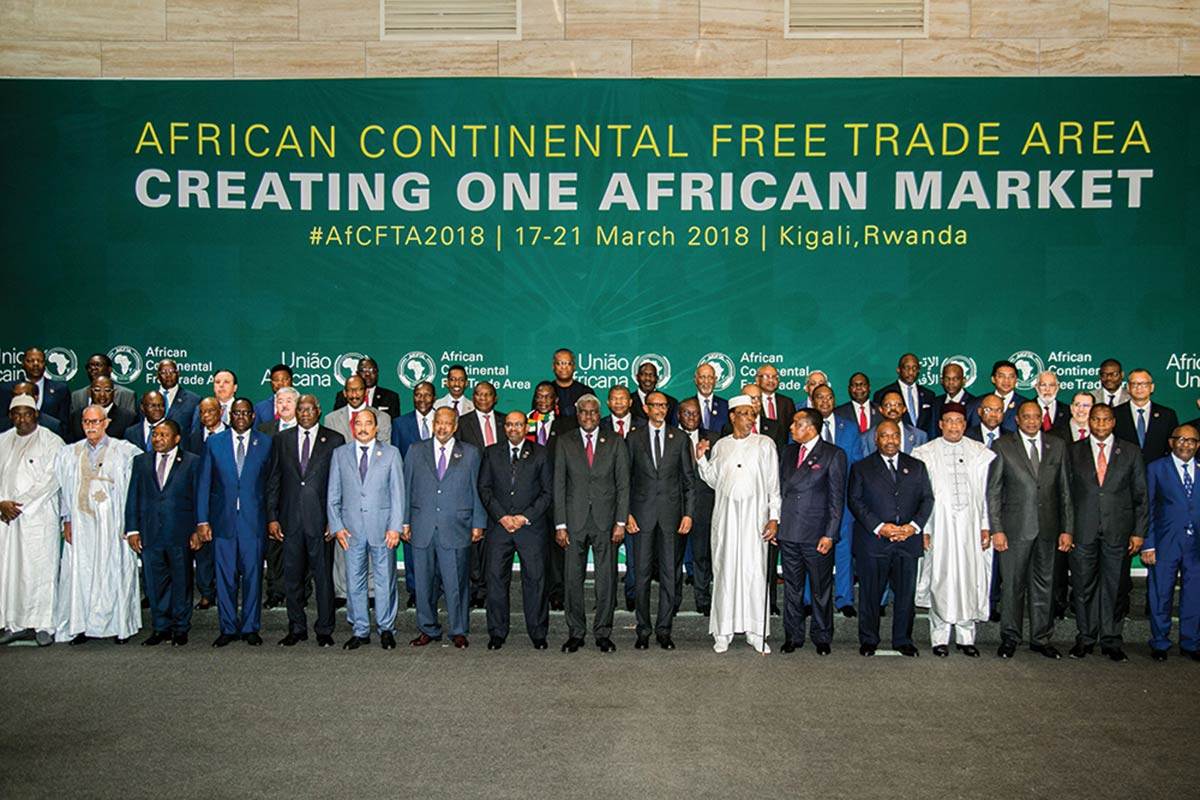
Africa is a continent of immense potential, with abundant natural resources and a large youthful population. However, despite its potential, the continent continues to face significant challenges, including poverty, underdevelopment, and conflict. One of the key issues facing Africa is the low level of intra-regional trade, which currently stands at a mere 14.4%. In order to grow the continent and reach the targets set by the African Union’s Agenda 2063, decisive action is needed to strengthen cooperation in Africa.
One of the main reasons for the low level of intra-regional trade is the lack of infrastructure, including roads, railways, and ports. The poor infrastructure makes it difficult for goods and services to move freely between countries, and this has a negative impact on economic growth. Therefore, significant investment in infrastructure is needed to improve connectivity and trade facilitation within the continent.
In addition to infrastructure, there is a need to address other barriers to trade, including non-tariff barriers such as restrictive regulations and inefficient customs procedures.



Harmonization of regulations and standards across the continent will make it easier for businesses to operate and trade with one another. This will require a coordinated effort by African governments and the private sector to remove barriers to trade and create a conducive environment for business.
Another critical issue is the need to nurture Africa’s regional and continental bodies. These bodies play a crucial role in promoting regional integration and cooperation. However, their effectiveness is often hampered by a lack of funding. Therefore, increasing funding for these bodies will be critical in enabling them to carry out their mandate effectively. This will require African governments to commit more resources with less reliance on the support from international partners.
Furthermore, there is a need to develop regional value chains and promote intra-regional investment. This will help to create jobs and generate wealth within the continent, while also reducing dependence on imports from outside the continent. Regional value chains will require a coordinated effort by governments, the private sector, and regional bodies to identify key sectors for development and facilitate investment in these sectors.
In conclusion, decisive action is needed to strengthen cooperation in Africa and grow the continent. This will require significant investment in infrastructure, addressing non-tariff barriers to trade, nurturing Africa’s regional and continental bodies, developing regional value chains, and promoting intra-regional investment. Achieving these objectives will require a coordinated effort by African governments, the private sector, and international partners. However, the benefits of a more integrated and prosperous Africa are too great to ignore, and the time for action is now.


Farai Ian Muvuti is the Chief Executive Officer of The Southern African Times and is also a policy advisor to the African Business Chamber.