Friday, June 26, 2026
  • Login
The Southern African Times
  • Home
  • Southern Africa
  • Business
    • African Start ups
    • African Continental Free Trade Area
  • Technology
    • Lifestyle
      • Health
      • Culture
      • Food and Drink
      • Entertainment
  • Opinion
  • Sports
  • SAT Jobs
    • Events
  • About Us
    • Advertise with Us
    • Contact Us
No Result
View All Result
  • Home
  • Southern Africa
  • Business
    • African Start ups
    • African Continental Free Trade Area
  • Technology
    • Lifestyle
      • Health
      • Culture
      • Food and Drink
      • Entertainment
  • Opinion
  • Sports
  • SAT Jobs
    • Events
  • About Us
    • Advertise with Us
    • Contact Us
No Result
View All Result
The Southern African Times
No Result
View All Result
Home Climate Change

African countries are scaling up the fight against climate change

Adaptation finance is most critical in the transition to net zero

by SAT Reporter
February 14, 2023
in Climate Change
0
African countries are scaling up the fight against climate change

While Africa accounts for the lowest share of global greenhouse gas emissions annually (around 3% to 4%, according to different estimates), it disproportionally suffers from the effects of climate change.

According to the Intergovernmental Panel on Climate Change, gross domestic product per capita for 1991–2010 in Africa was on average 13.6% lower than if climate change was not present. Limiting global warming to 1.5 degrees Celsius compared to 2 degrees could result in almost all African countries having GDP per capita at least 5% higher by 2050 and 10% to 20% higher by 2100.

For African countries to reach their nationally determined contributions by 2030, it is estimated that $2.8tn will be required. The mobilisation of domestic and international financial resources is a priority of the Climate Change and Resilient Development Strategy approved by the African Union in February 2022, and it was top of the agenda for African countries at COP27.


ADVERTISEMENT

The international climate conference in Egypt ended with a long-awaited deal on a loss and damage fund for channelling finance to developing countries and new pledges to the Adaptation Fund. While these are positive developments, they do not constitute an immediate flow of finance to the most vulnerable states, especially taking into account the target which developed countries missed of mobilising $100bn a year by 2020.

Scaling up capital for sustainability in Africa was the focus of an OMFIF roundtable with Hemlata Sadhna Sewraj-Gopal, second deputy governor of the Bank of Mauritius, and Robert Mudida, director of the research department in the Central Bank of Kenya. Both African countries scored the maximum on sustainability indicators in OMFIF’s Absa Africa Financial Markets Index 2022 and have started promoting innovative sustainability-themed capital market products and bond issuances.

The central banks are developing guidance for banks to integrate climate-related risks into their governance, strategy, risk management and disclosure frameworks. There has been clear progress on this. Sewraj-Gopal noted that the impact of climate-related risk on financial services is on the lending and credit side. To tackle this the Bank of Mauritius has integrated due diligence and regulator monitoring of risk into the credit life cycle.

Both central banks have requested financial institutions expand their toolkit for scenario analysis and stress-testing, based on the Network for Greening the Financial Sector’s guidelines, and are integrating disclosure requirements aligned with the recommendations of the Task Force on Climate-related Financial Disclosures. The Central Bank of Kenya is requiring financial institutions to submit implementation plans on how to put into effect the guidelines issued by the bank.

Nevertheless, capacity-building is a significant obstacle in implementing these guidelines. Financial institutions lack expertise and resources to integrate ESG factors into their investment decision-making. Challenges remain in assessing and making accurate risk measurements due to data accessibility. There is also limited understanding of the full scope of risk, which hampers the ability to forecast impact. To help tackle this, the central banks are working with scientists, ministries of finance and banks by requesting them to identify the most vulnerable sectors and their contributions to GDP.

To raise finance to facilitate the transition, the central banks are encouraging the issuance of green bonds. The first green bond in Mauritius was issued in January 2022 following the release of the central bank’s guide for the issuance of sustainable bonds. The Kenya Green Bond Programme was launched in 2017 with the first green bond issued for the construction of environmentally friendly student accommodation in 2019. This has been an important milestone for the development of capital markets in both African countries.

African countries still struggle with funding and the need to customise investment for local realities. ‘As we move to net zero, we need more finance for adaptation than for transitioning,’ urged Sewraj-Gopal. There is a significant gap in adaptation finance for Africa, with flows being insufficient. As African countries are more vulnerable to physical risk, climate adaptation finance needs to be scaled up at speed to build the continent’s resilience to climate impacts.

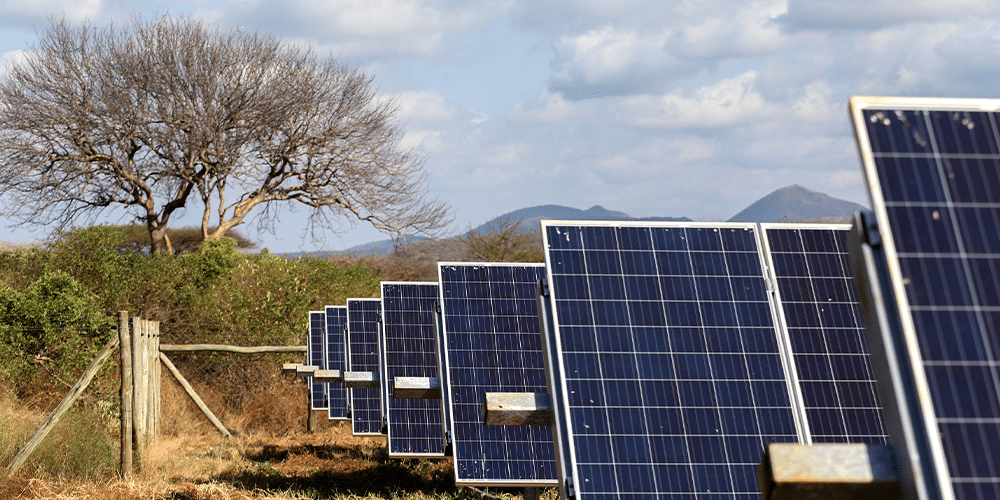
This scaling up is taking place, with investment in renewable energy in Africa growing rapidly and presenting significant potential for the transition to a low-carbon future. Kenya now generates more than 93% of its electricity from renewable energy sources and there is scope for further growth. To maximise this potential, countries need to create an environment for developing and scaling up projects, investing in research and technology transfer and integrating public-private partnerships.

Progress has been made, and both speakers acknowledged there is a lot of good will and growing awareness of the issue in the region. Yet adequately addressing climate risk and building sustainable capital markets requires collaboration of all stakeholders as central banks are only part of the equation.

Emma McGarthy is Head and Katerina Atkins is Programme Coordinator of the Sustainable Policy Institute, OMFIF.

Previous Post

S.Africa’s Telkom could open sale of stake in fibre unit by March

Next Post

U.S. sanctions cause suffering to all

SAT Reporter

Related Posts

Climate Change Drives Rising Health Risks in Southern Africa
Climate Change

Climate Change Drives Rising Health Risks in Southern Africa

by SAT Reporter
April 5, 2026
Green Climate Fund Approves 440 Million Dollars for African Climate Projects
Climate Change

Green Climate Fund Approves 440 Million Dollars for African Climate Projects

by SAT Reporter
March 31, 2026
South Africa’s Energy Transition Bottleneck Lies in Its Municipalities, IISD Report Finds
Climate Change

South Africa’s Energy Transition Bottleneck Lies in Its Municipalities, IISD Report Finds

by SAT Reporter
March 26, 2026
$1 Billion Boost for African Carbon Projects and Woodland Restoration
Climate Change

$1 Billion Boost for African Carbon Projects and Woodland Restoration

by SAT Reporter
January 30, 2026
UK-Backed Climate Accelerator Opens Doors for South African Green Innovators
African Start ups

UK-Backed Climate Accelerator Opens Doors for South African Green Innovators

by SAT Reporter
January 27, 2026
Next Post
U.S. sanctions cause suffering to all

U.S. sanctions cause suffering to all

Browse by Category

  • Africa AI
  • African Continental Free Trade Area
  • African Debt
  • African Start ups
  • Agriculture
  • AI Africa
  • Algeria
  • All News
  • Analysis
  • Angola
  • Arts / Culture
  • Asia
  • Botswana
  • BOTSWANA
  • BREAKING NEWS
  • BRICS
  • Burkina Faso
  • Burundi
  • Business
  • Business
  • Business Wire
  • Cameroon
  • Central Africa
  • Chad
  • China
  • Climate Change
  • Climate Changev
  • Community
  • Congo Republic
  • Conservation
  • Côte d’Ivoire
  • COVID 19
  • CRYPTOCURRENCY
  • Culture
  • Democratic Republic of Congo
  • Diplomacy
  • Eastern Africa
  • Economic Development
  • Economy
  • Education
  • Egypt
  • Elections 2024
  • Energy
  • Entertainment
  • Environment
  • Eritrea
  • Ethiopia
  • Europe
  • Fashion
  • Feature
  • Finance
  • Financial Inclusion
  • Food
  • Food and Drink
  • Foods
  • GABON
  • Ghana
  • Global
  • Global Africa
  • Guinea
  • Health
  • Humanitarian Aid
  • Immigration
  • in Southern Africa
  • International news
  • International Relations
  • Investment
  • Ivory Coast
  • Just In
  • Kenya
  • Lesotho
  • Libya
  • Life Style
  • Lifestyle
  • Literature
  • Malawi
  • Malawi
  • Mali
  • Markets
  • Mauritius
  • Middle East
  • Mining in Africa
  • Morocco
  • Mozambique
  • Namibia
  • Niger
  • niger
  • Nigeria
  • North Africa
  • North-Eastern Africa
  • Obituaries
  • Obituary
  • Opinion
  • PARTNER CONTENT
  • Politics
  • Property
  • Racism
  • Rwanda
  • Rwanda
  • SADC
  • SAT Interviews
  • SAT Investigation
  • SAT Jobs
  • Saudi Arabia
  • Senegal
  • Seychelles
  • Somaliland
  • South Africa
  • South Sudan
  • Sports
  • Startup Africa
  • STOCK EXCHANGE
  • Sudan
  • Sustainability
  • Sustainablity
  • Tanzania
  • Technology
  • Telecommunications
  • The Editorial Board
  • The Power Of She
  • Togo
  • Trade
  • Travel
  • Travel
  • Tunisia
  • Uganda
  • Uncategorized
  • Wealth
  • West Africa
  • World
  • World
  • ZAMBIA
  • Zambia
  • Zimbabwe
  • ZIMBABWE

Browse by Tags

#NewsUpdate #SouthAfrica #SouthernAfricanTimes #TheSouthernAfricanTimes AfCFTA africa African Continental Free Trade Area African development African Development Bank African economies African economy African Union Agriculture Angola Botswana China Climate change Cyril Ramaphosa Economic Development economic growth energy transition fiscal policy governance industrialisation Inflation Infrastructure Infrastructure Development International relations Investment Kenya Mozambique Namibia news Nigeria Regional Integration renewable energy Rwanda SADC South Africa Southern Africa sustainable development Tanzania United States Zambia Zimbabwe
ADVERTISEMENT

WHO WE ARE

The Southern African Times is a regional bloc digital newspaper that covers Southern African and world news. The paper also gives a nuanced analysis on news and covers a wide range of reporting which include sports, entertainment, foreign affairs, arts and culture.

Welcome Back!

Login to your account below

Forgotten Password?

Retrieve your password

Please enter your username or email address to reset your password.

Log In
  • Home
  • Southern Africa
  • Business
    • African Start ups
    • African Continental Free Trade Area
  • Technology
    • Lifestyle
      • Health
      • Culture
      • Food and Drink
      • Entertainment
  • Opinion
  • Sports
  • SAT Jobs
    • Events
  • About Us
    • Advertise with Us
    • Contact Us
Not enough quota to unlock this post
Unlock left : 0
Are you sure want to cancel subscription?