Sunday, May 24, 2026
  • Login
The Southern African Times
  • Home
  • Southern Africa
  • Business
    • African Start ups
    • African Continental Free Trade Area
  • Technology
    • Lifestyle
      • Health
      • Culture
      • Food and Drink
      • Entertainment
  • Opinion
  • Sports
  • SAT Jobs
    • Events
  • About Us
    • Advertise with Us
    • Contact Us
No Result
View All Result
  • Home
  • Southern Africa
  • Business
    • African Start ups
    • African Continental Free Trade Area
  • Technology
    • Lifestyle
      • Health
      • Culture
      • Food and Drink
      • Entertainment
  • Opinion
  • Sports
  • SAT Jobs
    • Events
  • About Us
    • Advertise with Us
    • Contact Us
No Result
View All Result
The Southern African Times
No Result
View All Result
Home Opinion

The road to peace: Why mediation is key in the Russia-Ukraine conflict?

by SAT Reporter
February 14, 2023
in Opinion
0
The road to peace: Why mediation is key in the Russia-Ukraine conflict?

The Russia-Ukraine conflict has shaken global peace, security, and stability as the shock waves have affected the entire region. The ongoing conflict shows no sign of resolution and has resulted in significant loss of life and property. The vital questions that need immediate answers are how long this war will go on, how peace will return to the region, and who will become the flag bearer of peace.

To resolve this conflict, there is a dire need to facilitate both parties toward a lasting solution sincerely. Global powers and international organizations like United Nations are responsible for mediating and bringing the parties to the table for a dialogue. Like any other conflict, the ultimate resolution of this conflict lies in diplomatic means, discussion, and negotiations. But someone has to take charge and become a mediator.

Furthermore, the ongoing conflict in Ukraine has been a source of significant tensions between Russia and the West, with the North Atlantic Treaty Organization (NATO) playing a vital role in the ongoing crisis. While many have called for NATO to take a more active role in mediating the conflict and negotiating a ceasefire, the organization should instead focus on ending its practice of arming Ukraine. The endless supply of arms to Ukraine has prolonged this conflict and is causing more harm than good. If this trend continues, the conflict may intensify as the U.S.-led NATO focuses on supplying weapons rather than mediation. NATO has pledged to deliver heavy weapons to Ukraine, and its Secretary General, Jens Stoltenberg, stated that more deliveries are expected in the near future.

Why arming Ukraine is a grave concern?

First, it constantly undermines efforts to resolve the conflict through diplomacy and dialogue. By providing Ukraine with weapons, NATO indicates that it does not desire to resolve the situation peacefully but aims to prolong the conflict. This makes it harder for diplomatic attempts to be successful as Russia may be less inclined to participate in negotiations if they think the Western countries are determined to maintain the hostilities through continual arms supply.

Secondly, this weapon influx will create an unending vicious cycle of an arms race, further creating instability. The NATO countries and Ukrainian allies should realize the impact of their weapon transfers on the region, as this may cause unimaginable destruction in the long term. The continuous delivery of heavy weapons also means that the situation will not de-escalate anytime soon, making negotiations less likely. The war must end as quickly as possible because protracted conflicts become complex over time and hard to resolve.

Thirdly, there is also a severe risk of arms getting into the wrong hands, like criminal gangs and terrorists, further creating chaos and instability in the region. More weapons mean more violence, especially in times of war. So, this conflict may become more extensive, creating more interrelated and overlapped conflicts if things are not managed soon.
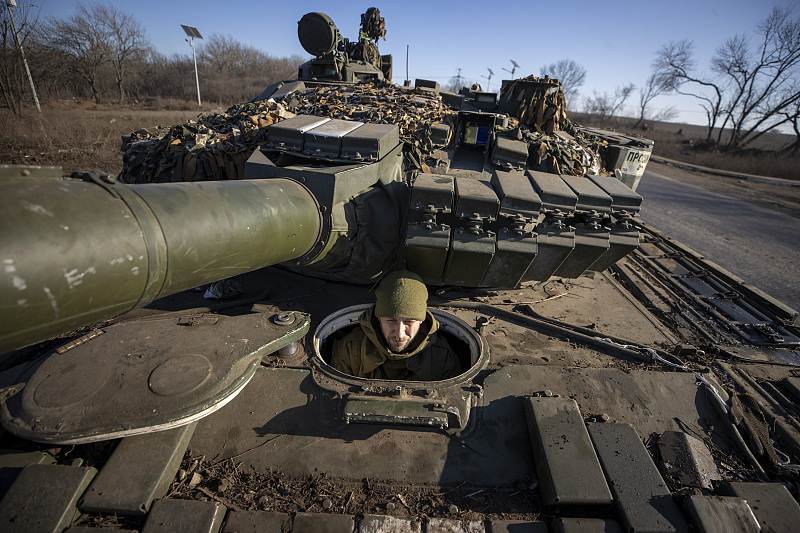


Ukrainian soldiers are seen on their ways to the frontlines with their armored military vehicles, in Donetsk Oblast, Ukraine, January 26, 2023. /CFP

What should be done?

The conflict between Russia and Ukraine has been ongoing for several years, and finding a resolution will likely require a multifaceted approach. So, what are those potential steps that could be taken to help bring an end to the conflict? First is Russia’s and Ukraine’s will and sincerity to dialogue and resolve the dispute. This mass influx of weapons to Ukraine must stop, and NATO should realize the seriousness of the matter.

Diplomatic negotiations and dialogues between Russia, Ukraine, and other key players, such as the European Union and the United States, could be held to resolve the crisis peacefully. This could include discussions around core issues such as border disputes. But to initiate a dialogue, it is essential to have a ceasefire agreement to end the fighting and allow for diplomatic talks. This could include a mutual agreement on the withdrawal of military forces from the border regions, as well as the establishment of buffer zones to prevent further clashes.

It’s important to note that finding a resolution to the conflict will likely be difficult and complex, and more than one approach will likely be required on its own. Diplomatic negotiations, ceasefire agreements, humanitarian aid, and other measures may be needed to resolve the conflict, at least to some extent.

Mediation is key to resolving this conflict.

The Russia-Ukraine conflict is fast becoming a dangerous war that desperately needs peace and collaboration. Mediation must take place, considering the fundamental concerns and potential for compromise of the primary parties involved, including Russia, Ukraine, and NATO.

Now is the time to start the dialogue, and someone must muster the courage to mediate the peace process. Countries such as Türkiye, like before, and China, which offered many times to mediate and facilitate the process, should be taken seriously. Besides, international organizations like United Nations and European Union should not let the conflict go on for another day. Returning to the table is always the best way to deal with conflicts rather than returning to arms. Let us put down our weapons and pick up the tools of peace once more, for it is through mediation that we can end this endless devastation.


Mariam Shah is an Islamabad-based independent researcher in the field of conflict studies and military psychology. The article reflects the author’s opinions and not necessarily the views of The Southern African Times. 

Previous Post

Rwandan minister calls for addressing challenges faced by coffee producers

Next Post

Zambian finance minister criticises creditor delays in debt restructuring

SAT Reporter

Related Posts

France Is Trying to Get New Stripes in Africa – but will it work?
Opinion

France Is Trying to Get New Stripes in Africa – but will it work?

by Development Reimagined
May 14, 2026
When AI Gets It Wrong, Humans Must Get It Right
Opinion

When AI Gets It Wrong, Humans Must Get It Right

by Dr Brighton Chireka
May 14, 2026
Can the United States Still Sanction China Into Compliance?
Opinion

Can the United States Still Sanction China Into Compliance?

by SAT Reporter
May 12, 2026
Op-Ed by President Ramaphosa | Reparations must help to address Africa’s colonial legacy
Opinion

Op-Ed by President Ramaphosa | Everyone in South Africa Must Respect and Uphold Our Laws

by SAT Reporter
May 12, 2026
Who Owns the American Story? Druski’s Viral Satire and Hollywood’s Identity Crisis
Opinion

Who Owns the American Story? Druski’s Viral Satire and Hollywood’s Identity Crisis

by Michelle Mungeni
May 12, 2026
Next Post
Zambian finance minister criticises creditor delays in debt restructuring

Zambian finance minister criticises creditor delays in debt restructuring

Browse by Category

  • Africa AI
  • African Continental Free Trade Area
  • African Debt
  • African Start ups
  • Agriculture
  • AI Africa
  • Algeria
  • All News
  • Analysis
  • Angola
  • Arts / Culture
  • Asia
  • Botswana
  • BOTSWANA
  • BREAKING NEWS
  • BRICS
  • Burkina Faso
  • Burundi
  • Business
  • Business
  • Business Wire
  • Cameroon
  • Central Africa
  • Chad
  • China
  • Climate Change
  • Climate Changev
  • Community
  • Congo Republic
  • Conservation
  • Côte d’Ivoire
  • COVID 19
  • CRYPTOCURRENCY
  • Culture
  • Democratic Republic of Congo
  • Diplomacy
  • Eastern Africa
  • Economic Development
  • Economy
  • Education
  • Egypt
  • Elections 2024
  • Energy
  • Entertainment
  • Environment
  • Eritrea
  • Ethiopia
  • Europe
  • Fashion
  • Feature
  • Finance
  • Financial Inclusion
  • Food
  • Food and Drink
  • Foods
  • GABON
  • Ghana
  • Global
  • Global Africa
  • Guinea
  • Health
  • Humanitarian Aid
  • Immigration
  • in Southern Africa
  • International news
  • International Relations
  • Investment
  • Ivory Coast
  • Just In
  • Kenya
  • Lesotho
  • Libya
  • Life Style
  • Lifestyle
  • Literature
  • Malawi
  • Malawi
  • Mali
  • Markets
  • Mauritius
  • Middle East
  • Mining in Africa
  • Morocco
  • Mozambique
  • Namibia
  • Niger
  • niger
  • Nigeria
  • North Africa
  • North-Eastern Africa
  • Obituaries
  • Obituary
  • Opinion
  • PARTNER CONTENT
  • Politics
  • Property
  • Racism
  • Rwanda
  • Rwanda
  • SADC
  • SAT Interviews
  • SAT Investigation
  • SAT Jobs
  • Saudi Arabia
  • Senegal
  • Seychelles
  • Somaliland
  • South Africa
  • South Sudan
  • Sports
  • Startup Africa
  • STOCK EXCHANGE
  • Sudan
  • Sustainability
  • Sustainablity
  • Tanzania
  • Technology
  • Telecommunications
  • The Editorial Board
  • The Power Of She
  • Togo
  • Trade
  • Travel
  • Travel
  • Tunisia
  • Uganda
  • Uncategorized
  • Wealth
  • West Africa
  • World
  • World
  • Zambia
  • ZAMBIA
  • ZIMBABWE
  • Zimbabwe

Browse by Tags

#NewsUpdate #SouthAfrica #SouthernAfricanTimes #TheSouthernAfricanTimes AfCFTA africa African Continental Free Trade Area African development African Development Bank African economies African economy African Union Agriculture Angola Botswana China Climate change Cyril Ramaphosa Economic Development economic growth energy transition governance IMF industrialisation Inflation Infrastructure Infrastructure Development International relations Investment Kenya Mozambique Namibia news Nigeria Regional Integration renewable energy Rwanda SADC South Africa Southern Africa sustainable development Tanzania United States Zambia Zimbabwe
ADVERTISEMENT

WHO WE ARE

The Southern African Times is a regional bloc digital newspaper that covers Southern African and world news. The paper also gives a nuanced analysis on news and covers a wide range of reporting which include sports, entertainment, foreign affairs, arts and culture.

Welcome Back!

Login to your account below

Forgotten Password?

Retrieve your password

Please enter your username or email address to reset your password.

Log In
  • Home
  • Southern Africa
  • Business
    • African Start ups
    • African Continental Free Trade Area
  • Technology
    • Lifestyle
      • Health
      • Culture
      • Food and Drink
      • Entertainment
  • Opinion
  • Sports
  • SAT Jobs
    • Events
  • About Us
    • Advertise with Us
    • Contact Us
Not enough quota to unlock this post
Unlock left : 0
Are you sure want to cancel subscription?