Friday, April 17, 2026
  • Login
The Southern African Times
  • Home
  • Southern Africa
  • Business
    • African Start ups
    • African Continental Free Trade Area
  • Technology
    • Lifestyle
      • Health
      • Culture
      • Food and Drink
      • Entertainment
  • Opinion
  • Sports
  • SAT Jobs
    • Events
  • About Us
    • Advertise with Us
    • Contact Us
No Result
View All Result
  • Home
  • Southern Africa
  • Business
    • African Start ups
    • African Continental Free Trade Area
  • Technology
    • Lifestyle
      • Health
      • Culture
      • Food and Drink
      • Entertainment
  • Opinion
  • Sports
  • SAT Jobs
    • Events
  • About Us
    • Advertise with Us
    • Contact Us
No Result
View All Result
The Southern African Times
No Result
View All Result
Home Opinion

OPINION: Why some Zimbabweans support Sanctions

by SAT Reporter
September 27, 2022
in Opinion
0
OPINION: Why some Zimbabweans support Sanctions

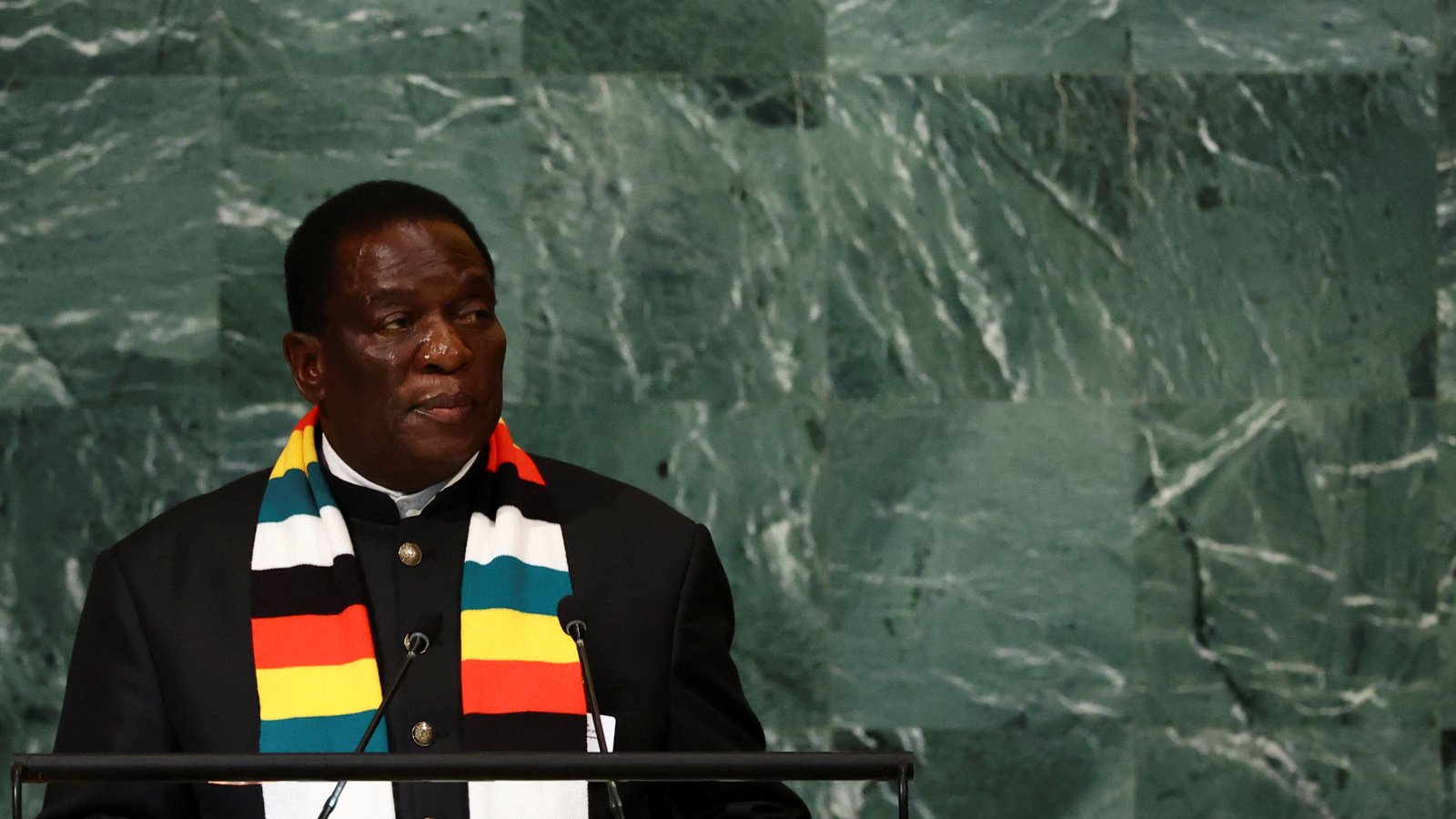
President Emmerson Mnangagwa was right in calling for the removal of unilateral coercive sanctions on Zimbabwe in his speech at the most recent United Nations General Assembly.  The Zimbabwean economy has been forced to grow with an albatross shackling its full potential.  Our Presidents call, at the United Nations, to remove sanctions finds its strongest resistance in Harare, and not Washington.

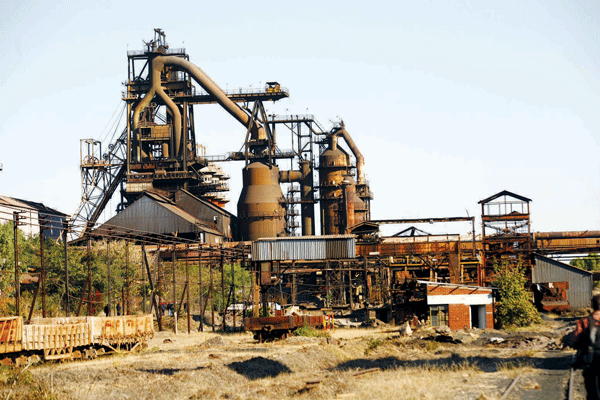
In this article I will expose how the opposition, Zimbabwean cartels, banks, greedy lobbyists, and South Africa, have a vested interest in maintaining sanctions on Zimbabwe, and are actively working to maintain the Zimbabwean sanctions program, and sabotage efforts to have them unlawful embargo removed, leaving Zimbabwe conveniently deindustrialised.

ADVERTISEMENT

Economic sanctions provide the opposition with a fettered economy, sieged by restrictions, which is the ideal breeding ground for public resentment to get votes.  It is also a powerful tool for blackmail.  Sanctions relief in exchange for a vote into power.  We know this because they told us.  We remember Mr Tendai Biti (Vice Vice President of the opposition) threatening to ensure that “they (the government) won’t get a cent” from international financial institutions.  We recall Chamisa’s (leader of Zimbabwe’s opposition) “sunga one sunga dozen” referring to sanctions.

The sanctions, which punish civilians, targeted or not, without trial, have nothing in common with basic human rights.  Condemned by the United Nations Special Rapporteur. Inconsistent with the UN Charter. Obviously at odds with principles of a constitutional democracy based on the rule of law, which the opposition ostensibly stand for.

Many Zimbabwean cartels, no different from the opposition, profit from the arbitrarily imposed economic coercive sanctions on Zimbabwe.  The restrictions are a fertile ground for corruption, exploitation, racketeering, and clandestine deals closed to the majority of Zimbabweans.

The removal of these sanctions would be a kiss of death for these nefarious characters, and foreign owned banks that abet the sanction-based economy.  It would mean the end of monopoly, the beginning of a market economy, transparency, increased taxes, and an open economy for the majority of Zimbabweans.

Zimbabwean lobbyists in America have nothing to show for the exorbitant fees they are paid by our government.  Even after the hard work that the President, and his capable team, have made to open the Zimbabwean economy for business, the lobbyists have failed in their single job, which is to successfully cause the removal of sanctions.  Knowing that they will never succeed, they have invested their efforts in preventing evidence of damage to the Zimbabwean economy from reaching the Courts, where binding judgments on the issue can be made.

For lobbyists, continued sanctions provides the same returns as the opposition, and the cartels, feeding on the suffering of Zimbabwean civilians.

The South Africans, for similar reasons, do Zimbabwe no real favours.  Publicly speaking against sanctions removal, but in reality, applying the same sanctions on Zimbabwe they say that they oppose.  The Banking Association of South Africa was the first to file Court papers against the Zimbabwean Anti Sanctions Movement in support of sanctions on Zimbabwe.

All ZASM claimed is an order declaring sanctions unlawful, but they resisted.  The reasons are obvious to all Zimbabweans.  Sanctions provide South Africans with an economic advantage over its northern neighbour at a time when competition for foreign direct investment, jobs, and tourists is high.

A deindustrialised  Zimbabwe has always been in South Africa’s best interests.  It means they can use access to international financial institutions to buy Zimbabwean raw materials on the cheap and beneficiate them for higher profits.  It means they can exploit Zimbabwean labour, also on the cheap, and dismiss them as quickly as a ZEP.  It means they get to sell Zimbabwean tourist destinations, as though they are South African destinations.  It means that every dollar Zimbabwe makes South Africans will always make the lions share.

The South Africans do not want to compete for jobs with 178 000 Zimbabweans in South Africa.  They certainly do not want to compete for jobs with 15 million Zimbabweans in Zimbabwe, unrestricted by sanctions.  I recently watched a documentary where the younger President Mnangagwa, when he was a minister in government, spoke about South Africa’s move to weaken the Zimbabwean economy.  Nothing has changed.  South Africa sits in a comfortable sweet spot.  They apply the unlawful American sanctions, to their economic benefit, and get to blame the Americans for it.  Even calling for their removal, knowing that the Americans do not take their calls seriously.  In that regard, they are like the fruitless American lobbyists, earning a living from the same sanctions they are trying to remove.

President Mnangagwa does not have to go to Washington to find detractors.  Our Presidents real saboteurs are in Harare and Johannesburg.  Earning illicit profits from unlawful sanctions, and using intimidation on the Chairman of ZASM and myself, to prevent evidence of sanctions from reaching the Court room.

Zimbabwe went to war for independence, liberty, and justice.  If Zimbabweans are prevented from producing evidence of the harm of sanctions by the opposition, the cartels, inefficient lobbyists, and oppressive South Africans, all benefiting from exploiting Zimbabweans, then Zimbabwean independence is not complete.




Simba Chitando is an Advocate of the High Court of South Africa and Counsel for the Zimbabwean Anti Sanctions Movement.The article reflects the author’s opinions and not necessarily the views of The Southern African Times.

Tags: Nelson ChamisaSanctionsSimba ChitandoSouth AfricaTendai BitiZimbabwe
Previous Post

South Africa to overhaul beleaguered Eskom’s board

Next Post

Zambia, China hold forum to deepen trade, investment ties

SAT Reporter

Related Posts

Op-Ed by Yemi Osinbajo, Former Vice President of Nigeria: Africa Is Losing the Iran War
Opinion

Op-Ed by Yemi Osinbajo, Former Vice President of Nigeria: Africa Is Losing the Iran War

by SAT Reporter
April 13, 2026
A Superpower Under Strain: Iran and the Limits of American Power
Opinion

A Superpower Under Strain: Iran and the Limits of American Power

by Kundai Vambe
April 8, 2026
South Africa Seeks to Tighten Immigration Rules in Policy Shift
Opinion

South Africa Seeks to Tighten Immigration Rules in Policy Shift

by Kundai Vambe
April 8, 2026
OPINION | Africa Isn’t Failing Democracy — The Narrative Is
Opinion

OPINION | Africa Isn’t Failing Democracy — The Narrative Is

by The Editorial Board
April 6, 2026
Soft Power, Hard Minerals: China’s Expanding Grip on Southern Africa
Opinion

Soft Power, Hard Minerals: China’s Expanding Grip on Southern Africa

by Kundai Vambe
April 5, 2026
Next Post
Zambia, China hold forum to deepen trade, investment ties

Zambia, China hold forum to deepen trade, investment ties

Browse by Category

  • Africa AI
  • African Continental Free Trade Area
  • African Debt
  • African Start ups
  • Agriculture
  • AI Africa
  • Algeria
  • All News
  • Analysis
  • Angola
  • Arts / Culture
  • Asia
  • Botswana
  • BOTSWANA
  • BREAKING NEWS
  • BRICS
  • Burkina Faso
  • Burundi
  • Business
  • Business
  • Business Wire
  • Cameroon
  • Central Africa
  • Chad
  • China
  • Climate Change
  • Climate Changev
  • Community
  • Congo Republic
  • Conservation
  • Côte d’Ivoire
  • COVID 19
  • CRYPTOCURRENCY
  • Culture
  • Democratic Republic of Congo
  • Diplomacy
  • Eastern Africa
  • Economic Development
  • Economy
  • Education
  • Egypt
  • Elections 2024
  • Energy
  • Entertainment
  • Environment
  • Eritrea
  • Ethiopia
  • Europe
  • Fashion
  • Feature
  • Finance
  • Financial Inclusion
  • Food
  • Food and Drink
  • Foods
  • GABON
  • Ghana
  • Global
  • Global Africa
  • Guinea
  • Health
  • Immigration
  • in Southern Africa
  • International news
  • International Relations
  • Ivory Coast
  • Just In
  • Kenya
  • Lesotho
  • Libya
  • Life Style
  • Lifestyle
  • Literature
  • Malawi
  • Malawi
  • Mali
  • Markets
  • Mauritius
  • Middle East
  • Mining in Africa
  • Morocco
  • Mozambique
  • Namibia
  • Niger
  • niger
  • Nigeria
  • North Africa
  • North-Eastern Africa
  • Obituaries
  • Obituary
  • Opinion
  • PARTNER CONTENT
  • Politics
  • Property
  • Racism
  • Rwanda
  • Rwanda
  • SADC
  • SAT Interviews
  • SAT Investigation
  • SAT Jobs
  • Saudi Arabia
  • Senegal
  • Seychelles
  • South Africa
  • South Sudan
  • Sports
  • Startup Africa
  • STOCK EXCHANGE
  • Sudan
  • Sustainability
  • Sustainablity
  • Tanzania
  • Technology
  • Telecommunications
  • The Editorial Board
  • The Power Of She
  • Togo
  • Trade
  • Travel
  • Travel
  • Tunisia
  • Uganda
  • Uncategorized
  • Wealth
  • West Africa
  • World
  • World
  • ZAMBIA
  • Zambia
  • Zimbabwe
  • ZIMBABWE

Browse by Tags

#NewsUpdate #SouthAfrica #SouthernAfricanTimes #TheSouthernAfricanTimes AfCFTA africa African Continental Free Trade Area African development African Development Bank African economies African economy African Union Agriculture Angola Botswana Business China Climate change Cyril Ramaphosa Economic Development economic growth energy transition fiscal policy food security industrialisation Inflation Infrastructure Development International relations Investment Kenya Mozambique Namibia news Nigeria Regional Integration renewable energy Rwanda SADC South Africa Southern Africa sustainable development Tanzania United States Zambia Zimbabwe
ADVERTISEMENT

WHO WE ARE

The Southern African Times is a regional bloc digital newspaper that covers Southern African and world news. The paper also gives a nuanced analysis on news and covers a wide range of reporting which include sports, entertainment, foreign affairs, arts and culture.

Welcome Back!

Login to your account below

Forgotten Password?

Retrieve your password

Please enter your username or email address to reset your password.

Log In

  • Home
  • Southern Africa
  • Business
    • African Start ups
    • African Continental Free Trade Area
  • Technology
    • Lifestyle
      • Health
      • Culture
      • Food and Drink
      • Entertainment
  • Opinion
  • Sports
  • SAT Jobs
    • Events
  • About Us
    • Advertise with Us
    • Contact Us
Are you sure want to unlock this post?
Unlock left : 0
Are you sure want to cancel subscription?