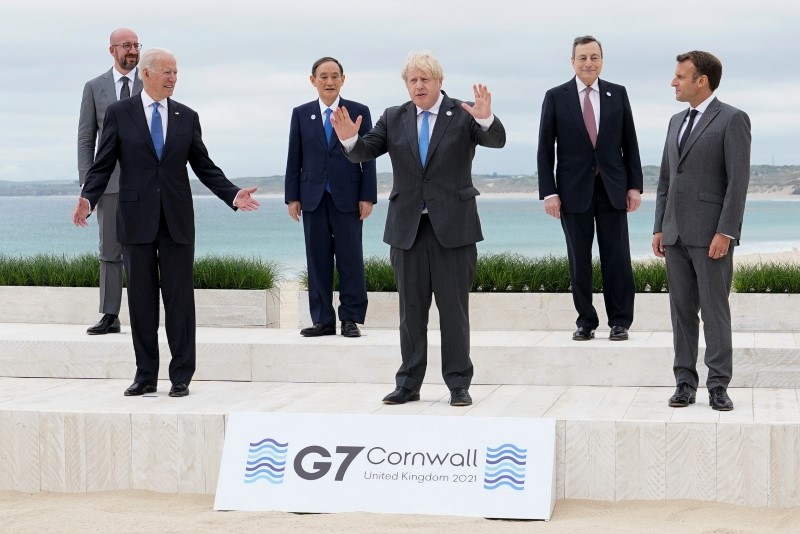
Activists sharply criticised a pledge by the Group of Seven rich countries on Tuesday to commit 4.5 billion U.S. dollars to fight global hunger, saying the sum fell short of what was needed, with millions of people on the brink of starvation.
“Faced with the worst hunger crisis in a generation, the G7 have simply failed to take the action that is needed. Many millions will face terrible hunger and starvation as a result,” Max Lawson, head of inequality policy at Oxfam, said.
“Instead of doing what is needed, the G7 are leaving millions to starve and cooking the planet.”



German Chancellor Olaf Scholz, who hosted the summit, defended the money committed when questioned on Tuesday, adding”we won’t stop doing what is necessary” to fight hunger.
The worst drought in decades in parts of Africa and soaring food prices, driven higher by Russia’s actions in Ukraine, have sparked repeated warnings about threats to food security of the world’s poorest and possible famines.
Ramaphosa urges G7 to assist African nations in becoming more self-reliant
South African President Cyril Ramaphosa who spoke to G7 Leaders, at the invitation of Chancellor Scholz, discussed issues of food security, fuel supply and increasing local production on items that are currently in low supply due to the conflict in Ukraine.
He expressed the need to enhance the resilience of food and agricultural production systems through adaptation, reducing agricultural greenhouse gas emissions and safeguarding national food security.
Ramaphosa then further made a special proposal that developing countries on the African continent, working together with the G7 countries, should be self-reliant in the production of fertilizers to ensure food security.
“We… should improve fertiliser production on the African continent to secure food security… be it grains or any other type of food commodity. It is fertilisers that are going to help us reach that level. As much as there is conflict, the silver lining is that it could actually make us wake up and begin to produce our own fertilisers to secure our own food security.”
The 4.5 billion U.S. dollars the G7 committed will go to protecting the most vulnerable from hunger and malnutrition. The G7 says that a total of 14 billion U.S. dollars of assistance has been committed this year.
G7 leaders also called on those with stockpiles to make food available and said they were working on ways to get grain out of Ukraine, after a Russian blockade of Black Sea ports pushed trade to slower land routes.

They also agreed to step up their efforts to help farmers to keep working in Ukraine, one of the world’s largest grain producers, and address Ramaphosa’s concerns regarding fertiliser shortages.
Story compiled with assistance from wire reports